Toyota's 'Reasonable' $22,000 Kei Truck Is Priced Against UTVs, Not Pickups
A Toyota executive's $22,000 estimate came with a UTV benchmark. I think that is the real target: a road-legal cab utility vehicle priced under Polaris and Kubota.
Contents · 6 parts
Toyota still hasn't published a price for the Scion KEI-01, but one of its executives has put a number on the table: about $22,000, and in any case under $30,000. Nine outlets ran that figure within a day, and almost all of them measured it against a Ford Maverick.
Here's what the headlines miss. Toyota didn't pick that comparison. The executive who floated the price set it next to a side-by-side utility vehicle, and I think that's the correct frame. At $22,000, the KEI-01 is priced to take buyers from Polaris, Kubota, and John Deere, in a North American side-by-side market that Polaris puts at about 525,000 units a year.
A number from engineering, with a benchmark attached
Toyota USA's vice president of engineering, Don Federico, gave the figure to The Drive during first drives on November 17. "$22,000 seems reasonable," he said, adding that it will cost less than $30,000. In the same conversation, he pointed out that buyers routinely spend $30,000 to $45,000 on a four-wheel-drive utility UTV with an enclosed cab, heat, and air conditioning. This is an executive's estimate, not an MSRP.
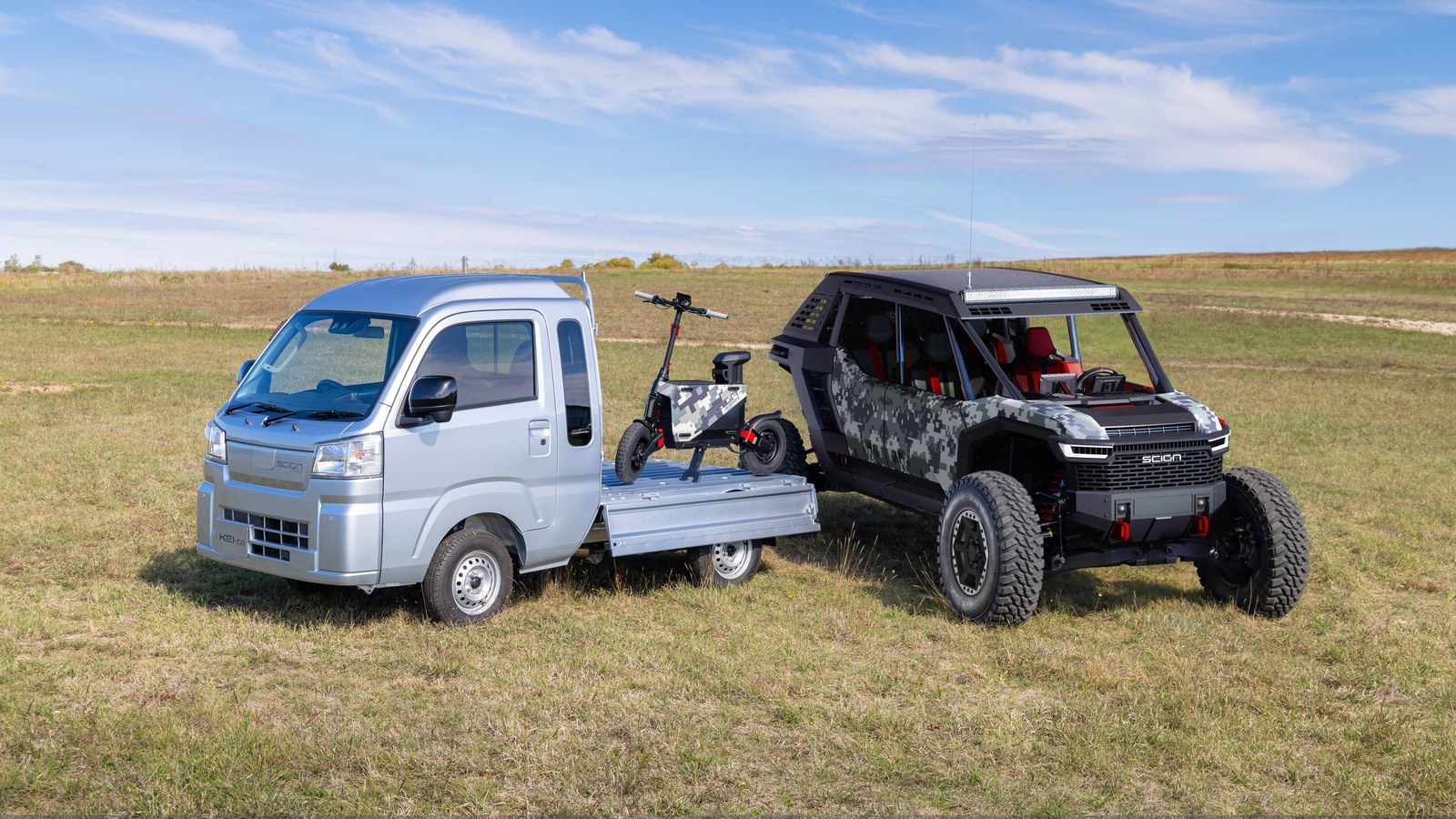
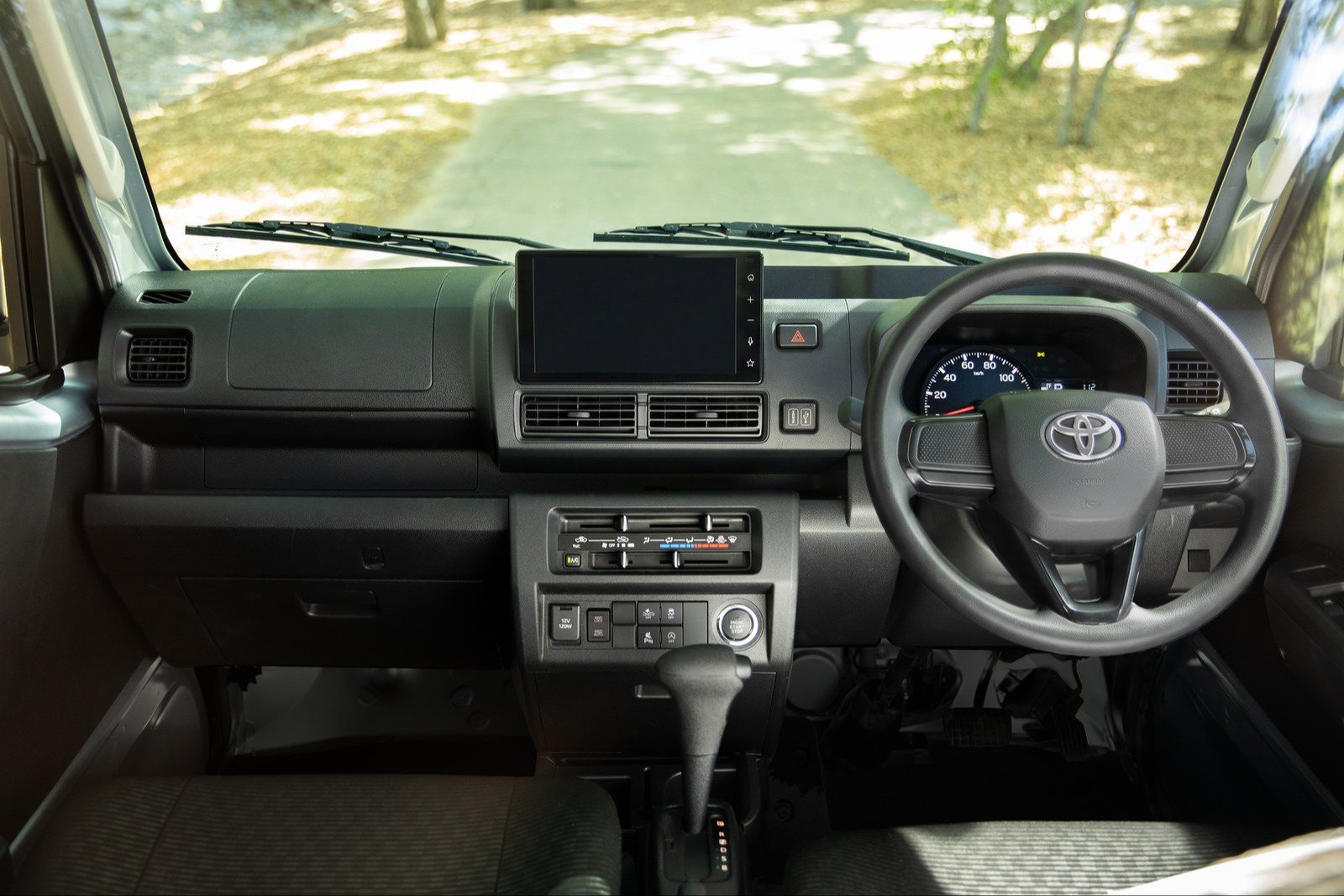
The hardware facts come from Toyota's November 10 launch release. The KEI-01 uses a 660cc three-cylinder engine, a CVT, and selectable four-wheel drive, carries up to 600 lb in the bed, and is built to the federal low-speed vehicle standard with a 25 mph top speed. Assembly starts at Toyota Indiana in the second half of 2027, and the first sales go to fleets through a small group of selected dealers. I covered what the 25 mph cap means when the brand launched. The price is the new piece.
The price ladder Toyota is actually climbing
Put the KEI-01 next to the work machines Federico was describing, and the $22,000 figure stops looking like a bargain pickup and starts looking like a discount cab UTV. Polaris lists its Ranger XP 1000 NorthStar Edition, the enclosed-cab version of its best-known work side-by-side, at $29,999 plus $1,395 destination. Kubota's RTV-X Cab, a diesel with a factory heat-and-A/C cab, starts at $30,899.
| Scion KEI-01 | Polaris Ranger XP 1000 NorthStar | Kubota RTV-X Cab | Ford Maverick XL | |
|---|---|---|---|---|
| Price | ~$22,000 (executive estimate) | $29,999 + $1,395 destination | From $30,899 | $28,145 + $1,845 destination |
| Engine | 660cc 3-cyl, CVT | 82 hp twin | 23.3 hp 3-cyl diesel | Hybrid |
| Enclosed cab, heat and A/C | Standard | Standard | Standard | Standard |
| Legal on public roads | Yes, as an LSV (25 mph) | Off-road vehicle; state rules vary | Off-road vehicle; state rules vary | Yes |
Against the Maverick, the KEI-01 loses on almost every line that matters to a private buyer: speed, seats, range of use. Against the Ranger and the Kubota, it wins the one line those machines can't buy, which is a federal motor-vehicle classification. A low-speed vehicle is defined by NHTSA, and most states let it run on roads posted at 35 mph or less. A side-by-side is, in Polaris's own description, a vehicle designed for off-road use, and whether it may touch the county road is a state-by-state patchwork.
That gap is worth real money to the customers Toyota names in its release: farmers and ranchers, municipalities, universities, corporate campuses. Their vehicles spend the day crossing between parcels, buildings, and service roads. In my view, a cab UTV that can legally use the road between the barn and the next field is a better product for them than either a faster UTV or a bigger pickup.
Scion is a powersports brand in all but name
The strongest evidence for my reading isn't the price quote. It's the rest of the launch. Scion by Toyota didn't debut with a car. It debuted with the KEI-01, a compact personal-mobility concept called BKE, and the SxS Concept, a purpose-built side-by-side with a turbocharged four-cylinder hybrid making more than 300 hp. Toyota says it will keep developing the SxS and evaluate how to bring it to enthusiasts.
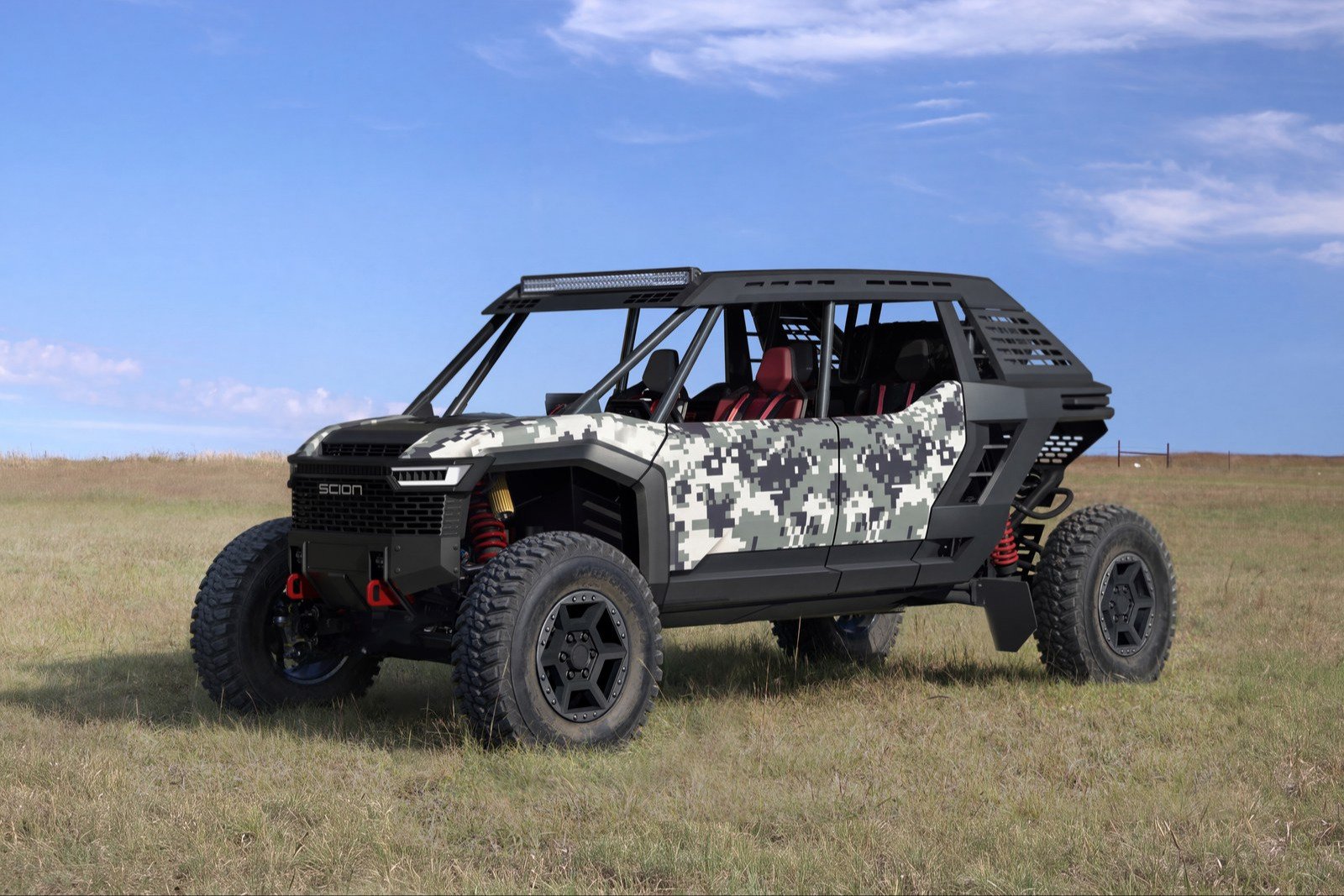
Line those up, and Scion looks like a company built to enter the off-road vehicle business from both ends. The KEI-01 attacks the work side of the market, where Polaris says utility models, led by the Ranger, drove its retail growth in 2025. The SxS would go after the recreational side, where RZR and Can-Am live. Polaris estimates North American side-by-side retail at 525,000 units in 2025, up from 510,000 a year earlier, according to its 2025 annual report. That figure covers sport and utility machines together, so the KEI-01's slice is smaller. It is still a market Toyota has never sold into.
What strikes me is how much of Toyota's existing advantage carries over. UTV buyers already pay $30,000 or more for a cab machine sold through a powersports or tractor dealer. Toyota can offer a smaller, slower machine with a proven engine, a factory warranty, and service at a car dealership, at a lower price. The Drive's own subhead calls it a factory-warrantied workhorse priced well below loaded UTVs. Nobody has yet asked what that means for the companies that sell those UTVs.
The case against my view
The objection is serious. "Seems reasonable" is not a price. It came from an engineering executive during a drive event, not from sales or pricing, and Toyota has said only that retail sales may come later, if at all. A fleet buyer negotiating a pilot contract may never see $22,000, and a private buyer may never see the truck.
The functional comparison is also generous to Toyota. A Ranger XP 1000 has 82 hp, a 1,000-lb box, and suspension made for ruts and creek beds. The KEI-01 is a road-going kei truck with a 25 mph governor. On a ranch with no paved road in sight, a UTV does more work per dollar. UTV sticker prices also overstate what buyers pay: Polaris reported lower net pricing in its fourth quarter of 2025 and leaned on promotions to move dealer stock, so the real gap to $22,000 is narrower than the list prices suggest. And the dealer argument cuts both ways, because the KEI-01 will be sold through a small selected group of Toyota stores at first, not the whole network.
I accept most of that. My answer is that the overlap I'm describing is not the ranch in the middle of nowhere. It's the buyer who needs a cab, a bed, and four-wheel drive, and also needs to use public roads between work sites. That buyer currently pays UTV money for a machine that may not be legal on the road. Federico chose the UTV benchmark himself, and I take that as the clearest signal yet of which market Toyota thinks it's entering.
What would change my mind
If Toyota publishes an official KEI-01 price above $30,000 before deliveries begin in the second half of 2027, the UTV undercut disappears, and the truck becomes a premium niche product rather than a market attack.
If Scion by Toyota drops the SxS Concept or stops showing it by the 2027 SEMA Show, the powersports reading weakens, and the KEI-01 looks like a one-off fleet experiment.
And if Toyota's first named fleet customers turn out to be urban delivery operators rather than farms, municipalities, and campuses, I'll concede that Toyota sees the KEI-01 as a small commercial vehicle, not a UTV replacement.
My read
The most useful thing Toyota said this week wasn't the $22,000 figure. It was the benchmark Federico attached to it. Scion is pricing the KEI-01 against $30,000 cab UTVs, with a road-legal classification as the edge, and the SxS Concept shows the brand wants the rest of that market too. Polaris, Kubota, and Deere should treat this launch as a competitor entering their segment.