Tesla Raised Cybertruck Prices the Day It Killed It. Owners Pay Next
Tesla killed the Cybertruck and raised its entry price to $92,490 the same day. That's a margin harvest, and the bill for the exit lands on current owners.
Contents · 7 parts
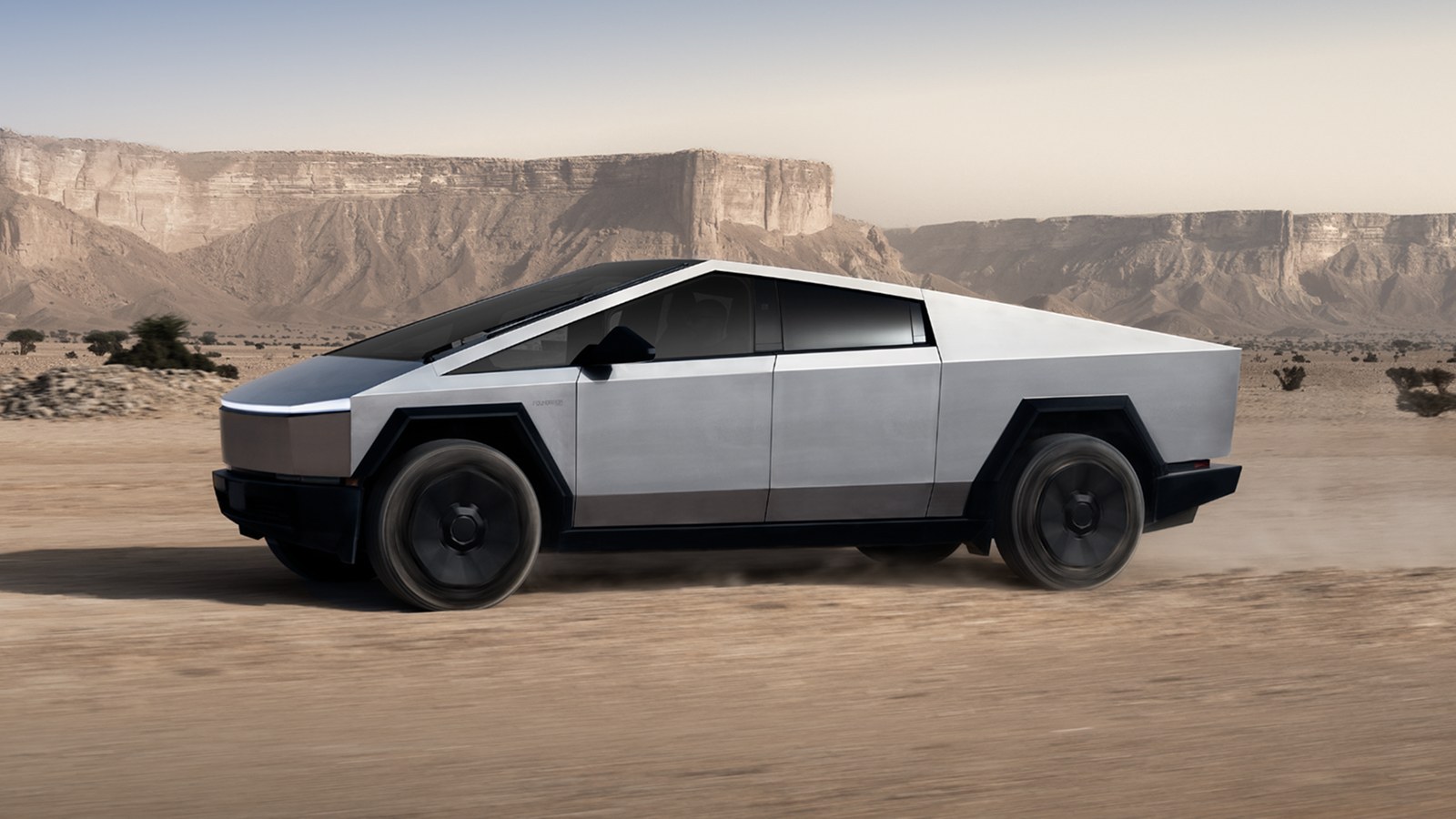
Tesla announced the end of the Cybertruck on November 6 and, within hours, made it more expensive. The cheapest Cybertruck you can now order costs $92,490, up from $69,990 at the start of August.
Most of the coverage reads this as a cleanup: a flop leaves, Cybercab gets the floor space. I think the price move tells a different story. Tesla is not just clearing a line. It is harvesting the last buyers of a truck it has stopped believing in, and the people who will pay for that decision longest are the ones who already own one.
Tesla set an end date, then raised the price of what is left
In a post on X, Elon Musk wrote that Tesla will be winding down Cybertruck production at Gigafactory Texas around the middle of next year to make room for more Cybercab production. That is the entire official explanation. Tesla has not said how long it will keep selling inventory, or what happens to parts after the line stops.
The price changes came the same day. Electrek reports the Dual Motor AWD went up 10% to $82,490 and can no longer be ordered, the Premium AWD rose 8.8% to $92,490, and the Cyberbeast added $2,500 to reach $102,490. It was the second increase since August, when Tesla added $5,000 to two trims.
A 32% higher entry price in ten weeks is a harvest, not a cleanup
Put the three price lists side by side and the pattern is hard to miss. The trims buyers actually chose on price got the biggest increases. The flagship, already priced for people who don't shop on price, barely moved.
| Early August | After August hike | November 6 | |
|---|---|---|---|
| Dual Motor AWD | $69,990 | $74,990 | $82,490 (not orderable) |
| Premium AWD | $79,990 | $84,990 | $92,490 |
| Cyberbeast | $99,990 | $99,990 | $102,490 |
| Cheapest truck you can order | $69,990 | $74,990 | $92,490 |
Part of that 32% jump at the bottom comes from deleting a trim, not from repricing one. That is the point. Removing the cheapest configuration while raising everything above it is how you narrow a product to the buyers with the least price sensitivity. When a company plans to keep a model, it protects the entry point, because that is where new owners come from. When it plans to leave, the entry point stops mattering.
The history makes the contrast sharper. Tesla promised a $39,900 Cybertruck in 2019. As recently as February, it offered a dual-motor truck at $59,990 for ten days to move metal. Nine months later, the same buyer is told the floor is $92,490 and the clock is running.
Demand never showed up at $70,000, so the last trucks are priced for loyalists
Tesla does not break out Cybertruck sales. It reports an "Other Models" bucket, which fell 48% year over year to 8,295 in the third quarter, the lowest since 2021. With Model S and Model X production ended in April, Electrek estimates that 7,000 to 8,000 of those were Cybertrucks. That is an estimate, not a Tesla figure, but it implies roughly 30,000 trucks a year from a line planned for 250,000, according to Electrek's analysis.
Cox Automotive's estimates point the same way: 3,519 US sales in the first quarter of 2026 and 3,744 in the second, against 14,416 in the third quarter of 2024. And a meaningful slice of recent demand was internal. S&P Global Mobility data cited by Electrek show SpaceX took 1,279 Cybertrucks in the fourth quarter of 2025, and Musk's companies together accounted for about 19% of US registrations that quarter.
So here is my reading of the arithmetic. Tesla could not find enough buyers at $69,990. Raising the price will not find new ones. What it does is extract more per truck from the people who wanted a Cybertruck regardless, while the remaining build slots run out. I covered the same logic when Tesla canceled the truck for Australia and New Zealand in October: margin, not volume, has been driving Cybertruck decisions for months.
The bill lands on owners who bought a body nobody else uses
An owner of a discontinued Ford or Toyota rarely worries much. Those models share parts with other vehicles, and an entire aftermarket exists. The Cybertruck is the opposite. Its stainless steel exoskeleton and large castings are specific to it. When production ends, so does the steady pull of new-vehicle parts orders that keeps a supply chain honest.
Tesla's silence here is the problem. As Kelley Blue Book notes, the company has not said how long it will sell remaining inventory or supply replacement parts. Ending production does not mean ending service. But "we will keep fixing them" is a sentence that costs nothing to say, and Tesla has not said it.
The plant priorities matter too. Giga Texas is being reorganized around Cybercab, a vehicle that is already drawing regulatory scrutiny. NHTSA opened an audit query on September 4 into how Tesla self-certified a car without traditional controls, and Electrek reports Tesla asked the agency to treat its entire October 30 response as confidential. When a company's attention and capital are tied up in a program like that, a discontinued pickup with a few tens of thousands of owners does not move up the list.
The case against my view
The strongest counterargument is that this is simply rational end-of-life economics. A low-volume model on its way out has a finite supply of components. Raising prices matches demand to the trucks Tesla can still build, instead of taking orders it cannot fill. And higher new-truck prices may actually help owners in the short run, because a used Cybertruck now looks cheaper next to a $92,490 new one. Discontinued "last of" vehicles sometimes hold value better, not worse.
I take that seriously, and for the next year it may well be right. But it confuses scarcity with desirability. Scarcity supports prices when a car is wanted and rare. A Cybertruck whose sales fell by roughly three-quarters from its peak, before any end date existed, is rare because people stopped buying it. Once the line closes and the new-truck reference price disappears, used values will be set by repair costs and parts availability, and on those Tesla has offered nothing.
What would change my mind
If Tesla publishes a parts and service commitment for the Cybertruck with a specific term, ideally ten years or more, before production ends in mid-2027, my concern about owners largely goes away.
If Tesla rolls the price increases back or reintroduces a cheaper trim before the last trucks are built, that would suggest it is managing volume rather than squeezing margin, and I would be wrong about the harvest.
And if used-market data from Cox Automotive or iSeeCars in the first half of 2027 show Cybertruck resale values holding steady or rising relative to comparable electric pickups, the market will have told me the "last of" premium is real.
My read
Tesla ended the Cybertruck because almost nobody would pay $70,000 for it, then charged the remaining believers $92,490. That is a sensible way to close out a program and a revealing one. The company is optimizing the exit for itself. Until Tesla says, in writing, how long it will support the trucks already on the road, owners should assume the cost of that exit is theirs.