Tesla Is Running the Cybertruck for Margin, Not Volume. Australia Paid First
Right-hand drive is the excuse. Raising prices into falling US demand while refunding seven-year-old deposits says Tesla now manages the Cybertruck for cash, not growth.
Contents · 7 parts
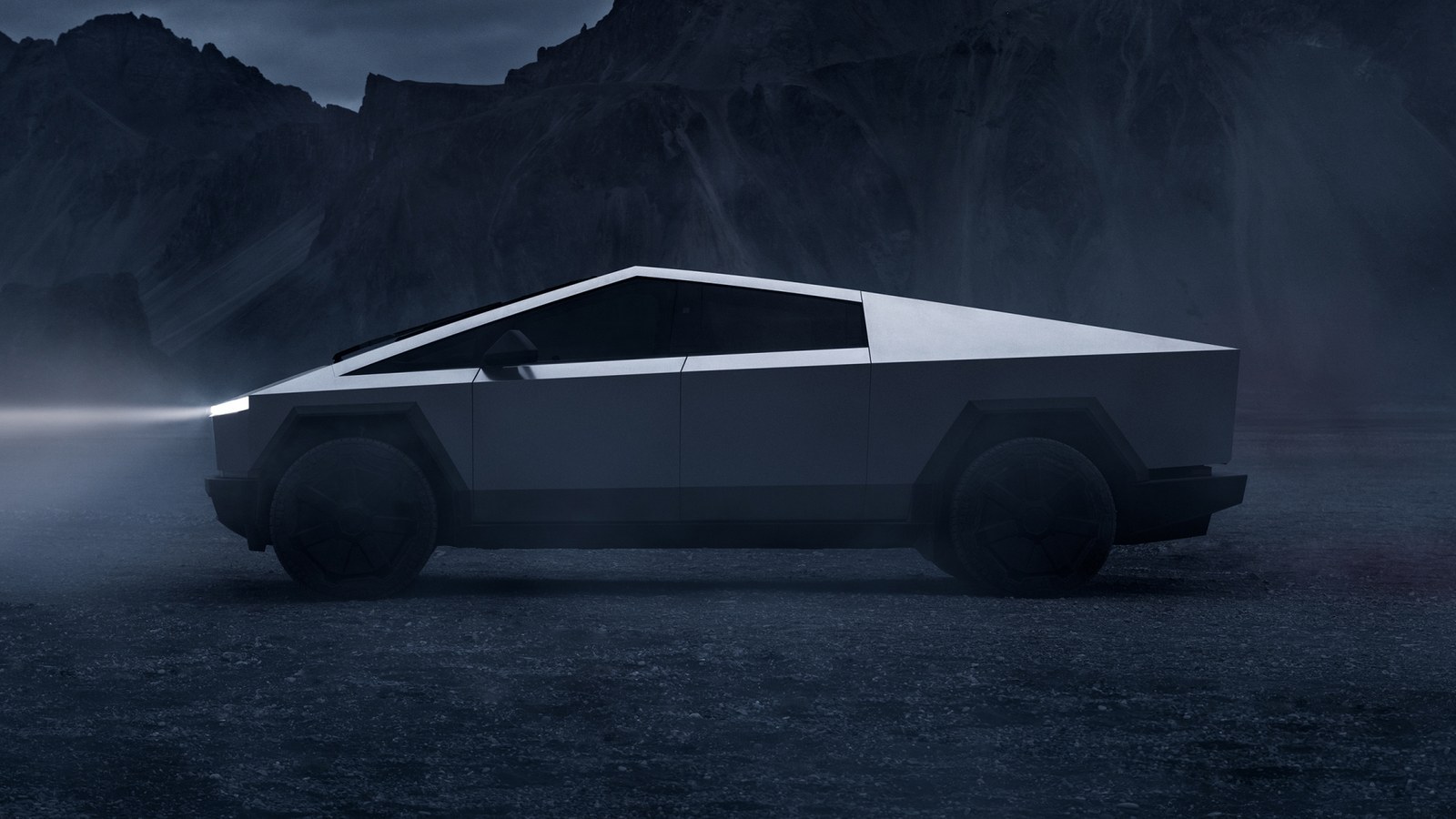
Tesla has told Cybertruck reservation holders in Australia and New Zealand that the truck isn't coming, almost seven years after they paid A$150 each to hold a place in line. They get refunds within 30 days and, if they order a Model 3 or Model Y instead, a free year of FSD (Supervised).
Most coverage reads this as a right-hand-drive story. I think that's the least interesting part. Here's what the headlines miss: Tesla isn't trimming a market. It is running the Cybertruck for margin instead of volume, and Australian buyers are simply the first to get the memo. The people who should read it most carefully are American owners and shoppers.
A seven-year reservation ends in two sentences
The email to reservation holders, quoted by Electrek, says plans to build the truck for the two countries "have been discontinued." Tesla closed its Australian order page in May 2022 without refunding anyone, and in 2024 Elon Musk told shareholders the truck might be certified for other markets the following year, Electrek reports. That never happened.
The Cybertruck is built only in left-hand drive. Outside North America it is sold or offered in South Korea, the UAE, Saudi Arabia, Qatar, Jordan, and Israel, and it remains blocked in the EU, largely over pedestrian safety. A crowdsourced survey from 2020 put Australia third among reservation markets with about 3% of the total. Tesla never published regional numbers, and many of those deposits were likely withdrawn years ago.
The number that matters is the American one
Tesla doesn't break out Cybertruck sales. Its Q3 2026 delivery report listed 8,295 "Other Models," down from 15,933 a year earlier, as Not a Tesla App tallied. Electrek estimates 7,000 to 8,000 of those were Cybertrucks. I'd treat that as a ceiling, not an estimate: the same bucket now holds the Semi, which has just entered volume production, leftover Model S and Model X units, and every Cybertruck sold in Korea and the Gulf.
The independent US count is far smaller. Cox Automotive estimates 3,519 Cybertrucks sold in the US in the first quarter of 2026 and 3,744 in the second, according to Electrek's breakdown of the category. That follows a fall from about 39,000 in 2024 to 20,200 in 2025, per Cox data reported by Jalopnik. Even the late-2025 number leaned on the family: S&P Global Mobility registration data showed 1,339 of 7,071 Cybertrucks registered in Q4 2025 went to SpaceX and other Musk companies, as Bloomberg reported.
| Earlier | Latest | |
|---|---|---|
| Starting price | $39,900 promised (Nov. 2019) | $74,990 dual-motor (Aug. 2026) |
| US sales, full year (Cox) | ~39,000 (2024) | 20,200 (2025) |
| US sales, quarter (Cox) | 3,519 (Q1 2026) | 3,744 (Q2 2026) |
| Tesla "Other Models" deliveries | 15,933 (Q3 2025) | 8,295 (Q3 2026) |
| Annual capacity | 250,000 planned | 125,000+ installed |
Run the first half of 2026 forward and you get roughly 14,500 trucks a year in the US. Tesla's latest shareholder letter lists more than 125,000 units of installed Cybertruck capacity, Electrek notes. By my math, American demand covers about 12% of what the factory can already build, before anyone mentions the 250,000 the line was planned for.
Raising prices into falling demand is the tell
This is the detail that matters more than Australia. In August, with volumes near these lows, Tesla raised Cybertruck prices by $5,000. The dual-motor truck now starts at $74,990, Electrek reports. When the truck was unveiled in November 2019, Tesla promised a $39,900 starting price.
A company chasing volume cuts price, or adds a cheaper trim and lets it run. A company harvesting a product raises price on the buyers who still want it and stops spending on anything that won't pay back quickly. A right-hand-drive version, plus certification under Australia's design rules, is exactly that kind of spending. The way I see it, the Australian refund and the August price hike are one decision viewed from two sides.
It also fits what I argued after Tesla's third-quarter earnings: the car business is being run to produce margin, and the company spends that margin on its AI bets. A low-volume pickup that needs fresh engineering money is the opposite of what that strategy rewards.
The consolation offer says the same thing. Tesla isn't offering refunded customers anything tied to the Cybertruck. It is steering them toward the two cars it builds at scale in right-hand drive. The Cybertruck is now a US product with a handful of left-hand-drive export outlets for trucks that already exist.
Owners now hold a truck in harvest mode
For American owners, harvest mode cuts both ways. In my view, a higher sticker on new trucks puts a firmer ceiling over used prices, and Tesla has every reason to keep selling software, parts, and service to a fleet it wants to monetize. The less comfortable side: products that aren't expected to grow tend to get fewer variants, fewer meaningful updates, and less marketing, and the resale market has only US buyers to lean on.
Losing two export markets won't move used prices by itself. What can move them is a maker signaling that the truck's market is the one it already has. My bet is that Tesla keeps building the Cybertruck in Texas as long as it covers its costs, prices it for margin, and spends as little as possible on new versions. I am not predicting a US cancellation. Nothing Tesla has said points there, and any claim that one is coming is speculation until the company says otherwise.
The case against my view
The strongest counterargument is that this is ordinary capital discipline. Australia and New Zealand were about 3% of reservations by one crowdsourced count, many deposits are years old, and engineering a right-hand-drive stainless-steel truck plus local certification for two small markets would be hard to justify for any automaker, with a healthy product or not. On this reading, Tesla simply said no to a bad project, a few years late.
I accept all of that as far as it goes. It explains why Australia was cut. It doesn't explain why a truck selling at roughly an eighth of its installed US capacity got a $5,000 price increase instead of a push for volume. A truck with growth ahead of it would earn the right-hand-drive budget eventually. Choosing to refund rather than delay again tells me Tesla no longer sees that growth.
What would change my mind
If Cox's estimates for the third and fourth quarters of 2026 show US Cybertruck sales holding above roughly 7,000 a quarter, without the backlog Tesla cited in its July lawsuit against its casting supplier, the volume story is better than I think.
If Tesla announces a new Cybertruck variant priced well below $74,990, or a substantive refresh for 2027, that is investment, not harvest. And if Tesla starts reporting Cybertruck deliveries separately instead of folding them into a category that now includes the Semi, I'd read that as confidence. Companies rarely hide the numbers of products they expect to grow.
My read
Australia didn't lose the Cybertruck because of the steering wheel. It lost it because Tesla has stopped funding the truck's future and started pricing it for the buyers it already has. For American owners, that means a supported but static product and a resale market that rests on US demand alone.