Tesla's Roadster Is Back With Half the Range and No Promise It Will Ever Ship
Tesla's new Roadster is a different car from the one it sold in 2017, and the reservation contract promises no price, no date and no delivery.
Contents · 6 parts
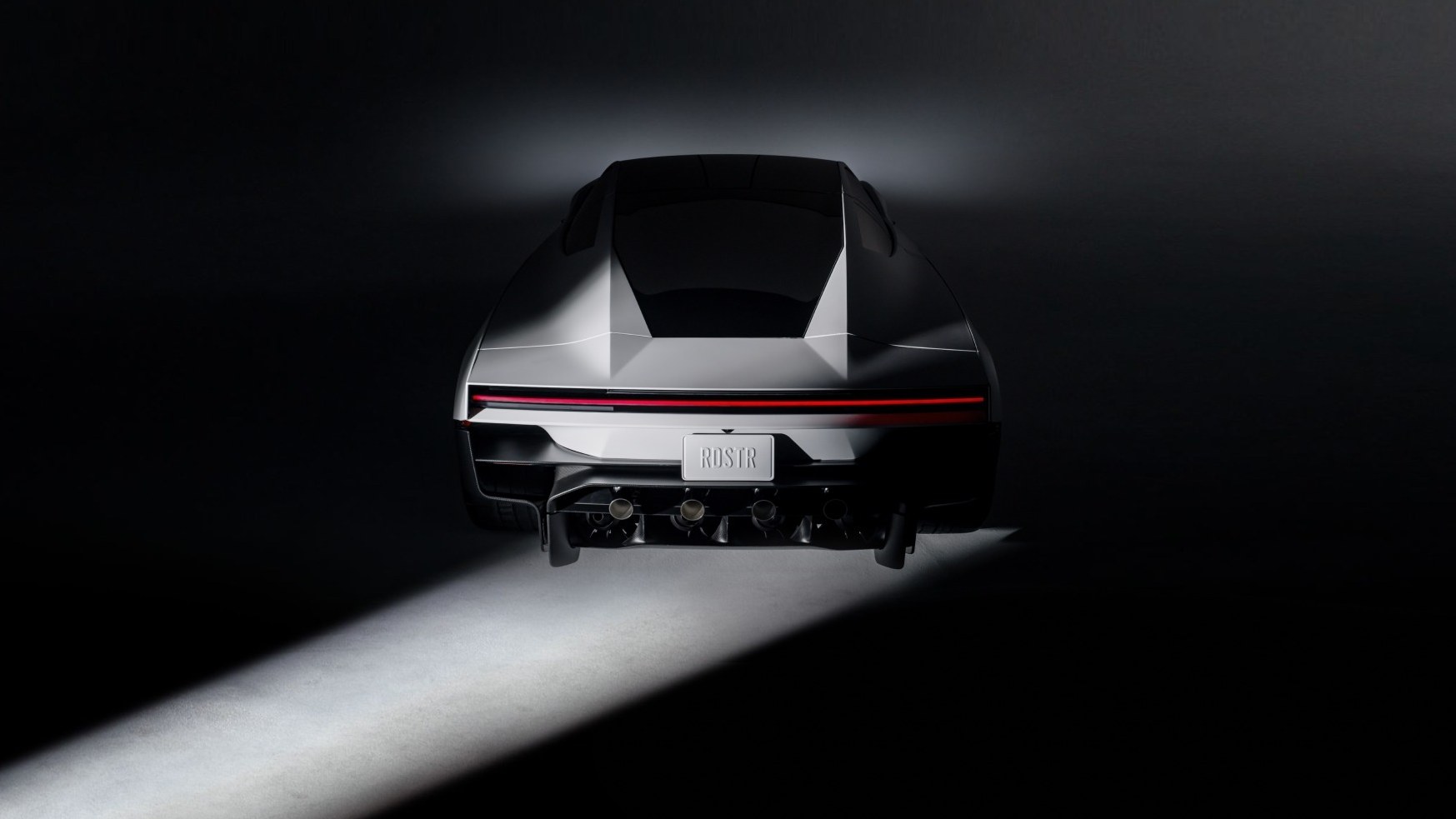
Tesla finally showed the second-generation Roadster on October 15, nearly nine years after it first took deposits for it, and promised production in Texas in 2028. The car on stage jumped over a Cybertruck, flipped in midair and, by Tesla's count, hit 60 mph in under a second.
Here's what the stunt coverage misses: the car a 2017 buyer paid $50,000 to reserve no longer exists. The new one has roughly half the promised range, half the seats and no price. Its headline feature is not approved for public roads. And the reservation contract says in plain English that Tesla may never deliver it at all.
I think the honest description of this Roadster is a SpaceX demonstration with a reservation form attached. The deposit is refundable, so nobody is losing their money. But what that money actually buys is a place in a line Tesla does not promise will ever reach the front.
A launch held at a rocket site, with a contract that promises nothing
Tesla held the livestreamed reveal at SpaceX's rocket development site in McGregor, Texas, Bloomberg reported, and the prototype was built with SpaceX-developed cold-gas thrusters. Reservations reopened the same night: $50,000 for the Performance version, $250,000 for the thruster-equipped Thrust version, and an invite-only one-seat Rocket, according to TechCrunch.
The specifications came a day later, not from Tesla's own materials but from a nearly hour-long Top Gear video with chief engineer Lars Moravy and design chief Franz von Holzhausen. InsideEVs summarized them: about 3,700 lb for the lightest version, rear-wheel drive only, more than 1,073 hp and 885 lb-ft in base form, more than 1,341 hp and 1,032 lb-ft in the higher-output versions, charging at up to 500 kW, and around 310 to 320 miles of real-world range. Tesla's own reservation listing rounds that to 300 miles, TechCrunch reported.
Then there is the paperwork. The reservation agreement, as quoted by InsideEVs, states that Tesla cannot guarantee when the vehicle will be delivered "or if it will be delivered," and calls any estimated price only an estimate. The same agreement makes the reservation fully refundable.
The 2017 car and the 2026 car are two different products
Put the two announcements side by side, and the gap is not a delay. It is a substitution.
| Promised in 2017 | Shown in 2026 | |
|---|---|---|
| Range | 620 miles | about 300–320 miles |
| Battery | 200 kWh | not disclosed |
| Seats | 4 | 2 (Rocket: 1) |
| 0–60 mph | 1.9 seconds | under 1 second (Tesla claim, thruster versions) |
| Base price | $200,000 | not announced |
| Deliveries | 2020 | production from 2028 |
The 2017 figures come from Tesla's original unveiling, as reported at the time. Range was the whole pitch back then: Los Angeles to San Francisco and back on one charge. That claim is gone, and so are two seats.
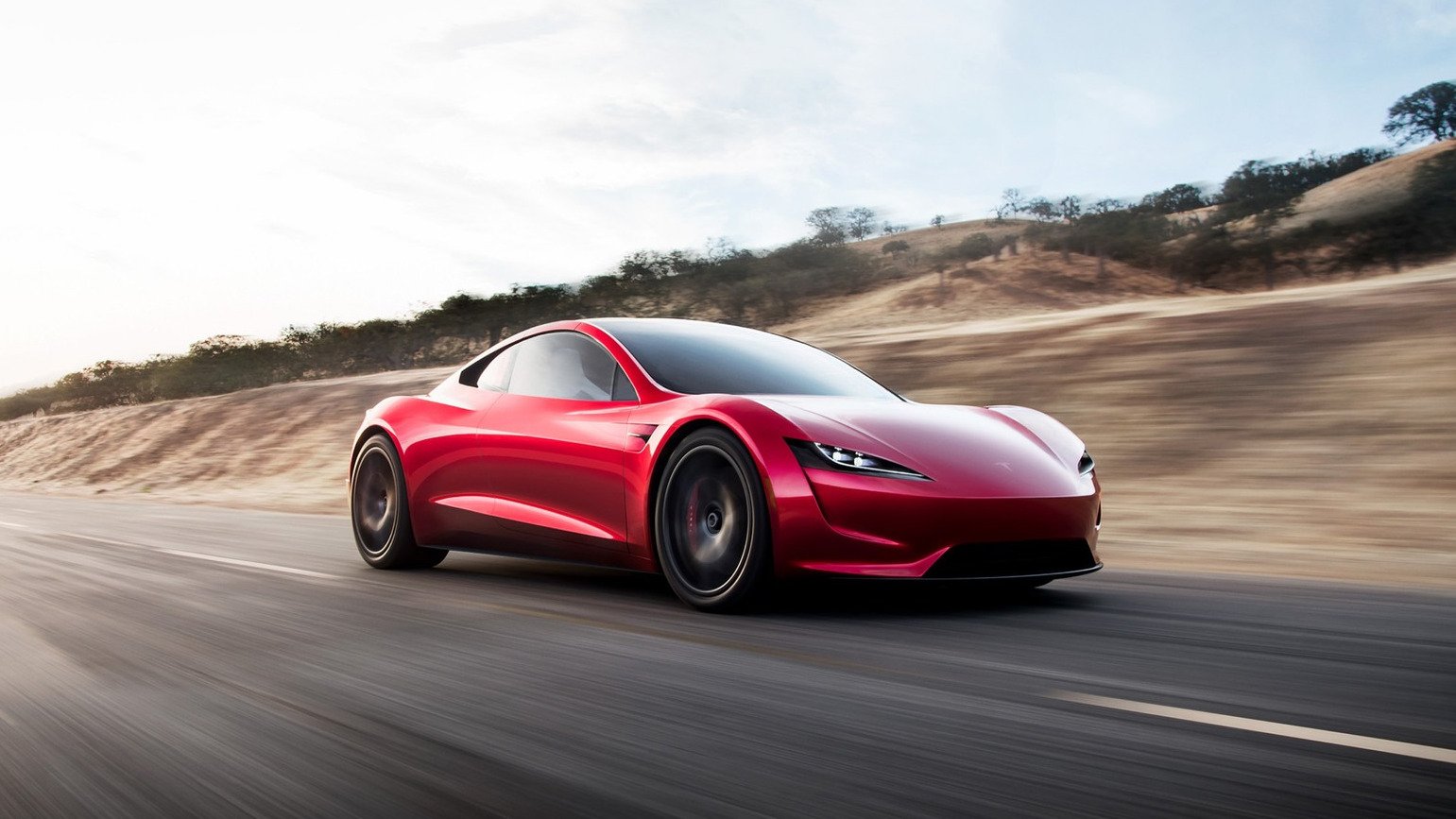
What replaced them is acceleration that depends on compressed gas. The sub-second 0–60 time belongs to the thruster-equipped versions, whose pressurized tank, per the engineers' briefing, takes hours to refill and is spent in a few seconds of use. Nobody outside Tesla has timed it, and no on-screen timer ran during the demo. So the number that leads every headline is the one least connected to a car you would drive on a Tuesday.
The flying part is not a road car feature
Tesla's own fine print for the Rocket feature reads "Not approved for public road use," The Associated Press reported. That matters more than it sounds. The $250,000 Thrust reservation buys into a configuration whose signature trick, as far as anyone has been told, belongs on a closed course.
That is not unusual for a hypercar with a track mode. It is unusual for the trick to be the entire marketing campaign. The event was staged at a SpaceX facility, the hardware came from SpaceX, and the same day analysts quoted by Bloomberg were explaining why a Tesla-SpaceX combination makes sense. CNBC tied the reveal directly to that speculation. Neither company has announced anything, so I treat the merger as what it is: a story the market is telling, which the Roadster happens to illustrate very well.
What strikes me is who the audience is. A car buyer wants a price, a delivery window and a range figure Tesla will stand behind. An investor wants proof that Tesla and SpaceX share technology worth combining. Thursday night served the second group far better than the first.
The case against my view
The strongest counterargument is that I am judging a halo car by the rules of a family sedan. The Roadster was never meant to sell in volume. Its job is to show what Tesla's engineers can do, and for the first time in nine years Tesla gave hard numbers, a production site and a year. Rear-wheel drive, 3,700 lb and more than 1,000 hp is a serious specification, and 10-minute fast charging would be genuinely useful.
The contract language is defensible too. Any automaker taking money for a car still in development needs a clause that protects it if the program dies. And the deposit is refundable, so the downside for buyers is limited.
I accept most of that. But "refundable" has not always meant easy. When Marques Brownlee canceled his 2017 reservation in 2025, there was no cancel button and the refund arrived only after repeated calls, Electrek reported. More importantly, a halo car still has to be a car. Tesla promised this one for 2020, then let the date slide for years, as CARINDUST noted when Musk teased a sub-second Roadster in 2024. A show with a production date of 2028 is still a show until the date holds. The same rule applied when GM kept an electric Corvette in the "someday" column.
What would change my mind
If Tesla publishes a price and an EPA-certified range for the Performance version before the end of 2027, the Roadster starts looking like a product rather than a demo.
If Tesla rewrites the reservation agreement to commit to a delivery window, even a loose one, I would read that as real confidence in the 2028 start.
And if customer cars are leaving Texas in 2028 with the specifications Moravy described, I will happily admit the stunt was just a loud way to launch a real car.
My read
Tesla did not deliver the Roadster it sold in 2017; it replaced it with a different car and a better show. The deposit is safe, but the contract promises no car, no price and no date, and the thruster versions' headline trick is not approved for the road. Until those three blanks are filled in, I would treat a Roadster reservation as an interest-free loan to Tesla with a refund attached, not as a car order.