GM Still Promises an Electric Corvette. Its Own Engineer Just Told Us Not to Wait
GM's Corvette chief calls an electric car the end game, just not today. With Corvette sales up and GM's EVs sliding, I don't expect one before 2030.
Contents · 6 parts
Four years after GM president Mark Reuss promised an all-electric Corvette, the man who runs the car told a podcast audience this week that it is still coming. Someday. "But not today."
Here's what the headlines miss: that sentence is not a delay notice. It's a forecast. I think "someday, but not today" is the polite way of saying there will be no fully electric Corvette this decade, and that GM made the call because the people who buy Corvettes are voting for gasoline with their money right now.
I don't think GM is wrong to listen. I think it's wrong to keep pretending the promise still has a shape.
A promise from 2022 that now has no date at all
On the October 14 episode of The Drivecast, Tony Roma, GM's executive chief engineer for Corvette and performance cars, said electric cars are "the end game" and that GM will "fully electrify Corvette" someday. The Drive's write-up of the interview notes that he gave no timing and no generation.
Compare that with April 2022. Reuss told CNBC that GM would have an electrified Corvette "next year," followed by a fully electric one, and declined to say when the second step would come. That interview made the hybrid E-Ray sound like the first stage of a two-stage plan.
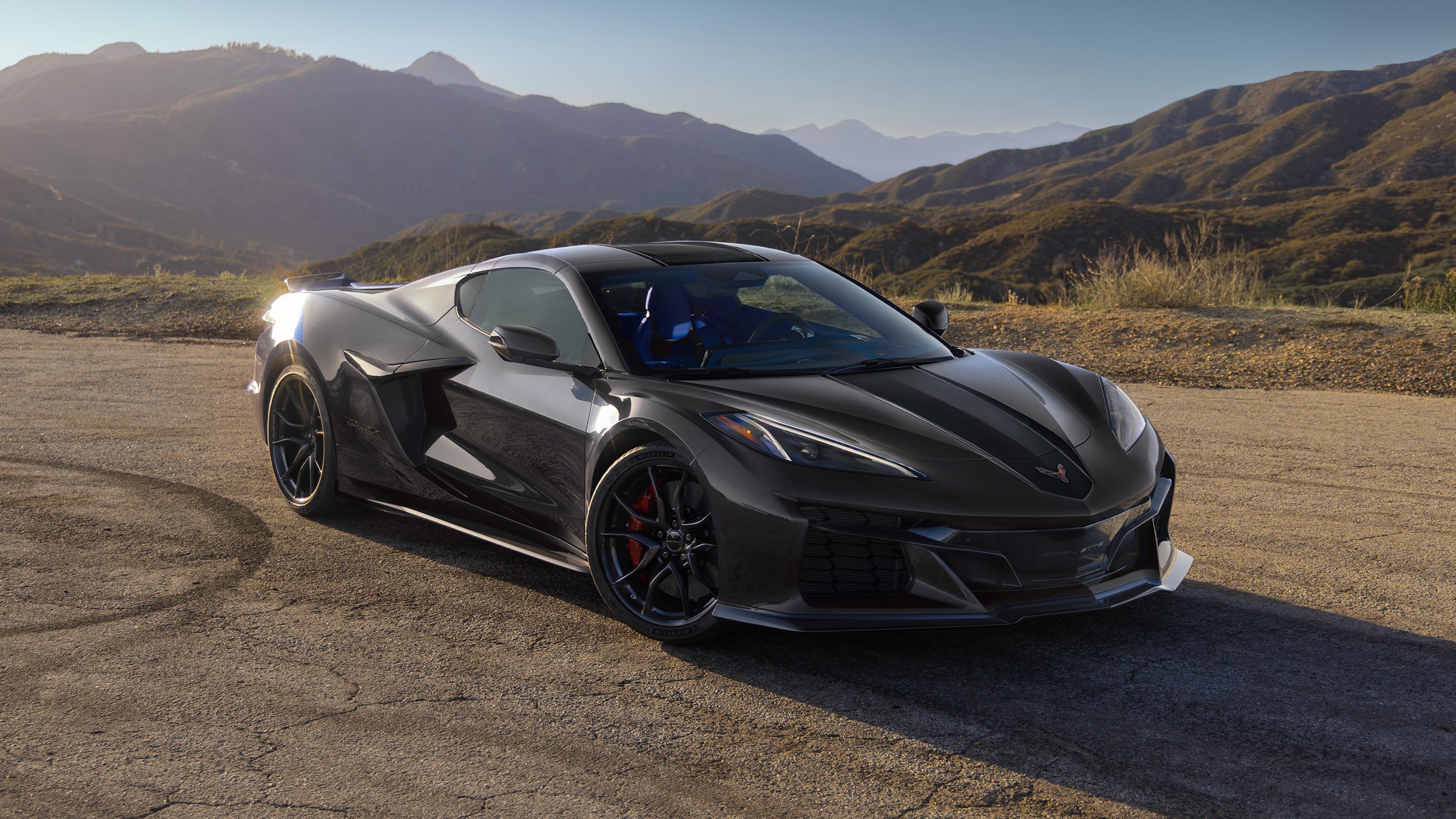
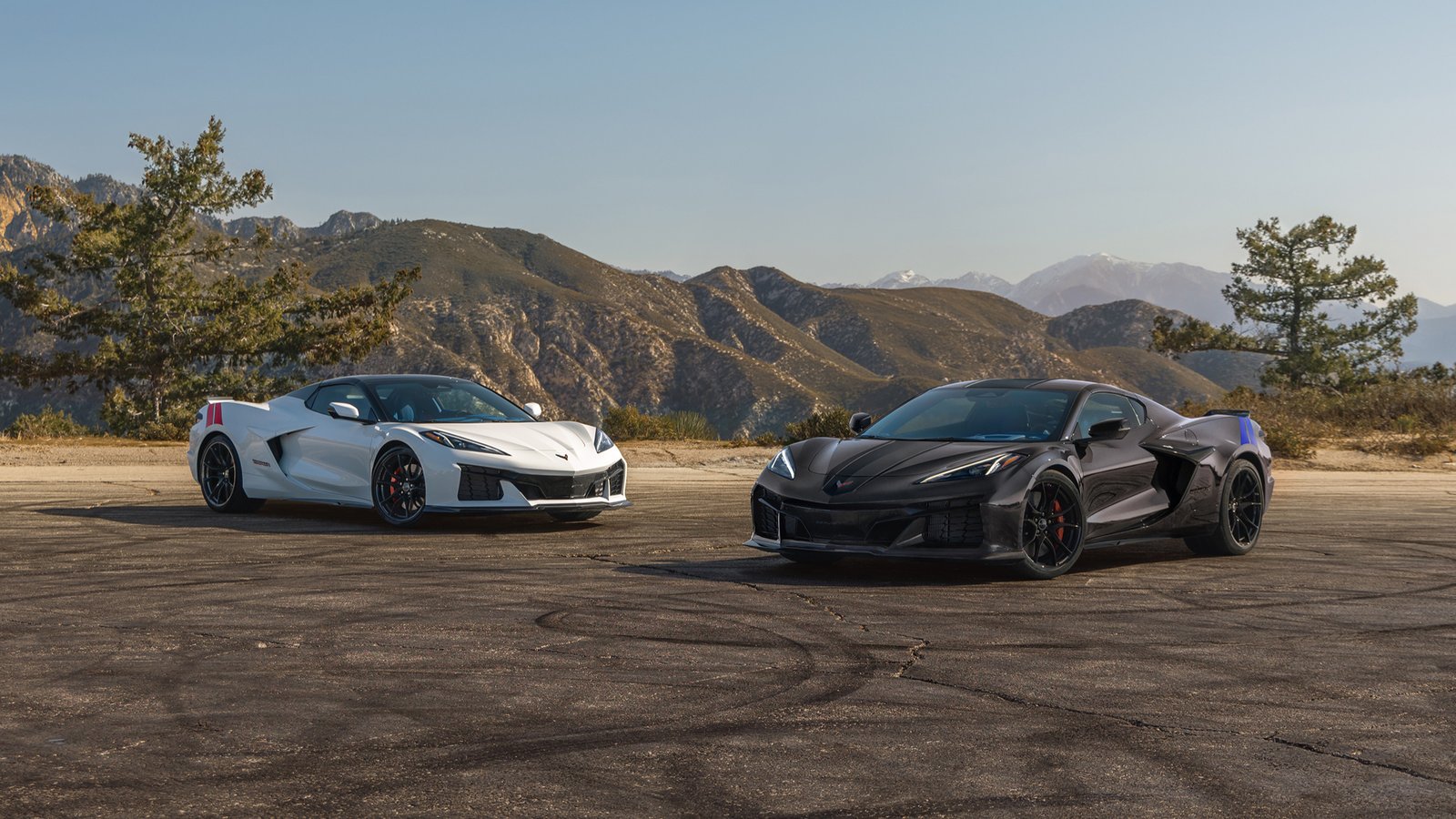
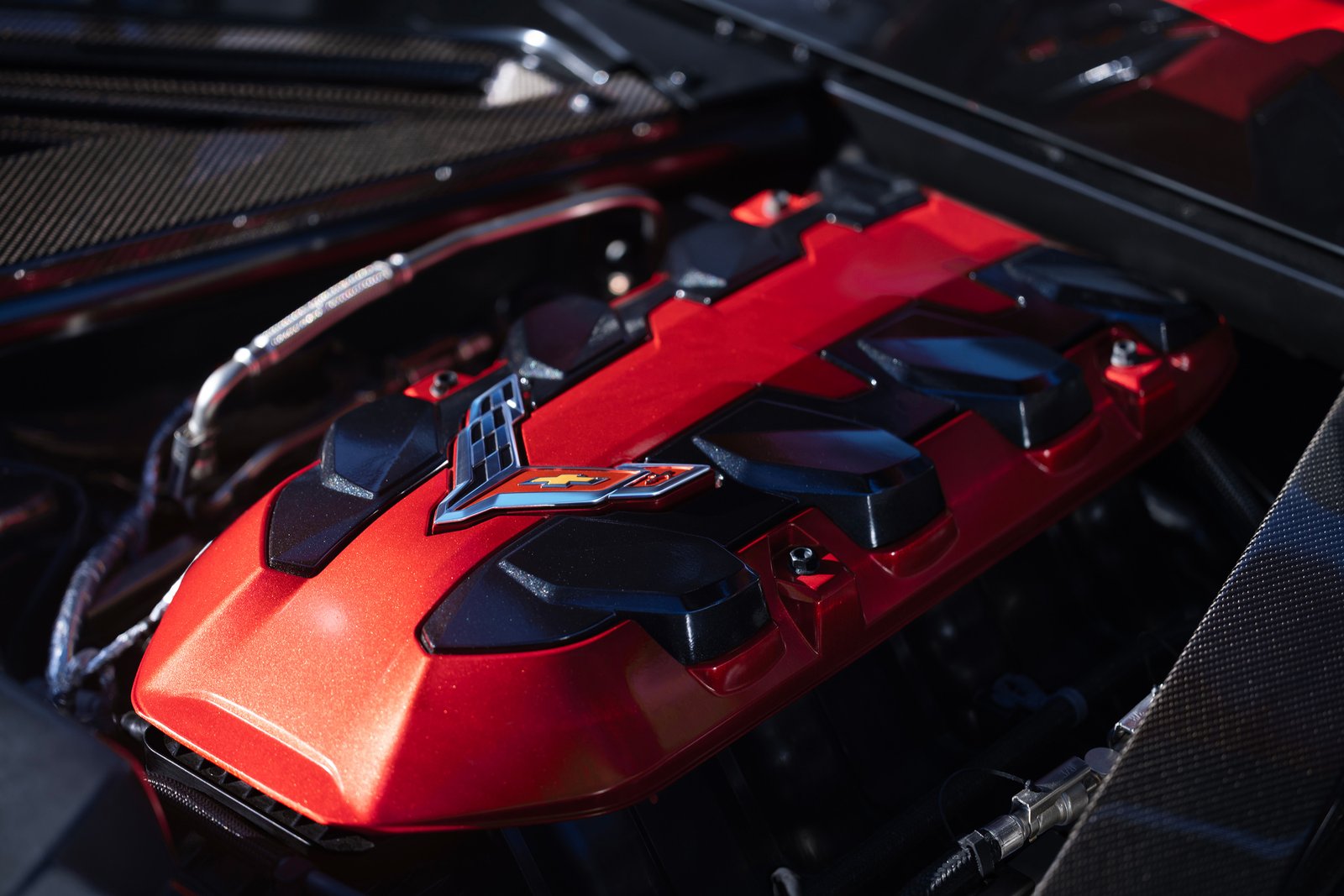
To be fair, GM delivered the first stage. The E-Ray arrived, and for 2027 it has become the Grand Sport X, while the ZR1X adds another hybrid with an electric motor driving the front axle. What GM never delivered is a date for stage two. In 2022, it was "coming." In 2026, it's "someday." That is movement in the wrong direction.
Corvette buyers are paying for gasoline, and GM's EV buyers are leaving
The numbers that matter here are not about batteries. They are about who is buying what.
GM's own third-quarter delivery tables show U.S. Corvette deliveries up 29% year over year. In the same quarter, GM's mainstream EVs fell off a cliff: the Equinox EV dropped 92% and the Blazer EV 84%. Meanwhile, Kelley Blue Book data shows the sports-car segment's average transaction price falling sharply while the overall market barely moved.
| 2025 | 2026 | Change | |
|---|---|---|---|
| Corvette U.S. deliveries, Q3 | 5,123 | 6,585 | +29% |
| Chevrolet Equinox EV sales, Q3 | 25,085 | 1,905 | −92% |
| Sports car average transaction price, Sept. | $51,026 | $43,785 | −14.2% |
| Industry average transaction price, Sept. | $50,221 | $50,562 | +0.7% |
Read those rows together. The gas-and-hybrid Corvette is growing in a segment where buyers are spending less, not more. GM's electric lineup is shrinking even in its cheapest, highest-volume models. The KBB September tables don't explain why sports-car prices fell, and I won't pretend they do. But a segment where average prices drop 14% in a year is not one that's hungry for a heavier, pricier halo car.
If you're a product planner, the incentive is obvious. Every Corvette GM sells today is a V8 or a V8 hybrid, and I'd assume a healthy-margin one. An electric Corvette would cannibalize those sales, cost a fortune to engineer, and land in a market where GM's own EV demand is sliding. My bet is that nobody inside GM is asking for that trade before the C8 runs its course.
Everyone else in the segment made the same quiet retreat
What strikes me is that GM isn't an outlier. It's following the pattern.
Dodge postponed the Charger Daytona R/T EV for the 2026 model year, leaving the Scat Pack as its only electric Charger for now; CEO Matt McAlear told Motor1 the company was still weighing tariff effects. In Europe, Autocar reported in late 2025, citing people inside Porsche, that the electric Boxster and Cayman would gain combustion versions after all.
Three companies, two continents, one direction: the electric performance car is being moved from "next" to "eventually." In my view, GM is simply the most honest about it, because Roma said the quiet part on a podcast instead of in a footnote.
For a buyer, this matters more than any spec sheet. If you were holding off on a Corvette because you feared the last pure V8 was about to disappear, the evidence says you have more time than the 2022 headlines implied. The American gas sports car isn't on its deathbed. It's selling better.
The case against my view
The strongest argument against me goes like this: GM isn't retreating, it's waiting on purpose. There is no proven market for a six-figure electric sports car in America. Battery packs are still heavy, and a heavy Corvette is a worse Corvette. Launching late, on a next-generation battery with better energy density, could produce a far better car than rushing one out in 2027. Meanwhile, the hybrid ladder from E-Ray to Grand Sport X to ZR1X is real electrification that customers are actually buying.
I accept most of that. The hybrid path is smart, and waiting for better cells is good engineering. But notice what that argument concedes. If GM is waiting for the market to form and for batteries to mature, it is waiting on two things nobody can date. A wait with no end point, four years after the electric Corvette became part of GM's public plan, is how a plan turns into an aspiration. That's not a criticism of the engineers. It's a description of the business case.
And to be clear about what we don't know: GM has not said which generation an electric Corvette would belong to, whether it would sell alongside a gas car, or when it would arrive. Anything beyond Roma's words is not confirmed.
What would change my mind
If GM uses the reveal of the next-generation Corvette to confirm a fully electric version for that generation, with a target year, I'm wrong, and I'll say so.
I would also reconsider if GM's EV sales recover to their 2025 levels for two straight quarters in the first half of 2027. That would rebuild the internal case quickly.
A third signal: an electric sports car from a rival, Porsche's electric 718 being the obvious candidate, selling in meaningful numbers in the U.S. through 2027. If someone proves the segment exists, GM will not want to arrive last.
My read
"Someday" is the most honest word GM has used about this car since 2022, and in my view it means the business case isn't there. Unless GM's EV demand recovers in 2027, I don't expect a fully electric Corvette before 2030. The Corvette's electric future is the hybrid one GM is already selling. Buyers who want a V8 aren't running out of time.