Ferrari's First EV Isn't $80,000 Cheaper. It's a Test of What the Badge Is Worth
The $80,000 "discount" is Italian VAT, and the US premium is mostly tariffs. The real story is an electric Ferrari priced $122,190 above the V12 Purosangue.
Contents · 7 parts
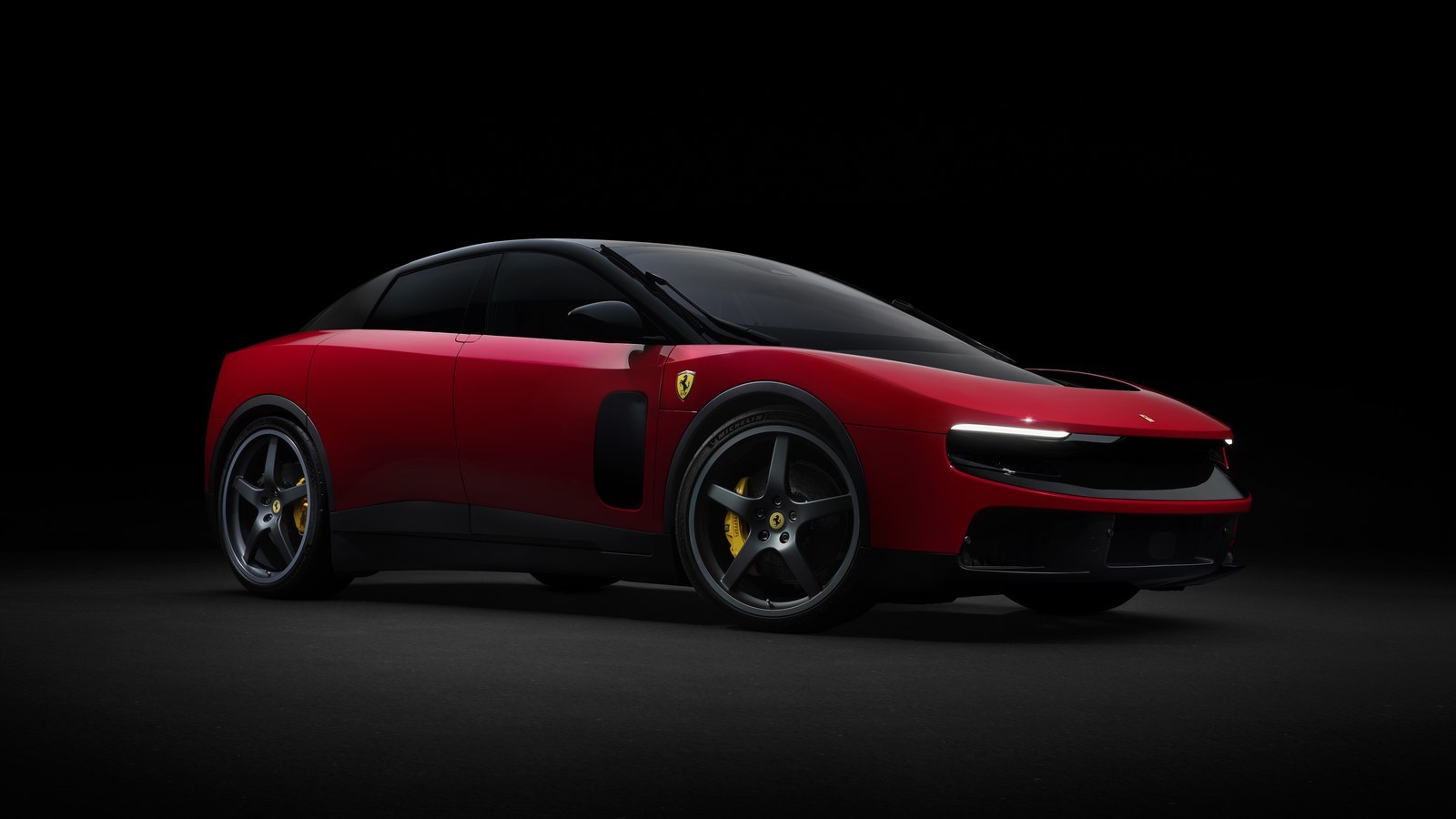
Ferrari's first electric car, the Luce, will start at $560,800 in the US, with deliveries due in the second quarter of 2027. The headline everyone ran with on Thursday is that it came in roughly $80,000 under expectations.
I don't buy the discount. The $640,000 figure was never a US price; it was a European sticker with Italian sales tax baked in. Strip the tax out and the Luce isn't cheaper for Americans at all. What is genuinely new is something the "bargain" framing buries: Ferrari has priced an electric car well above its own V12 SUV, and so far its buyers haven't blinked. I think this is a live test of how much the prancing horse is worth once you take the engine away.
A price Ferrari confirmed but never announced
There is no press release. Car and Driver reported the $560,800 figure first, and Ferrari confirmed it to the magazine, as Electrek reports, citing Car and Driver. The base price excludes options, and Ferrari hasn't said what those cost or how many cars America will get in 2027.
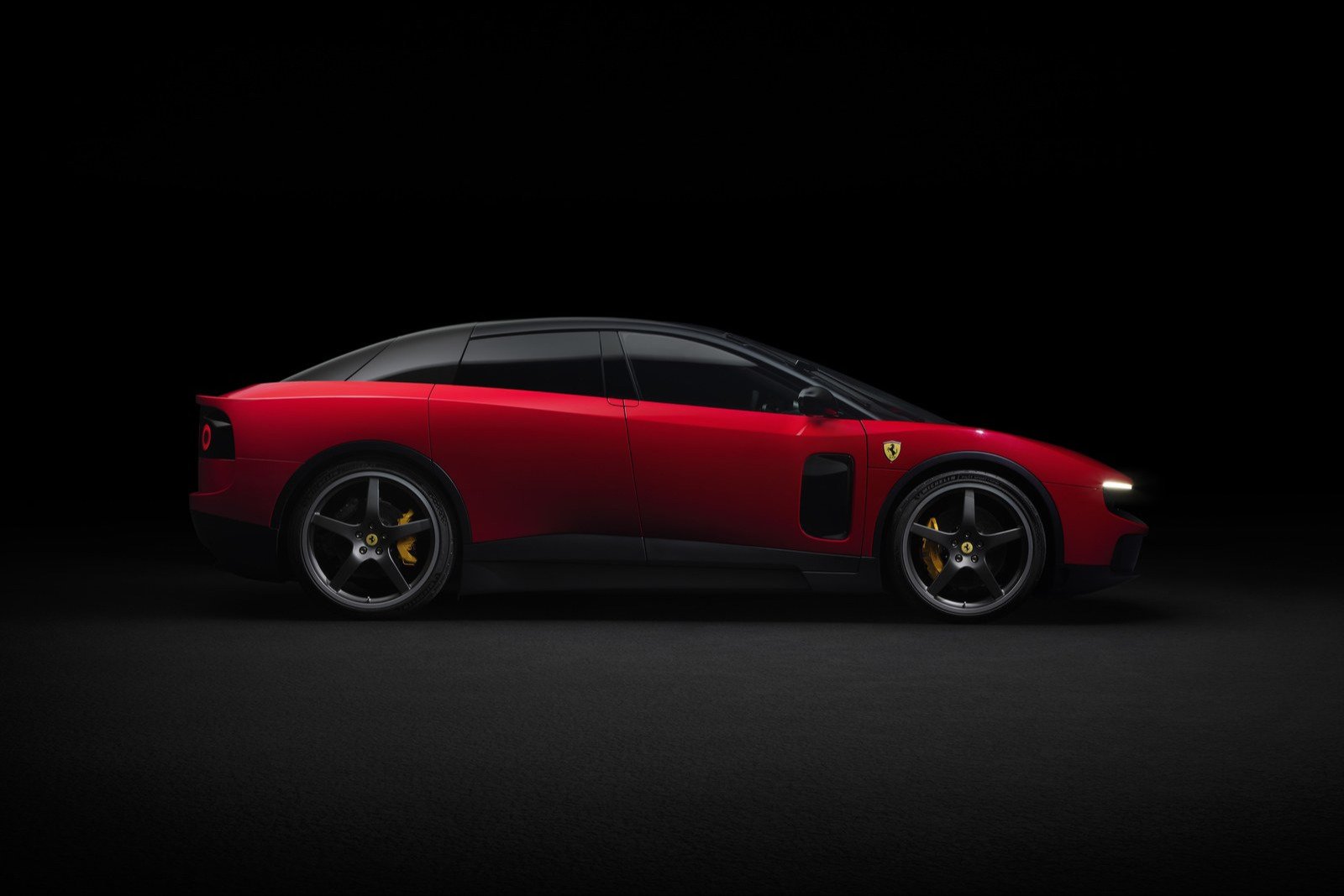
When the Luce debuted in Rome on May 25, Ferrari quoted only a European price of €550,000. The car itself is not in question. In Ferrari's launch materials, it has four motors, one per wheel, for 1,035 hp (1,050 cv), a 122-kWh battery that charges at up to 350 kW, a curb weight of 4,982 lb (2,260 kg), and 0–62 mph (0–100 km/h) in 2.5 seconds. Ferrari quotes more than 329 miles (530 km) of range on the WLTP cycle; there is no EPA figure yet. It is also the first Ferrari with four doors and five seats.
Where the $80,000 actually went
Most outlets converted €550,000 at the exchange rate of the day. The European Central Bank's reference rate on May 25 was $1.1643, which gives about $640,000. That is where the expectation came from.
But European car prices include VAT, and Italy's rate is 22%. Take it out and the Luce costs about €450,800 before tax. At the ECB rate of $1.1205 on October 22, that is roughly $505,100. Electrek ran the same exercise and landed in the same place. I checked the rates myself, and the math holds.
So an American pays about $55,700 more than an Italian before tax, and then pays state sales tax on top. The "discount" is a currency conversion that compared a taxed number with an untaxed one.
| Ferrari Luce base price | |
|---|---|
| Italy, with 22% VAT | €550,000 |
| Same, at May 25 rate ($1.1643) | ~$640,400 |
| Italy, without VAT | ~€450,800 |
| Same, at Oct. 22 rate ($1.1205) | ~$505,100 |
| US MSRP, before sales tax | $560,800 |
| US premium over Italy, pre-tax | ~$55,700 (+11%) |
Americans aren't being gouged, either
Here is where I part ways with the obvious follow-up headline. An 11% premium sounds like Ferrari squeezing the US market. It isn't. Cars built in the EU have faced a 15% US import tariff since the framework deal was made retroactive to August 1, 2025, as Bloomberg reported at the time. Add 15% to the untaxed Italian price and you get about $580,900, which is more than the actual US sticker.
That is a rough upper bound, since the duty is levied on import value rather than retail price, and shipping and US certification aren't free. But the direction is clear. The US price sits close to where tariffs and logistics alone would put it. Ferrari did raise prices on part of its US lineup by up to 10% in 2025 to cover tariffs, CNBC reported. With the Luce, the way I see it, Ferrari simply carried its European price across the Atlantic, intact.
In other words, the real number to argue about isn't $80,000. It's $122,190.
The electric Ferrari costs more than the V12 one
That is the gap between the Luce and the Purosangue, Ferrari's four-seat SUV with a naturally aspirated 6.5-liter V12, which starts at $438,610 in the US, according to Motor1. Roughly 28% more for the car without the engine Ferrari has spent nearly eight decades selling.
For years, the luxury industry told itself that wealthy buyers would not pay supercar money for an electric car. Electrek points to Maserati shelving the electric MC20 Folgore over exactly that fear. Mercedes-AMG is hedging with a synthesized V8 soundtrack on its electric GT SUV, and Porsche has been building a gas-engine price ladder above the 911. Ferrari went the other way. It put the EV near the top of its series lineup, priced close to the 849 Testarossa, as Motor1 notes.
What strikes me is that the market has so far accepted it. Ferrari sold out its 2026 allocation of just under 500 cars in under two months, with China doing much of the buying, and the first production chassis went for $40 million at a charity auction in August, per Electrek. That happened despite a design by Jony Ive and Marc Newson's LoveFrom that drew heavy criticism at launch.
The case against my view
The strongest objection is that none of this tells us anything about electric cars. Ferrari has always priced at the top of what its customers will pay, and it controls supply ruthlessly. A sold-out first year of fewer than 500 cars, plus a $40 million auction for charity, measures loyalty to Ferrari, not appetite for a battery. Electrek suggests some buyers may be taking a Luce simply to stay in line for the next limited V12. If that's true, the price is a membership fee, and the powertrain is beside the point.
I think that objection is right about the mechanism and wrong about the conclusion. If Ferrari can make customers pay $122,190 more for an EV because they want the next V12, that is precisely the badge doing the work. The question was never whether a Ferrari EV is worth $560,800 as an electric car. A Lucid Air Sapphire with more power costs less than half as much, Electrek notes. The question is whether the name holds the price once the engine is gone. For the first year, it clearly does.
What would change my mind
American buyers take delivery from the second quarter of 2027. If early cars start trading below MSRP on the secondary market by the end of 2027, while Purosangues still command premiums, the badge did not carry the EV. That would be the clearest signal.
I would also reconsider if Ferrari trims its 2028 Luce allocation, starts bundling options at no charge, or signals softer EV orders in its capital markets updates over the next year. And if the next electric cars from Porsche, Lamborghini, or Bentley launch priced below their combustion siblings, the industry will have decided that Ferrari is the exception rather than the template.
My read
The $80,000 "discount" is a tax artifact, and the US premium over Italy is mostly tariffs. The real news is that Ferrari charged $122,190 more for an electric car than for its V12 SUV, and customers lined up anyway. Until resale values say otherwise, the lesson for every luxury brand is uncomfortable: buyers at this level were paying for the badge all along, and the engine was the excuse.