AMG's 1,153-HP Electric SUV Plays a Fake V8. Its Bosses Want the Real One Back
AMG's first in-house SUV is a serious EV. The recorded V8 inside it, and the real V8s its bosses promise, show AMG doesn't trust horsepower alone to sell it.
Contents · 6 parts
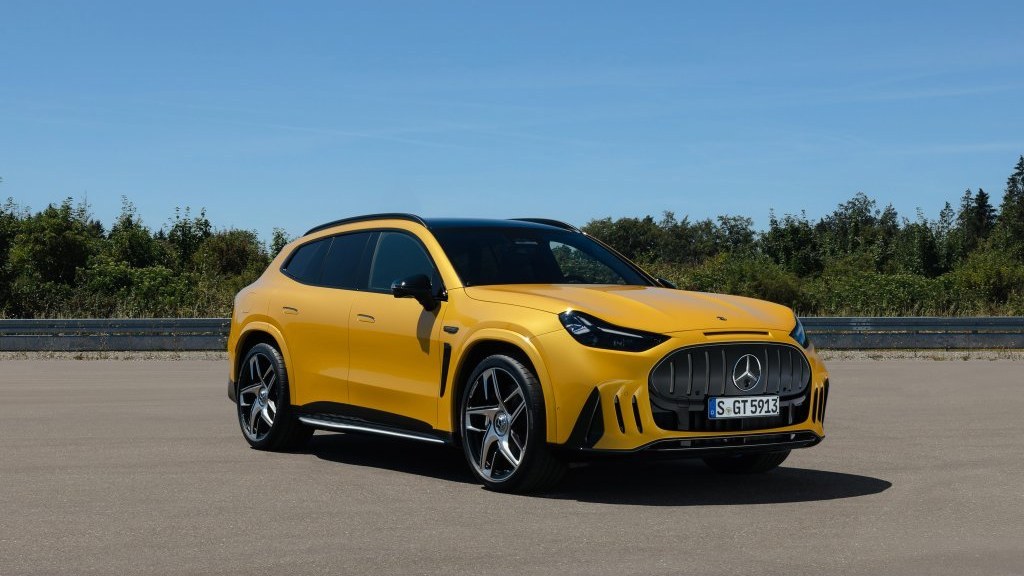
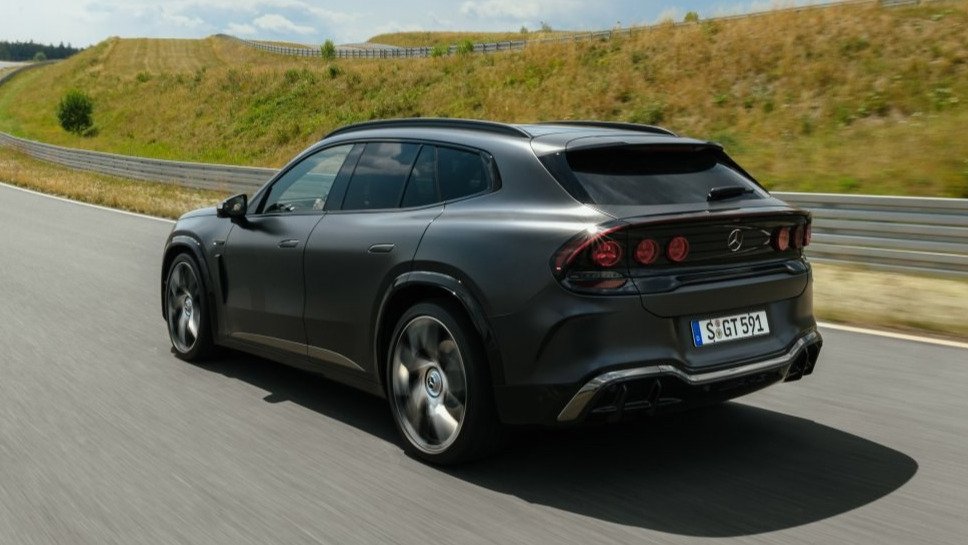
Mercedes-AMG's new GT SUV makes up to 1,153 hp, and in its loudest drive mode it plays a recording of a V8. That second fact tells you more about where AMG is going than the first.
Here's what the headlines miss: the same weekend AMG revealed its first fully in-house SUV, its bosses told reporters they were going back to V8s. I don't read that as a contradiction. I read it as a hedge. AMG is selling the electric future and insuring itself against it at the same time, and the fake engine note is the clearest admission that big electric numbers no longer sell a flagship on their own.
A clean-sheet electric AMG with a borrowed soundtrack
Mercedes-Benz USA presented the GT SUV on October 17. It is the second vehicle on AMG's dedicated AMG.EA electric architecture, after the GT 4-Door Coupé, and the first full-size SUV the division says it developed entirely on its own. It reaches US dealers in summer 2027 as a 2028 model, in GT 53, GT 55, and GT 63 form.
The GT 63 uses three axial-flux motors and quotes 1,153 hp and 1,475 lb-ft at peak. Mercedes estimates 0–60 mph in 2.6 seconds, or 2.4 seconds with the one-foot rollout American magazines use, according to Electrek. The 800-volt pack holds 128 kWh usable in the GT 55 and GT 63 and accepts up to 710 kW DC; the GT 53 gets 106 kWh and 600 kW. Mercedes quotes 385 to 435 miles for the big-battery cars, but that is the European WLTP cycle. EPA figures are not out, and they will be lower.
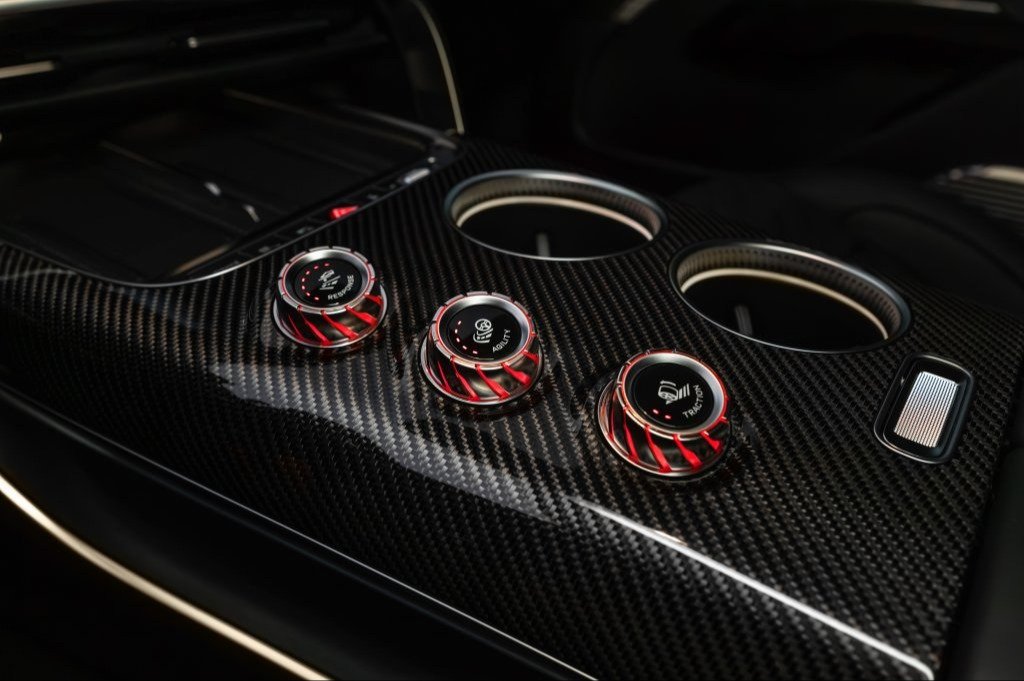
Then there is the sound. In the AMGFORCE Sport+ setting, the GT 63 and GT 55 play recorded V8 audio, with simulated gearshifts on the paddles; the GT 53 plays a six-cylinder. A Silent setting switches it off.
The number that matters is 711, not 1,153
Peak output is the headline. Continuous output is the engineering. Mercedes rates the GT 63 and the GT 55 at the same 711 hp of continuous power, and the GT 53 at 362 hp.
| GT 53 | GT 55 | GT 63 | |
|---|---|---|---|
| Motors | 2 radial-flux | 3 axial-flux | 3 axial-flux |
| Peak power | 536 hp | 805 hp | 1,153 hp |
| Continuous power | 362 hp | 711 hp | 711 hp |
| 0–60 mph (1-ft rollout, est.) | 3.7 sec | 2.7 sec | 2.4 sec |
| Usable battery | 106 kWh | 128 kWh | 128 kWh |
| Max DC charging | 600 kW | 710 kW | 710 kW |
Look at the last two columns. The GT 55 and GT 63 share the same three motors and the same battery, and they sustain exactly the same power. What the GT 63 adds is 348 hp of peak output, available in bursts, plus three tenths to 60 mph. In my view, that gap is a pricing ladder more than an engineering one. The GT 63 sells a bigger number; the GT 55 is the same car once the burst is over.
That is not a scandal. Every high-performance EV advertises peak figures, and peak power is real power. But it changes what 1,153 hp means. It describes a few seconds of launch, not how the car behaves on a third hot lap or a long mountain grade.
Why a 1,153-hp EV needs a V8 recording
If horsepower still sold electric cars by itself, AMG would not need a soundtrack. The obvious rival already matches the headline. Porsche's Cayenne Turbo Electric quotes 1,139 hp and the same 2.4-second rollout time, by each maker's own figures, and it already has a price: $163,000 before destination. Once two SUVs both crack four digits, the tie-breaker becomes everything else: charging, brand, and, apparently, noise.
Mercedes leadership has been unusually open about which noise its customers want. At a media roundtable reported by Road & Track on October 17, CEO Ola Källenius conceded that the four-cylinder hybrid C63 had misjudged part of AMG's audience, because "the good old V-8 crowd is a pretty good crowd." AMG chief Stefan Weckbach confirmed a V8 CLE63 for next year and described the plan as a return to V8 AMGs. In the same conversation he called axial-flux motors AMG's V8 equivalent for the electric side.
That last comparison is the tell. AMG explains its new technology by measuring it against the old one. The synthetic V8 is the same move, made audible.
The rest of Mercedes points the same way. The company dropped the EQE sedan, in Mercedes and AMG form, and the Maybach EQS SUV from its 2027 lineup, a spokesperson confirmed to Car and Driver. In the US, the regulatory push has faded as well: as I argued this week, the new fuel-economy rule effectively locks V8s in through 2031. Porsche reached a similar conclusion with the Mission S, keeping combustion in its future flagship.
The case against my view
The strongest objection is that this is not a hedge at all. It is a normal product line. AMG sells electric performance to buyers who want it and V8s to buyers who want those, the way it has always sold several engines in the same showroom. Synthetic sound is not a confession, either. Hyundai built much of the Ioniq 5 N's reputation on simulated engine and shift effects, and Dodge gave the electric Charger an artificial exhaust note. Enthusiasts pay for it, and AMG offers a Silent mode to everyone who doesn't.
I accept most of that. My disagreement is about timing and money. Running two powertrains is cheap when one of them is old and paid for. AMG is not simply keeping V8s alive; it is announcing new ones while funding a dedicated electric platform with its own motors and cell chemistry. Paying for two futures at once is what a company does when it can't tell which one will show up first. And a fake engine in a Hyundai is a playful extra. In an AMG, a brand built on the V8, it is a bridge for customers Mercedes has already admitted it lost once.
What would change my mind
If Mercedes announces US pricing next year that puts the GT 55 and GT 63 close together, I will read the identical continuous output as an engineering choice rather than a ladder. If AMG keeps the synthetic V8 standard through the first two model years and buyers actually use it, the sound is a feature in its own right, not a bridge.
The bigger test is the V8 itself. If the talk of more V8 AMGs never goes beyond the CLE63 by the end of 2027, the roundtable was diplomacy, and the electric bet is the only one Mercedes is really making.
My read
The GT SUV is a serious electric car, and its 710 kW charging is well ahead of the 400 kW most of the fastest US public chargers offer today. But AMG is selling it against a V8 benchmark, in sound and in vocabulary, while promising loyal buyers the real thing. My bet is that through 2028, AMG's V8 cars, not its 1,153-hp EV, will do the heavy lifting on profit in America.