Toyota Just Became Waymo's Factory — and America Isn't First in Line
Toyota isn't racing Tesla on self-driving. It's becoming the body shop for whoever owns the driver, and America waits only until Waymo's Chinese van runs into Washington's rules.
Contents · 7 parts
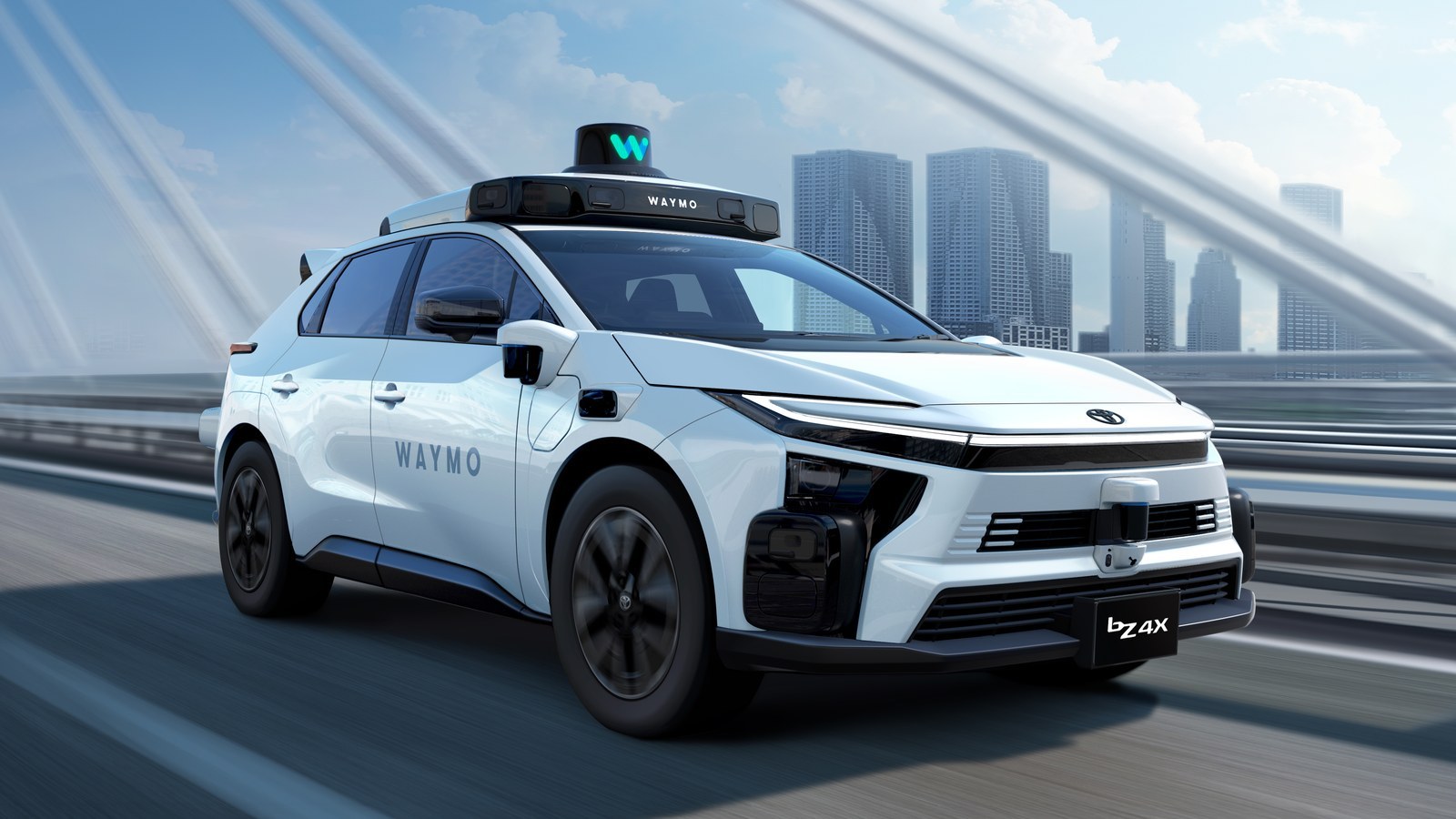
Toyota will build Waymo's next robotaxi: a bZ4X that leaves the Takaoka plant in Toyota City with Waymo's sensors and computer already installed. The first fleet goes to work in Japan in 2027, then Britain. The United States, Waymo's home market, is not named in the announcement at all.
Most headlines read this as Toyota finally entering the self-driving race. I read it the other way. Toyota isn't racing Tesla or anyone else on software. It is turning itself into the neutral body shop for whoever owns the driver, and America sits last on Waymo's list for now because Waymo doesn't need Toyota there yet. My bet is that it will, and sooner than this press release suggests.
What Toyota and Waymo actually signed
The joint announcement on October 30 moves the companies past the preliminary agreement they reached in April 2025. Toyota will assemble the base vehicle and integrate Waymo's autonomous hardware under one roof at Takaoka. The two will begin initial operations to test and validate an autonomous bZ4X fleet in Japan in 2027, with the U.K. and "other Waymo-serviced markets" planned for the following years. The target is SAE Level 4, meaning no driver behind the wheel within a defined area.
The release also says Toyota and Waymo will keep exploring autonomy for personally owned Toyota vehicles, together with Woven by Toyota. There are no fleet volumes, no vehicle price and no U.S. date. Waymo co-CEO Dmitri Dolgov repeats the company's claim that it is up to 20 times safer than human drivers on serious-injury crashes. That is Waymo's own figure, not an independent finding.
The same bZ4X already drives itself in China, for someone else
Here is the part that undercuts the "Toyota enters the robotaxi race" framing. In February, GAC Toyota in Guangzhou began series production of a bZ4X robotaxi fitted with Pony.ai's seventh-generation system. According to Electrive's report on the launch, Pony.ai planned to add more than 1,000 of them this year and grow its fleet past 3,000 vehicles.
So the same Toyota crossover now carries two competing autonomous drivers: Pony.ai's in China and Waymo's in Japan and, later, Britain. That is not a company choosing a horse. That is a company selling the saddle to every rider who can pay.
There is a second tell. When the partnership was first outlined, Waymo's April 2025 post spoke of developing "a new autonomous vehicle platform." Eighteen months later, what arrives is an adapted production bZ4X. In my view, Toyota chose speed and factory volume over a bespoke robot, which is exactly what a contract manufacturer does. What Toyota buys with this deal is a fuller EV line, access to Waymo's real-world data for its safety work, and an option on Waymo technology for its own cars. That last part stays at "explore." Anything for a future RAV4 or Camry is, for now, a promise to keep talking.
Why Japan goes first and America can wait
Look at what Waymo drives today and the order makes sense. Its U.S. fleet is built around the Zeekr-made Ojai van, assembled in Ningbo, China, and fitted with Waymo hardware in Mesa, Arizona. According to CarNewsChina, Waymo's U.S. fleet has passed 4,000 vehicles across 14 cities, and Denver and San Diego launched on September 1 with the Ojai only. The Hyundai Ioniq 5, built in Georgia, is still in road validation.
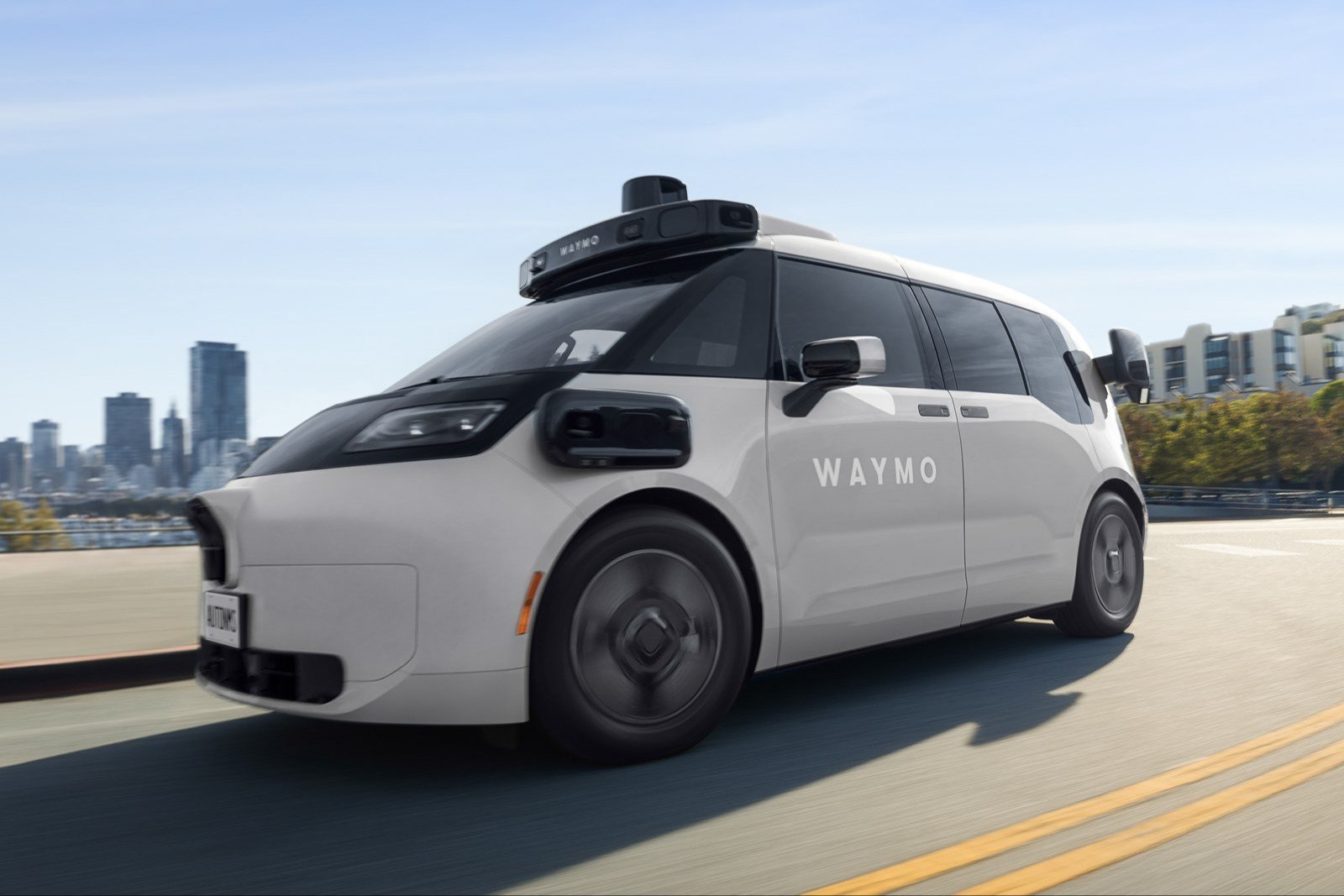
Japan is the opposite case. When Waymo, the taxi operator Nihon Kotsu and the GO app announced a Tokyo service for 2027 in September, the plan, as Automotive World reported, rested on about 100 Jaguar I-Pace crossovers, a model whose production ended in late 2024. Japan needs a new car before it can scale. America already has one.
| Jaguar I-Pace | Zeekr Ojai | Hyundai Ioniq 5 | Toyota bZ4X | |
|---|---|---|---|---|
| Base vehicle built in | Austria | Ningbo, China | Georgia, USA | Takaoka, Japan |
| Status | Out of production since late 2024 | In U.S. driverless service | Road validation | Japan testing from 2027 |
| First market | U.S.; Tokyo plan (~100 cars) | U.S. | U.S. | Japan, then U.K. |
Japan's law has allowed Level 4 operation under a permit system since April 2023, so the legal door is open. In the U.S., by contrast, NHTSA is still rewriting basic equipment rules for cars without steering wheels. The politics matter too. The release calls this Japan's first fully autonomous ride-hailing service on high-volume, domestically manufactured vehicles. That line is written for Japanese regulators, and it lands while Nissan is targeting fiscal 2027 for its own driverless service starting in Yokohama. Toyota isn't entering an empty field at home. It is making sure the first robotaxi Tokyo gets used to has a Toyota badge on the nose.
The clock on Waymo's Chinese van
This is where I think America comes back into the plan. The Commerce Department's final connected-vehicle rule bars manufacturers with a China nexus from selling new connected vehicles in the U.S. starting with model year 2027, even if the vehicle is built here, and bans covered Chinese hardware from model year 2030. How that rule treats a Chinese-built glider running Waymo's own software is something Waymo has not spelled out publicly. Add the import bill: CarNewsChina cites a customs analysis putting duties and charges on each Ojai chassis at roughly double its declared value. Japanese-built cars have paid a 15% U.S. tariff since September 16, 2025.
The bZ4X is also not a stranger to American dealers. It sells here as the Toyota bZ from $35,000, and Electrek counted 17,553 U.S. sales in the first half of 2026. Parts, crash certification and service networks already exist. If I were running Waymo's U.S. fleet, I would want that second non-Chinese option on the shelf well before 2030.
The case against my view
The strongest objection is that "America later" is simple sequencing, not strategy. Waymo has already paid to set up the Ojai pipeline, and the Ioniq 5 is built in the U.S., so it dodges both the tariff and the China rule. On that reading, Hyundai is Waymo's American hedge and the bZ4X never needs to cross the Pacific. Japan goes first only because the I-Pace is dying there and Toyota is the obvious local partner.
That is a fair point, and it may turn out right. My answer is scale. CarNewsChina reports Waymo is chasing 1 million weekly trips by the end of 2026, and the Ioniq 5 has not entered driverless service at anything like the Ojai's volume. A company growing that fast with one regulatory question mark over its main vehicle will want more than one backup. Even if the U.S. never sees a Waymo bZ4X, my central claim holds: Toyota has decided to supply autonomous companies rather than beat them.
What would change my mind
If Toyota announces its own Level 4 driver for ride-hailing by the end of 2027, rather than a partner's, the body-shop reading is wrong, and Toyota is still in the software race after all.
If Waymo confirms the Ojai is cleared under the Commerce rule for model year 2027 and keeps adding it in new U.S. cities through 2027, the American case for the bZ4X fades, and "America later" really does mean "America never."
If Toyota names a U.S. plant for Waymo vehicles before the Japanese fleet starts operating, then America was never second, only unannounced.
My read
Toyota has stopped pretending it must win autonomy to stay relevant. It builds the same bZ4X for Pony.ai in China and for Waymo in Japan and Britain, and it gets paid either way. Japan goes first because Waymo's Japanese plan is running on a discontinued Jaguar. I expect the U.S. to follow once the model-year 2027 rules start to bite on Waymo's Chinese van.