America's New-Car Market Now Runs on Stock Portfolios, Not Paychecks
A Fed hike barely moves a car payment. The buyers holding new-car prices near a record pay from portfolios, which makes Wall Street, not interest rates, the market's real risk.
Contents · 6 parts
The average new vehicle sold in America in September went for $50,562, according to Kelley Blue Book, just $52 shy of the all-time record. That number reads like strength. I think it measures something narrower: how well the stock portfolios of the top tenth of households did this year.
Here's what the headlines miss. Cox Automotive's own math now says a half-point rate hike barely touches a car payment, while the buyers keeping new-car prices near a record increasingly pay out of investment accounts. My bet is that the next real shock to new-car sales comes from Wall Street, not from the Fed.
Cox's chief economist is describing a two-speed market
In his Oct. 19 market summary, Cox Automotive chief economist Jeremy Robb put numbers on the cost of money. Over the life of a used-car loan in 2019, interest came to roughly $5,600, or 19% of everything the buyer paid. Today it is almost $11,000, or 26%. Used prime loan rates rose to 12.9% in October, up 37 basis points from September, with the 10-year Treasury near 5.10%. Markets put the odds of a quarter-point Fed hike in December at about 75%.
The same note contains the line that matters most. Another 50-basis-point increase, Robb wrote, would add only about $11 to a new-car monthly payment and $8 to a used one. Cox expects the effect of higher loan rates to be offset by a larger mix of cash purchases.
The buyer who sets the price doesn't need a loan
Robb has been building this case for weeks. In a Sept. 28 analysis of the Federal Reserve's Distributional Financial Accounts, he tracked liquid financial assets held outside retirement accounts: deposits, money market funds, bonds, stocks and mutual funds. That pool has compounded at 11.3% a year for seven years, against 3.9% for consumer prices. Over the same stretch, personal income grew 5.7% a year and expenses 6.3%. Something has to fill that gap, and Robb's answer is the assets themselves.
The ownership is lopsided. The top 10% of households now hold 82% of that pool, up from about 75% before the pandemic, and 72% of the pool sits in corporate equities and mutual funds. Robb wrote plainly that a stock-market correction would have a significant impact on consumer net worth and spending.
Now look at who buys new cars. At the Automotive News Congress, as Robb recounts in an Oct. 12 piece on affordability, a fellow panelist noted that households earning $250,000 or more remain strong buyers and have been moving from luxury brands into mainstream showrooms. Buyers 65 and older now account for about 27% of new-vehicle purchases, up roughly seven points, and older households are where wealth concentrates. Cox senior economist Charlie Chesbrough said it directly in the company's September sales forecast: today's new-vehicle buyers are more affluent, so inflation hits them less than other consumers.
Paychecks went to the used lot
The other half of the market shows up in used prices. The average used vehicle on a dealer lot is priced just above $27,000, up 7% year over year, about twice the normal pace, according to vAuto data Robb cited. Prices for 8- to 10-year-old cars rose just under 10%. A 10-year-old car today is a 2016 model. That is where buyers who finance out of a paycheck have gone, and they are the ones sending 26 cents of every dollar to interest. Add maintenance and repair costs up 5.8% year over year, a squeeze I covered in my column on repair bills, and the mass-market buyer is pressed from both ends.
| Before the pandemic | Now | |
|---|---|---|
| Interest over the life of a used-car loan | ~$5,600 (2019) | ~$11,000 |
| Share of used-car payments going to interest | 19% | 26% |
| Top 10% share of liquid assets outside retirement accounts | ~75% | 82% |
| Buyers 65+ share of new-vehicle purchases | ~20% | ~27% |
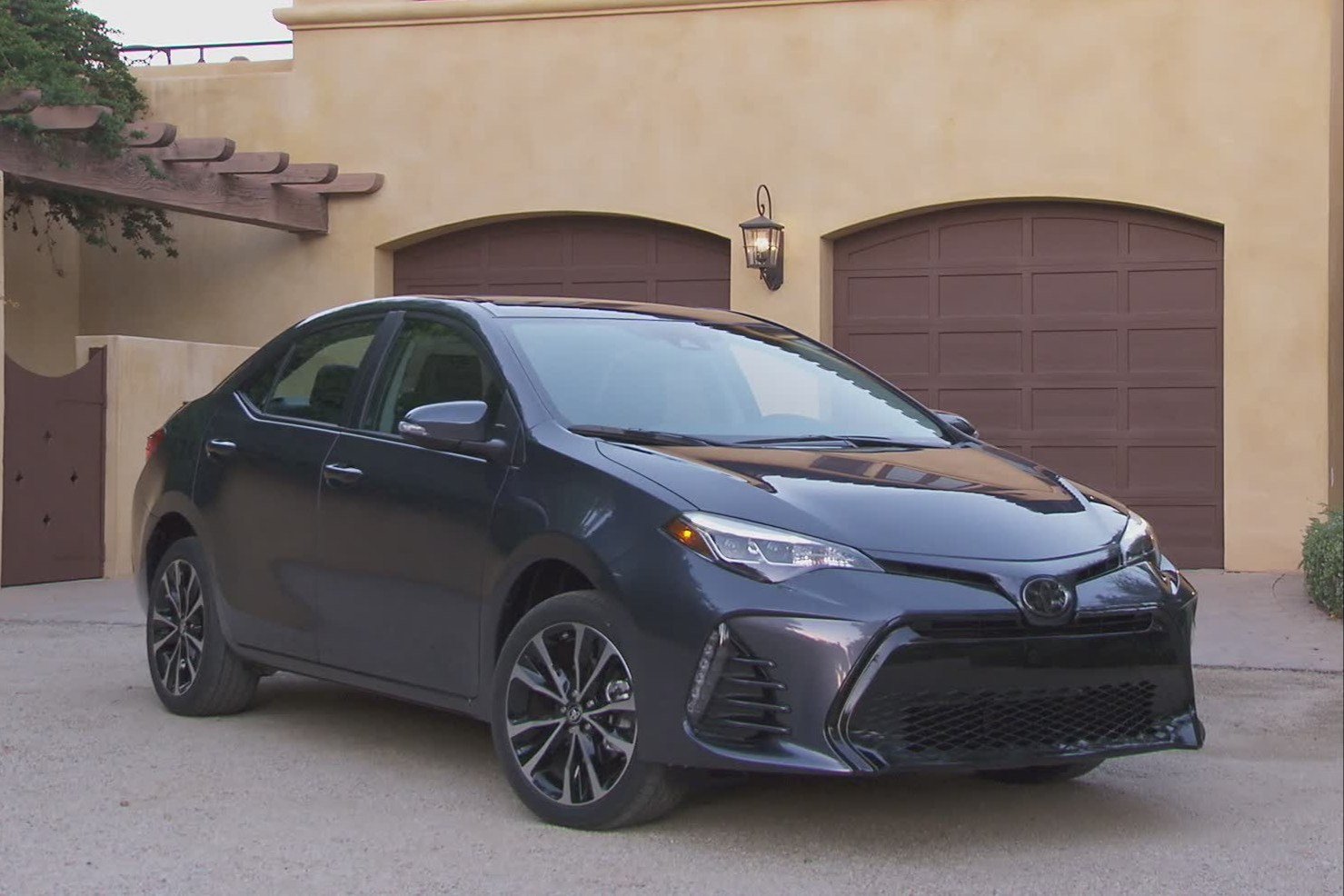
The new-car average looks calm because of mix. KBB's September price report shows the ATP up only 0.7% from a year earlier, well below the typical 2% to 4% September gain, because subcompact SUVs, compact cars and small pickups sold well. Full-size pickups still averaged $67,573, up 1.5%, and incentives fell to 6.6% of ATP from 7.3% a year ago. Robb himself warns that the average describes the buyers who remain, not the ones who moved to older used cars or walked away. In my view, a near-record ATP with thinner incentives, in an economy where income trails expenses, is not a sign of broad health. It is the price of a product that has been quietly repriced for people with brokerage accounts. GM's quarter, which I read as truck buyers paying for the profit, fits the same pattern.
The case against my view
The strongest objection is that none of this is new. Cox has flagged the wealth effect for most of the year, and the market has lived with it. In September Cox raised its full-year forecast to 16.1 million units from 15.8 million, with the selling rate holding in the low-to-mid 16 millions since March. If portfolio dependence were a fragile foundation, it would have cracked in a year of 5% Treasuries and gasoline up 34%.
There's more. Cox expects fleet sales of about 3 million units this year, demand that has nothing to do with anyone's brokerage account. Robb also points out that the bottom half of households has a cushion of its own: their money market holdings have compounded at 24.9% a year since the pandemic, thanks to the same high rates that make loans expensive. And strong sales of compact cars and small SUVs show mainstream buyers haven't left the new-car market at all.
My answer is that stability under rising rates is exactly what you'd expect from a market whose price-setting buyer doesn't need a loan. It confirms the dependence; it doesn't refute it. The test was never a rate hike. It is a drawdown, and this market hasn't faced one large enough to show how it behaves. I'll be honest about the gap: Cox doesn't publish the cash share of purchases, only a forecast that it will rise, and its notes offer no historical estimate of how sharply sales respond to a stock decline. I don't have one either.
What would change my mind
If the S&P 500 falls 15% or more from its peak this winter and Cox still reports a selling rate of 16 million or better through the first quarter of 2027, I'm wrong, and the market is broader than I think.
If the Fed hikes in December and new retail sales drop more than the $11-a-month math implies, then rates matter more than Cox's own calculation suggests, and the portfolio story is secondary.
If the next quarterly Distributional Financial Accounts data show the top 10% share of liquid assets falling while new-vehicle demand holds, or if Cox publishes cash-purchase figures showing that share flat as rates climb, the link I'm drawing is weaker than it looks.
My read
The new-car market isn't sick; it's concentrated. Its price level now tracks the portfolios of the top tenth of households more closely than the paychecks of everyone else, which is why a rate hike barely registers. That puts its real risk on a trading screen, not in a Fed statement. If equities hold into 2027, I expect ATP to set new records; if they break, I expect sales to fall faster than any rate decision could explain.