The 2027 Nissan Altima Still Starts Under $30,000. Unless You Need AWD
Nissan kept its midsize sedan alive and under $30,000. My read: it is protecting a sticker price, and the all-wheel-drive buyer is the one paying for it.
Contents · 6 parts
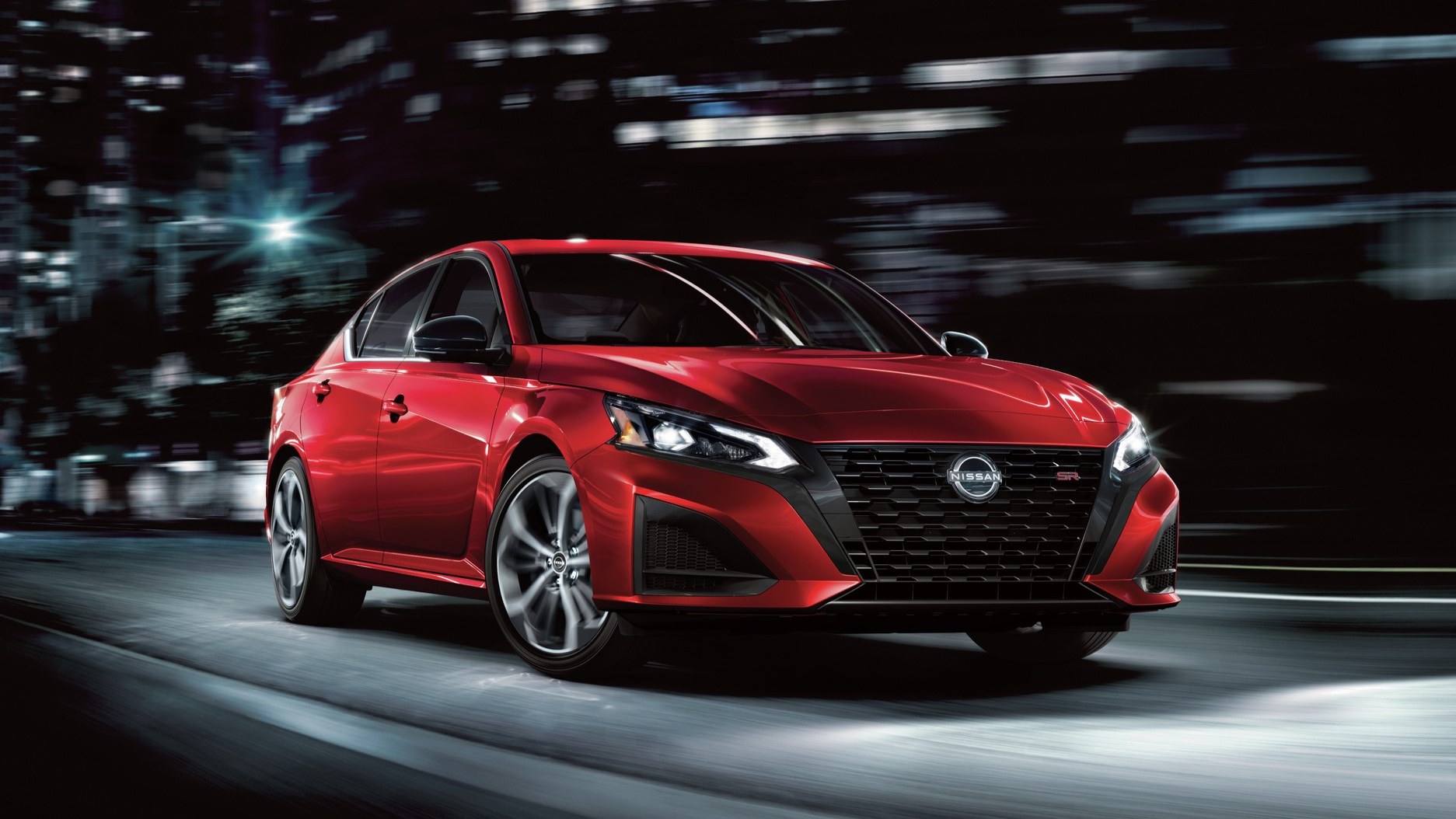
Nissan put the 2027 Altima on sale this week at $27,790, just $210 more than last year, and most of the coverage has treated it as a survival story. I read it as a pricing story. The Altima is still here because a midsize car under $30,000 has become rare enough to be worth protecting, and Nissan has found a way to protect that number without protecting every buyer behind it.
Here's what the headlines miss: the cheapest all-wheel-drive Altima just got $1,710 more expensive. The sticker survived. The affordable version for snow country didn't.
Nissan kept the sticker and trimmed the menu
According to Nissan's 2027 Altima pricing release, the sedan now comes in three configurations: SV FWD at $27,790, SR FWD at $29,190 and SR AWD at $30,690, plus $1,275 for destination. Every version uses a 2.5-liter four-cylinder rated at 188 hp (182 hp with AWD), with EPA ratings of up to 26 mpg city and 36 mpg highway for front-drive cars.
The 2026 lineup had four configurations, because the SV could also be ordered with all-wheel drive for $28,980. That option is gone. Nissan's release doesn't explain why, and it says nothing about the Altima beyond the 2027 model year.
Why a sub-$30,000 midsize car is now worth defending
Kelley Blue Book's September transaction price report puts the average price paid for a new vehicle at $50,562, just $52 shy of the record set in December 2025. The average sticker is $52,342. Against that, an Altima SV costs about 55% of what the typical American pays for a new vehicle. It also undercuts the midsize-car segment's average transaction price, which KBB puts at $34,104, by roughly $6,300.
That gap matters more to Nissan than it did a year ago. The Versa, long the cheapest new car in America, is gone: Cars.com reported that Nissan discontinued it, and Nissan's own third-quarter sales report shows 499 Versas sold in the quarter, against 10,844 a year earlier.
In the same KBB tables, Nissan's average transaction price rose 7.4% year over year to $37,437, while the industry average rose 0.7%. My read is that losing the bottom rung of the ladder explains a good part of that jump, and that Nissan has no appetite to lose the next one.
Nissan's U.S. car ladder now starts with the Sentra, priced from $22,990 for 2027. The Altima is the step above it: the cheapest way to buy a family-size new car from Nissan. Take it away, and the next step up is a crossover.
The Altima barely got pricier. The useful Altima did
Put Nissan's pricing releases for 2021, 2026 and 2027 side by side and a pattern appears. The headline number moves slowly. What that number buys keeps shrinking.
| 2021 | 2026 | 2027 | |
|---|---|---|---|
| Cheapest Altima (MSRP) | $24,300 | $27,580 | $27,790 |
| Cheapest AWD Altima (MSRP) | $26,800 | $28,980 | $30,690 |
| Destination charge | $925 | $1,275 | $1,275 |
| Price configurations | 9 | 4 | 3 |
The base price is up 14.4% since 2021, which is restrained by the standards of this market. The real change is the menu. Nine configurations in 2021, three now. The base S trim, the SL, the Platinum and the VC-Turbo engine are all gone, and this year the cheapest route into all-wheel drive went with them.
For Nissan, that's a sensible move. Three versions are cheaper to build and easier to sell, and the advertised starting price still begins with a 27. For a buyer in Minnesota or Vermont, though, the sub-$30,000 Altima no longer exists. Add destination, and the cheapest AWD car costs $31,965 before tax.
This is how affordability tends to erode now. Not through dramatic sticker jumps that make headlines, but through trims that quietly disappear. And the sticker is only the entry fee: as we worked out earlier this week, the cost of every mile you drive has been climbing too.
The case against my view
The strongest objection is that I'm giving Nissan too much strategic credit. On this reading, the Altima is a fleet-and-discount car whose sales are sliding, and a $210 increase alongside a narrower lineup is a quiet price hike dressed up as value. The numbers give that argument teeth: Nissan's report shows 56,424 Altimas sold through September, down 26% from 76,294 a year earlier.
Half of that objection I accept. The quiet price hike is my point, too. The fleet part is weaker. Nissan says it cut rental fleet sales by 45% across the brand in the third quarter, yet Altima sales in that quarter were flat at 14,136 against 14,187, while Nissan's car sales overall fell 21%. Nissan doesn't break out the Altima's fleet share, so I can't prove retail buyers filled the gap. But a car propped up mainly by rental companies shouldn't hold steady in a quarter when its maker cut rental deliveries nearly in half.
What would change my mind
If Nissan announces before the 2028 model year arrives that the Altima ends after 2027, I've overrated how much the brand values a sub-$30,000 midsize car, and this year's pricing was simply a run-out.
If Nissan's fourth-quarter sales report, due in early January 2027, shows Altima volume falling sharply again after a flat third quarter, the fleet-crutch reading gets much stronger than mine.
And if the next Altima starts above $30,000 before destination, then the number I think Nissan is defending wasn't worth defending after all.
My read
The Altima survived because $27,790 is a price Nissan can no longer afford to lose from its lineup, not because America fell back in love with sedans. Nissan is defending a sticker, and doing it efficiently: fewer versions, a nearly flat base price, all-wheel drive pushed past $30,000. Shoppers should read "from $27,790" as a front-drive number, and I expect more automakers to guard their entry prices exactly this way.