Thanksgiving Gas Fell 17 Cents. Driving 80 Gives Back About 50
The holiday gas record is a fight over a nickel. Holding 80 mph instead of 70 costs about 50 cents a gallon, and Thanksgiving morning is when Americans do it.
Contents · 6 parts
The national average for regular gas was $3.64 on Monday, down 17.5 cents in a week and 66 cents in a month, according to AAA. Three days before Thanksgiving, that has turned the holiday's price record into a live question.
Here's what the headlines miss: the record is a fight over a nickel. The habit that decides what this drive actually costs is worth about 50 cents a gallon, and it lives under your right foot. I think the speed you hold on the interstate will matter more to your holiday fuel bill than anything the pump does this week, and the data says Thanksgiving morning is exactly when Americans push it hardest.
A gas record that hangs on a few cents
AAA's Thanksgiving Day high is $3.58 a gallon, set in 2022. When AAA released its forecast on Nov. 16, the average stood at $3.82, and the club said a new record was on the table if prices held, the Associated Press reported. They didn't hold. By Nov. 23 the average had slid to $3.6366, still 5.7 cents above the 2022 mark.
Whether it falls further in time is genuinely open. At last week's pace, about 2.5 cents a day, the average would reach roughly $3.56 by Thursday and the record would survive. At Monday's pace, less than a cent, it would land near $3.61 and the record would fall. I wouldn't bet either way, and neither should a headline. What is certain: gas is still about 56 cents above where it was a year ago, when AAA had it at $3.07.
The audience for this number is enormous. AAA expects 81.5 million Americans to travel at least 50 miles from home between Nov. 24 and Nov. 30, and 72.9 million of them to go by car, slightly fewer than the 73.1 million who drove last year.
Why 80 mph erases the week's price drop three times over
The federal government's fueleconomy.gov offers a rule of thumb: each 5 mph you drive over 50 is like paying an extra 21 cents per gallon. That figure is pegged to $2.94 gas, which makes it about 7% of the pump price. Recalculated at Monday's $3.64, every 5 mph above 50 is worth roughly 26 cents a gallon. Holding 80 instead of 70 is two of those steps, or about 52 cents.
Put that next to the numbers everyone is watching. The trip column is my illustration, a 400-mile round trip in a crossover that averages 30 mpg, not a measured case.
| Cents per gallon | 400-mile round trip, 30 mpg | |
|---|---|---|
| Gap to the 2022 Thanksgiving record | 5.7 | $0.75 |
| Price drop over the past week | 17.5 | $2.34 |
| Price drop over the past month | 65.6 | $8.75 |
| Driving 80 instead of 70 (DOE rule of thumb) | ~52 | ~$6.93 |
In other words, a driver who cruises at 80 gives back nearly three times last week's decline and close to 80% of the past month's. The DOE number is an average, not a promise for your car. The agency notes that each vehicle peaks at a different speed and that its estimates fit diesels, hybrids and engines with cylinder deactivation less well. It also calls the figures conservative, because the mpg they start from tends to be higher than what drivers actually get. Your crossover may lose more or less. The direction won't change.
This is the same arithmetic behind our gas-versus-charging cost per mile: the price per gallon is only half of the bill, and the other half is how many gallons the trip burns. It's also why I've argued that the CAFE rollback locks in pump costs long after any single price dip.
Thanksgiving morning is when the foot gets heavy
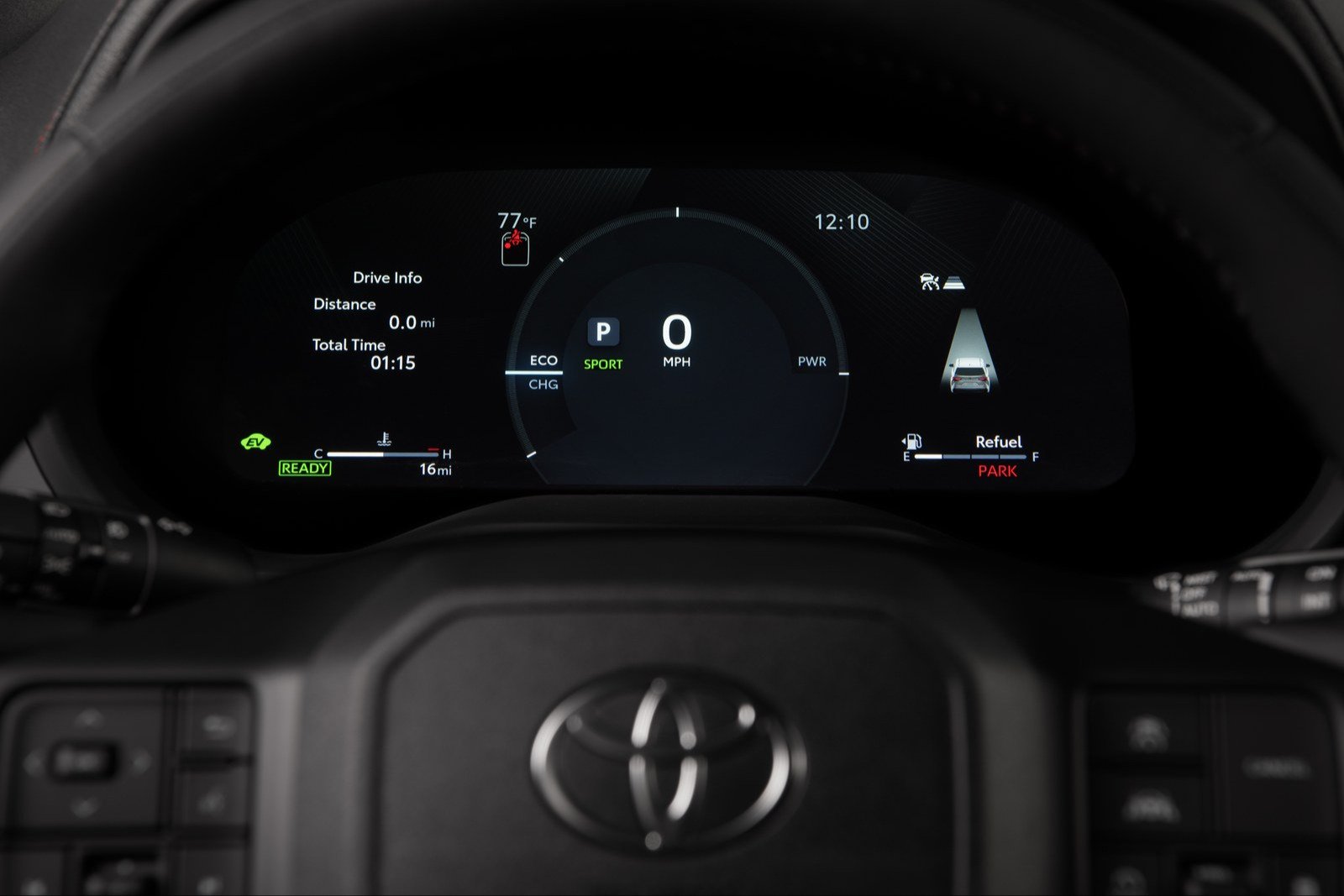
Allstate's Thanksgiving driver report, built on more than 44 million anonymized Drivewise trips from last year's holiday, found that the share of miles driven at 80 mph or faster rose nearly 200% between 6 and 9 a.m. on Thanksgiving compared with a typical Thursday morning, and stayed more than 100% above normal through lunch. On Black Friday from 6 to 9 a.m., high-speed driving rose more than 80%, even though there were about half as many trips as on a typical Friday morning.
Cambridge Mobile Telematics sees the same pattern with a different yardstick. Across 2022 to 2024, it measured speeding on Thanksgiving at 68% above a normal Thursday, and at 7 a.m. the time spent speeding was 187% higher than usual. Two companies, two methods, one conclusion: the holiday gets fast before breakfast.
What strikes me is how neatly that window lines up with the fuel math. Early morning, empty interstate, a long drive ahead and dinner on a deadline: those are the conditions in which nothing slows a driver down, so the full 52-cent penalty is in play.
The case against my view
The strongest objection is time. On my 400-mile illustration, 80 instead of 70 saves about 43 minutes on paper for roughly $7 of extra fuel, which works out to under $10 an hour. Plenty of people value an hour with family more than that, and they aren't wrong. Speed isn't automatically illegal, either: the Insurance Institute for Highway Safety lists nine states with posted limits of 80 mph or higher on some roads, led by Texas at 85. And Allstate's metric is the share of miles driven at 80-plus, not the number of drivers doing it, so a small group of very fast drivers can move it a lot.
All fair. My answer is that the fuel is the cheap part of the trade. The 43 minutes assume a clear road the whole way, which a holiday week rarely delivers. The expensive part sits on the risk side. An IIHS study of 1993 to 2017 found that each 5 mph increase in a state's maximum speed limit was associated with an 8.5% increase in fatality rates on interstates and freeways. That is a finding about limits across whole states, not a forecast for any one driver, but it shows which way the dial moves. Allstate also found that about one in five Thanksgiving Day trips involved multiple risky behaviors, and more than 90% of those combined speeding with phone use. If you choose 80, choose it with that price on the tag, not only the one on the pump.
What would change my mind
If AAA's national average on Thanksgiving Day, Nov. 26, comes in well below the record, say under $3.50, the pump will have done more for holiday drivers than I'm giving it credit for, and the gap in the table above narrows. I'd revise.
If Allstate or CMT publish 2026 holiday data in December showing early-morning high-speed driving flat against a normal Thursday, my point about Thanksgiving morning is out of date. And if fueleconomy.gov updates its speed guidance with newer testing that shows today's hybrids barely losing mpg between 70 and 80 mph, the 52-cent figure would be too high for a big slice of the holiday fleet.
My read
Whether Thanksgiving gas sets a record comes down to a few cents, and that part is out of your hands. The 50-cent part is not. My bet is that most drivers who hold 80 this week will burn more than the past week's price drop saved them, and the bigger cost of that habit won't show up at the pump at all.