Genesis Promised to Skip Hybrids. Its First One Is Built to Shadow Its V6
Genesis's first hybrid matches its V6 on torque and lands beside the Lexus RX 500h, not the RX 350h. It's a retreat from a 2021 promise, not from the market.
Contents · 7 parts
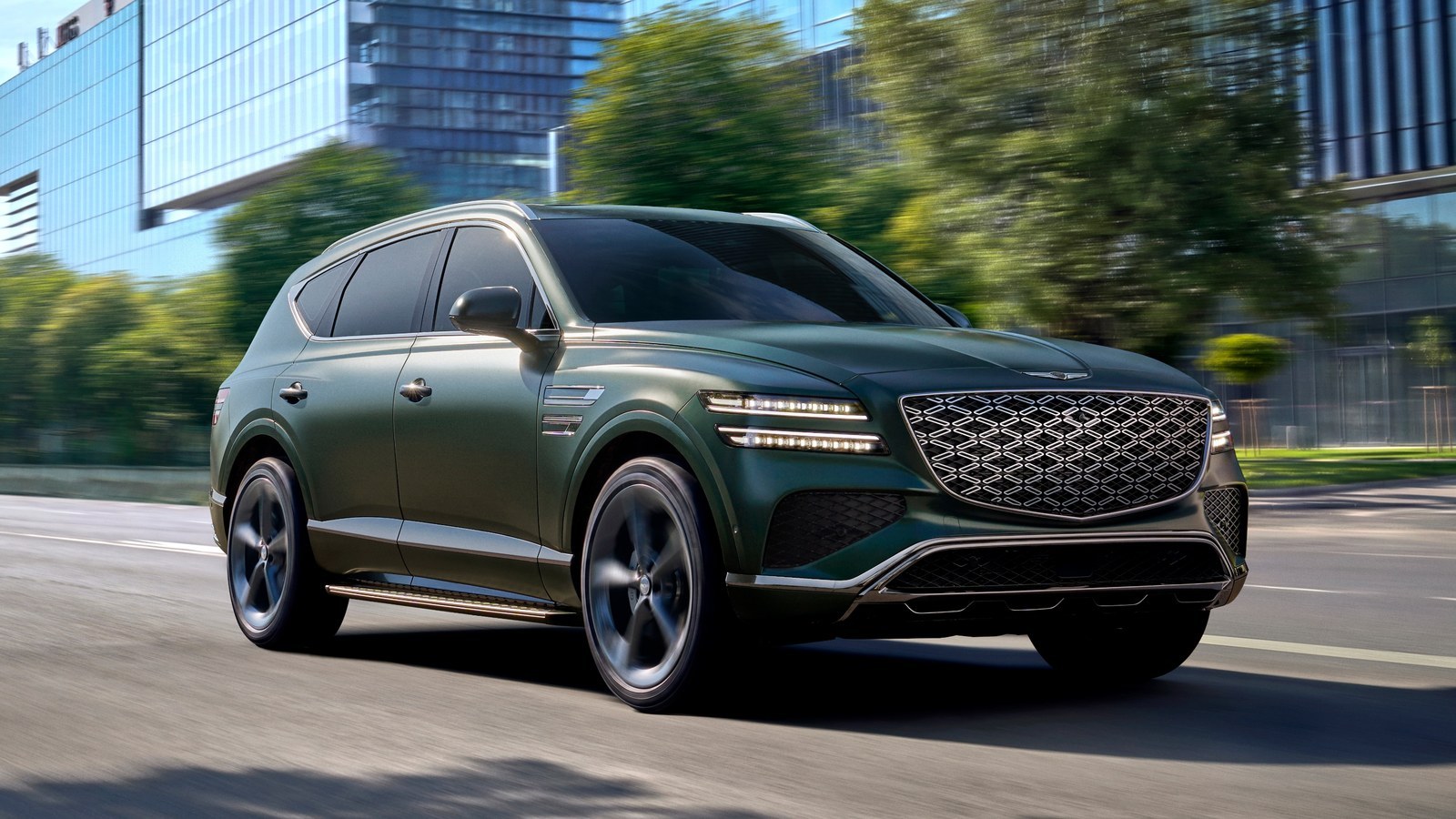
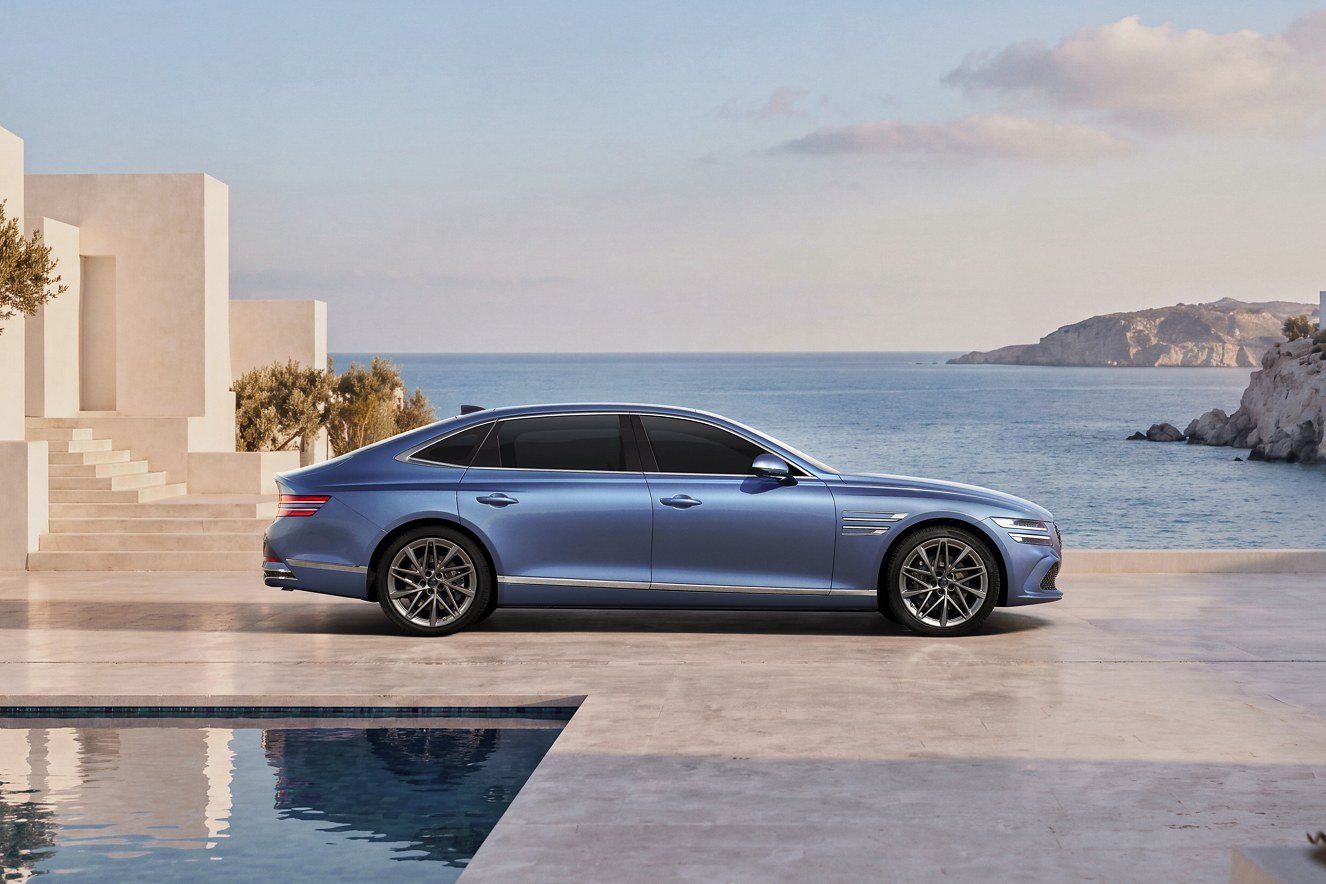
Genesis brought its first hybrids to Los Angeles this week: a GV80 Hybrid and a G80 Hybrid, each pairing a 2.5-liter turbo four with two electric motors for 347 hp and 391 lb-ft of torque. That last number is the one I'd circle. It is exactly what the brand's 3.5-liter twin-turbo V6 makes.
Here's what the headlines miss. This isn't a fuel-saving trim bolted onto the lineup; it is a V6 understudy wearing a hybrid badge, from a brand that once said it would never build a hybrid at all. Genesis isn't retreating from a market. Its U.S. sales are at records. It is retreating from a promise, and walking into the one corner of the luxury market where Lexus has a 20-year head start.
Genesis built a torque hybrid, not an mpg hybrid
According to the Genesis announcement from the LA debut, both cars use a parallel layout: a starter-generator, a drive motor and a seven-speed automatic, plus the first liquid-cooled hybrid battery in Hyundai Motor Group. Genesis says its internal testing shows 24% better fuel economy for the GV80 and 30% for the G80 compared with similar gas AWD models, and more than 500 miles on a tank. EPA ratings are still pending.
The hybrid-only extras lean toward comfort, not frugality. Stay Mode runs the climate control and infotainment without starting the engine, and Smart Regenerative Braking adjusts itself using navigation and traffic data.

What Genesis didn't say matters as much. There is no U.S. price, no on-sale date, no battery capacity and no electric-only range. The company says those details will come closer to launch.
In 2021, Genesis promised to skip hybrids entirely
In September 2021, Genesis said every new model from 2025 would be battery-electric or fuel-cell, and that the brand would be 100% zero-emission by 2030. A Genesis spokesman told Automotive News Europe at the time that this meant bypassing hybrids and plug-in hybrids altogether.
The American market didn't cooperate. The Electrified G80 was dropped from the U.S. lineup after the 2024 model year; Car and Driver and Electrek reported just 77 sold in the first half of 2025. The Electrified GV70 now starts at $58,500 for 2027 on Genesis's own site, down from $64,380 for 2026. Even allowing for the end of the federal EV tax credit in 2025, brands don't take nearly $5,900 off an EV they can't build fast enough.
Meanwhile, the brand grew anyway. Hyundai reported a record 82,331 Genesis deliveries in the U.S. in 2025, up 10%. By April 2026, Genesis CEO José Muñoz was promising New York auto show crowds that "whatever powertrain fits their life, there will be a Genesis for them." That sentence is the 2021 plan's polite obituary.
Why I read the hybrid as the V6's understudy
Put the GV80's powertrains next to the two Lexus RX hybrids, and the positioning becomes obvious.
| GV80 2.5T | GV80 Hybrid | GV80 3.5T V6 | Lexus RX 350h | Lexus RX 500h | |
|---|---|---|---|---|---|
| Horsepower | 300 | 347 | 375 | 246 | 366 |
| Torque, lb-ft | 311 | 391 | 391 | — | — |
| Combined mpg, AWD (EPA) | 21 | ~26 (estimate) | 19 | 36 | 27 |
| Starting MSRP before destination | $58,850 | not announced | — | $56,200 | $67,400 |
The hybrid gives up 28 hp to the V6 but matches its torque. Apply Genesis's 24% claim to the EPA rating of the gas GV80 2.5T AWD, and you get roughly 26 mpg combined. That is my arithmetic, not an EPA number, but it's about 7 mpg better than the V6 SUV.
Now look at where that lands against Lexus. The RX 350h is the efficiency hybrid: 246 hp and 36 mpg. The RX 500h is the performance hybrid: 366 hp and 27 mpg. On paper, the GV80 Hybrid sits almost on top of the 500h. Genesis built the hybrid a V6 buyer will accept, not the one a Prius owner will trade up to.
Genesis hasn't said the V6 is leaving the GV80 or the G80, and I won't pretend it has. But once a four-cylinder car makes the same torque and uses noticeably less fuel, the V6 has to justify itself on 28 hp and its sound. My bet is that, within a model cycle, it survives mainly in the top trims.
Lexus started the same way in 2005
The irony is that this is the Lexus playbook. The RX 400h went on sale in April 2005, sold as a V6 hybrid with the performance of a bigger engine and better mileage. Two decades later, Lexus sells the 2027 RX 350h from $56,200 and the RX 500h from $67,400, both before a $1,550 destination charge. The gas 2027 GV80 starts at $58,850 before destination.
Korea offers the only price signal so far. There, the GV80 Hybrid costs 76.8 million won against 69.85 million for the 2027 gas GV80, according to the Kyunghyang Shinmun. That's a gap of about 10%. A similar premium in the U.S. would put the hybrid between the two RX hybrids, which is exactly where its spec sheet already puts it. Tariffs on Korean-built cars could change that math, so treat it as a hint, not a forecast.
The case against my view
The strongest objection is that this is simply the right car at the right moment. Gas has spent the fall around $4 a gallon, and the hybrid boom it set off is already reshaping mainstream lineups. A luxury SUV that pulls like a V6, uses less fuel and goes 500 miles between stops is what $60,000 buyers are asking for. By this logic, calling it a retreat punishes Genesis for listening to customers. And a performance hybrid neatly avoids an mpg fight with the RX 350h that Genesis would lose.
I agree with most of that, and I think the product decision is sound. My argument isn't that the hybrid is wrong. It's that it is late and defined by the engine it shadows. Being right in 2026 doesn't refund the years Genesis spent on an electric G80 that found 77 buyers in six months. And by arriving with a hybrid tuned for torque, Genesis gives up the efficiency story, the one hybrid argument Lexus has spent 20 years owning.
What would change my mind
If the EPA rates the AWD GV80 Hybrid near 30 mpg combined when certification lands ahead of the 2027 launch, well above my 26 mpg estimate, this is a genuine efficiency play, and the "V6 understudy" label is unfair.
If the 2028 order guides for the GV80 and G80 keep the 3.5T across the same spread of trims, and the hybrid is priced above the V6 rather than beside it, then the hybrid is an add-on, not a replacement.
And if Genesis brings the range-extended GV70 that the Korea JoongAng Daily reported for North America on schedule, while its EV sales recover, the retreat reading weakens. That would mean Genesis is diversifying, not falling back.
My read
Genesis's first hybrid is a good car built for the wrong reason to admit: the V6 buyer is still there, and the EV buyer never showed up. It matches the V6's torque, lands on the RX 500h's spec sheet and arrives two decades after Lexus wrote that playbook. My bet is that the hybrid sells, and that the V6 quietly becomes the option you have to ask for.