Ten Burns, 1.2 Million Explorers: Why Ford's Airbag Probe Isn't Noise
Ten injuries look like noise against 1.24 million SUVs. But the complaints point at how the side airbag vents, and police officers are the ones getting burned.
Contents · 7 parts
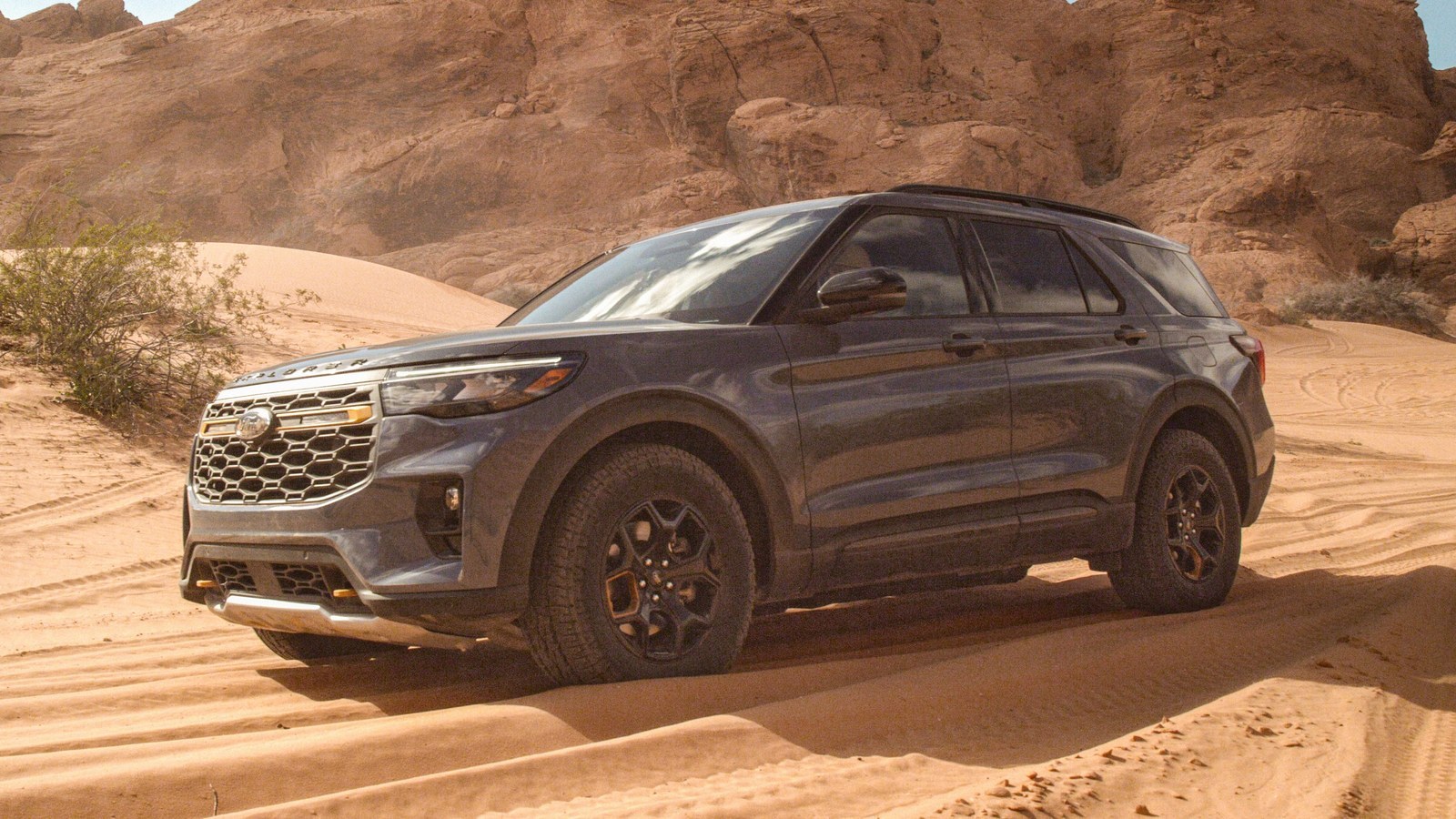
Federal safety regulators are now looking at an estimated 1,236,155 Ford Explorers over burns from seat-mounted side airbags, on the strength of just 11 incidents and 10 injuries.
Most headlines stopped at the big number. Here's what they miss: the vehicle count is a formality, and the injury count looks like noise. What matters is the shape of the complaints. They don't describe a bag that broke or a bolt nobody tightened. Several describe a bag that worked and pointed its hot exhaust at the person in the seat.
In my view, that makes this the most serious airbag question Ford has faced on this generation of Explorer, even though it is the smallest by case count. A bad batch gets a quick recall. A design question takes years, and the people most exposed are police officers.
NHTSA opened a preliminary evaluation, not a recall
The Office of Defects Investigation opened Preliminary Evaluation PE26008 on November 6. It covers 2021–2026 Explorers and describes the problem plainly: deployment of the seat-mounted side airbag may cause serious burns to front-seat occupants.
The evidence is eight owner complaints and four Early Warning Reporting injury reports from Ford, 11 incidents after removing duplicates. There are 10 injuries and no deaths. NHTSA says the burns were typically second or third degree and hit both drivers and front passengers, and that some complaints involve law enforcement officers in Explorer Police Interceptors. Ford had not commented publicly as of November 9, and no recall is attached to the probe.
The complaints point at the design, not the build
Read the complaints themselves and a pattern appears. One 2023 Explorer owner told NHTSA that the side bag's exhaust port faced inward, toward the occupant rather than the door, and that the gas burned through clothing. A Police Interceptor complaint from a February 2025 crash with a UPS truck reports third-degree burns from the exhaust port that required surgery and a skin graft. Another, from a September 2026 crash, says the seat bag vented toward the driver and the heat melted parts of the officer's duty belt.
NHTSA has made no finding on vent direction, and not every complaint describes it. One describes a torn bag that left unreacted propellant on the skin, which is a different failure. But when several unrelated owners describe the same geometry, that is the thing investigators will chase first.
This is why I don't put this probe in the same bucket as Explorer's long recall list. NHTSA's database shows 70 recall campaigns touching 2020–2026 Explorers, with 17 filed in 2025 and 18 so far in 2026. Three involved airbags, and all three were tiny build or parts issues. PE26008 is a different animal.
| Model years | Vehicles | Issue | |
|---|---|---|---|
| Recall 20V497 | 2020 | 488 | Side airbag or seat-back module attachments may be loose |
| Recall 21V652 | 2021 | 592 | Side airbag weld studs may fail |
| Recall 26V581 | 2026 | 7 | Passenger frontal airbag active vent may not open |
| Probe PE26008 | 2021–2026 | 1,236,155 (est.) | Burns from seat-mounted side airbag deployment |
Those three recalls together covered fewer than 1,100 vehicles. The new probe covers the whole generation because the question isn't which cars got a bad part. It's whether the part works the way it was designed to, and whether that design is safe.
Why police fleets will show it first
Three of the eight complaints come from Police Interceptors, according to a VIN decode published by Torque News. That's a big share for a variant that is only part of Explorer volume. Ford sold 222,706 Explorers in the U.S. in 2025, per its year-end sales release, and calls it America's best-selling three-row SUV.
The way I see it, patrol cars are an early-warning system. They crash more often than family SUVs, they take side impacts at intersections, and officers sit tight against the seat bolster with gear on their hips. If a side bag vents toward the occupant, a police fleet will log the injuries years before the retail fleet does. Fleet buyers also keep records, fill out NHTSA forms, and hold on to damaged vehicles.
That matters commercially too. Police agencies buy on reputation and repeat orders. A burn probe involving officers is the kind of problem procurement offices notice.
What an Explorer owner should do now
There is nothing to fix yet, because there is no recall. A VIN search on NHTSA will show open recalls for other issues, and given Explorer's record it's worth running, but this one won't appear.
Do not try to disable or remove a side airbag. These bags exist to protect your chest and pelvis in side impacts, where there is little metal between you and the other car, and nothing in this probe suggests the bags fail to do that. The question is a burn risk on top of the protection.
If you or someone in your car was burned in a side-airbag deployment in a 2021–2026 Explorer, file a report at NHTSA.gov and tell your insurer to preserve the airbag module. Fleet managers should do the same for every deployed seat bag. Evidence is what moves a preliminary evaluation forward, and the fact that a third of the current complaints came from police shows who is paying attention.
The case against my view
The strongest counterargument is arithmetic. Ten injuries across 1.24 million vehicles and five model years is a microscopic rate. Every airbag inflates with hot gas from a pyrotechnic charge, and minor burns are a known side effect across the industry. Plenty of preliminary evaluations close without a recall, and Ford could show that its side bags burn no one more often than anyone else's.
I take that seriously, but the fleet is the wrong denominator. Most Explorers will never deploy a seat-mounted side bag. The rate that matters is burns per side-bag deployment, and NHTSA will ask Ford for exactly that. Second- and third-degree burns needing surgery are not the scrapes people associate with airbag rash. And "known side effect" is not a defense if the vent points at the occupant when it could point at the door.
The precedent cuts both ways. NHTSA opened its probe into ARC airbag inflators in July 2015, upgraded it to an Engineering Analysis in August 2016, and issued an initial recall decision only in September 2023. Small case counts can mean a dead end, or the start of a very long file.
What would change my mind
If Ford's response shows that side-bag deployments in Explorers produce burns at a rate no higher than comparable SUVs, the design argument weakens sharply. I would also back off if NHTSA's review finds the vent geometry described in the complaints doesn't match the production part.
On the other side, watch for three things: new burn complaints filed after this week's coverage, NHTSA adding the Lincoln Aviator, which shares the platform and was included in both earlier side-airbag recalls, and an upgrade to an Engineering Analysis within the next year. Any of those would tell me this is heading toward a remedy rather than a closed file.
My read
The headline number is 1.2 million, but the meaningful numbers are three Police Interceptor complaints and one recurring description of where the hot gas goes. Explorer's long recall list is about build quality. This probe is about design, and design problems are slower and more expensive to fix. My bet is that this file stays open well into 2027 and that police fleets supply most of the evidence that decides it.