Honda's $3 Billion Ohio Plant Is a Tariff Hedge Wearing a Hybrid Badge
Honda's new Ohio factory adds U.S. capacity it can use if the Canada tariff bites. The real hybrid commitment sits in its powertrain plants.
Contents · 6 parts
Honda said on Monday it will spend $3 billion on a fourth auto plant in Ohio, able to build 240,000 vehicles a year from 2029, and it framed the whole package around one word: hybrids.
I think that word is doing a lot of work. The plant is real and so is the hybrid demand, but they are not the same story. Here's what the headlines miss: the new factory is mostly an option on the Canada tariff, and a hybrid is simply the product Honda is most likely to run through it if it ever has to use that option.
The actual hybrid bet in Monday's announcement is quieter. It sits in a transmission plant.
Honda bought 240,000 cars of room, not a product plan
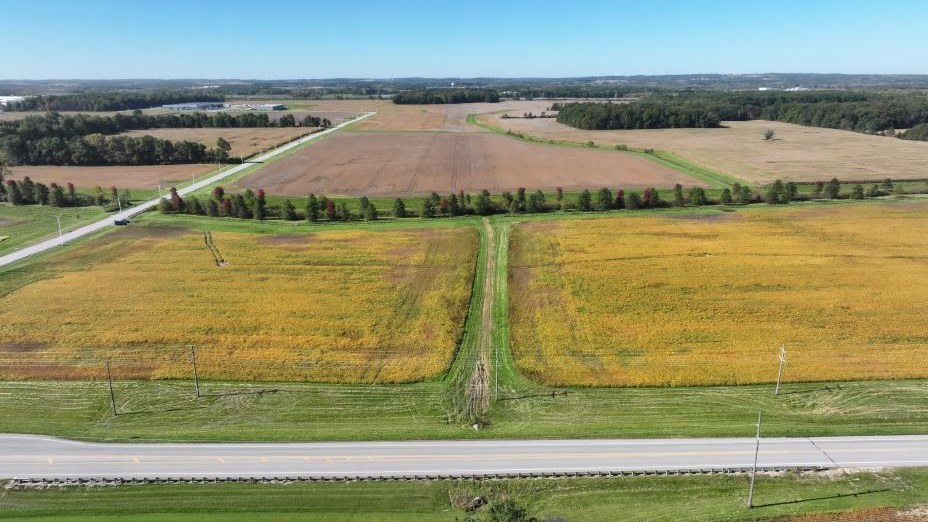
According to Honda's release, the new plant will sit between the East Liberty and Marysville auto plants, employ more than 2,000 people and start production in 2029, pending final government approvals. Honda says it will be able to build hybrid, gasoline and battery-electric vehicles. It does not say which models.
The rest of the package spreads across the network. Alabama gets a retooled Line 1 so it can build the Passport alongside Line 2, plus equipment for a new V6 hybrid engine. The Anna engine plant in Ohio retools a line for a next-generation four-cylinder Atkinson-cycle engine. Honda's Ohio transmission plant converts a second line to hybrid systems, and the Georgia transmission plant will add hybrid systems for larger vehicles.
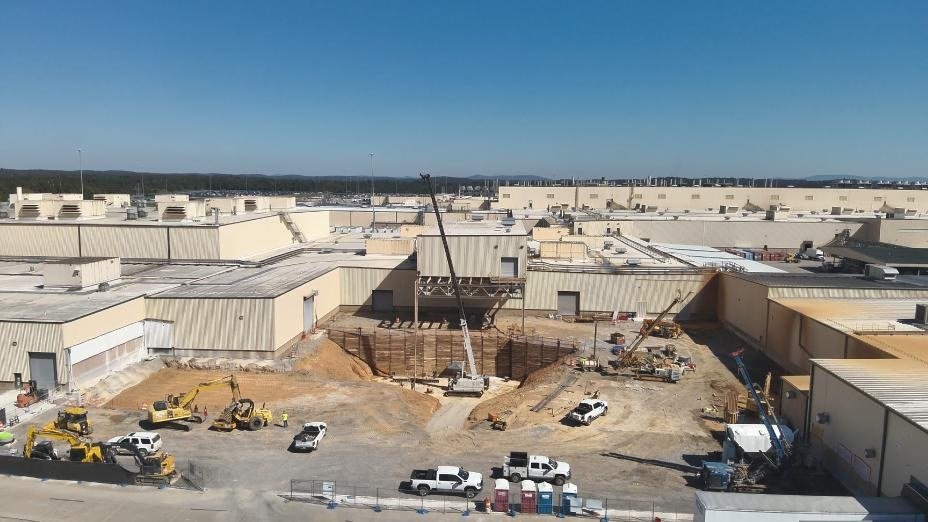
Honda puts its U.S. capacity after all of this at about 1.3 million vehicles a year and its North American capacity at about 1.9 million.
Why the tariff math points to Ohio
Canadian-built vehicles have paid the 25% Section 232 auto tariff since April 3, 2025; for USMCA-qualifying cars, the duty falls only on non-U.S. content, and only if the importer documents it. In August, President Trump posted that the rate on Canadian cars, parts and steel would rise to 50% on January 1. As of November 8, no document had turned that post into a rate, The Auto Wire reports, and Prime Minister Mark Carney says the two sides are "not quite there."
Few automakers are more exposed than Honda. Barclays analysts estimate that almost a quarter of Honda's U.S. sales are built in Canada, Reuters reported in August, and the CR-V is the car that crosses the border.
Honda has already shown how it handles this. In May 2025 it moved CR-V production for U.S. buyers from Alliston, Ontario, to East Liberty and sent Ohio output for other markets to Canada, roughly one for one, The Logic reported. That kind of swap only works while Ohio has room. Run Honda's own numbers backward and you see what the new plant changes.
| Before | After expansion | |
|---|---|---|
| U.S. vehicle capacity | ~1.06 million* | ~1.3 million |
| North American capacity | ~1.66 million* | ~1.9 million |
| Capacity outside the U.S. | ~600,000* | ~600,000* |
| Ohio hybrid system capacity | 1x | 3.5x (+250%) |
| New jobs | — | 2,000+ |
*My arithmetic from Honda's totals and the 240,000-unit plant, not figures Honda published.
The last-but-one row is the one that interests me. Every new car of capacity lands in the U.S., while capacity outside it stays flat. Honda isn't leaving Canada. It is building enough American slack to rebuild a large share of its Canada-to-U.S. volume south of the border if the tariff makes that necessary.
The hybrid bet lives in the transmission plant
If you want Honda's real hybrid commitment, look at the powertrain lines. The Ohio transmission plant already builds the two-motor system for U.S.-made CR-V, Accord and Civic hybrids, starts a next-generation system next year and will lead production of a larger system for bigger models. Honda says that work raises its Ohio hybrid system capacity by 250%.
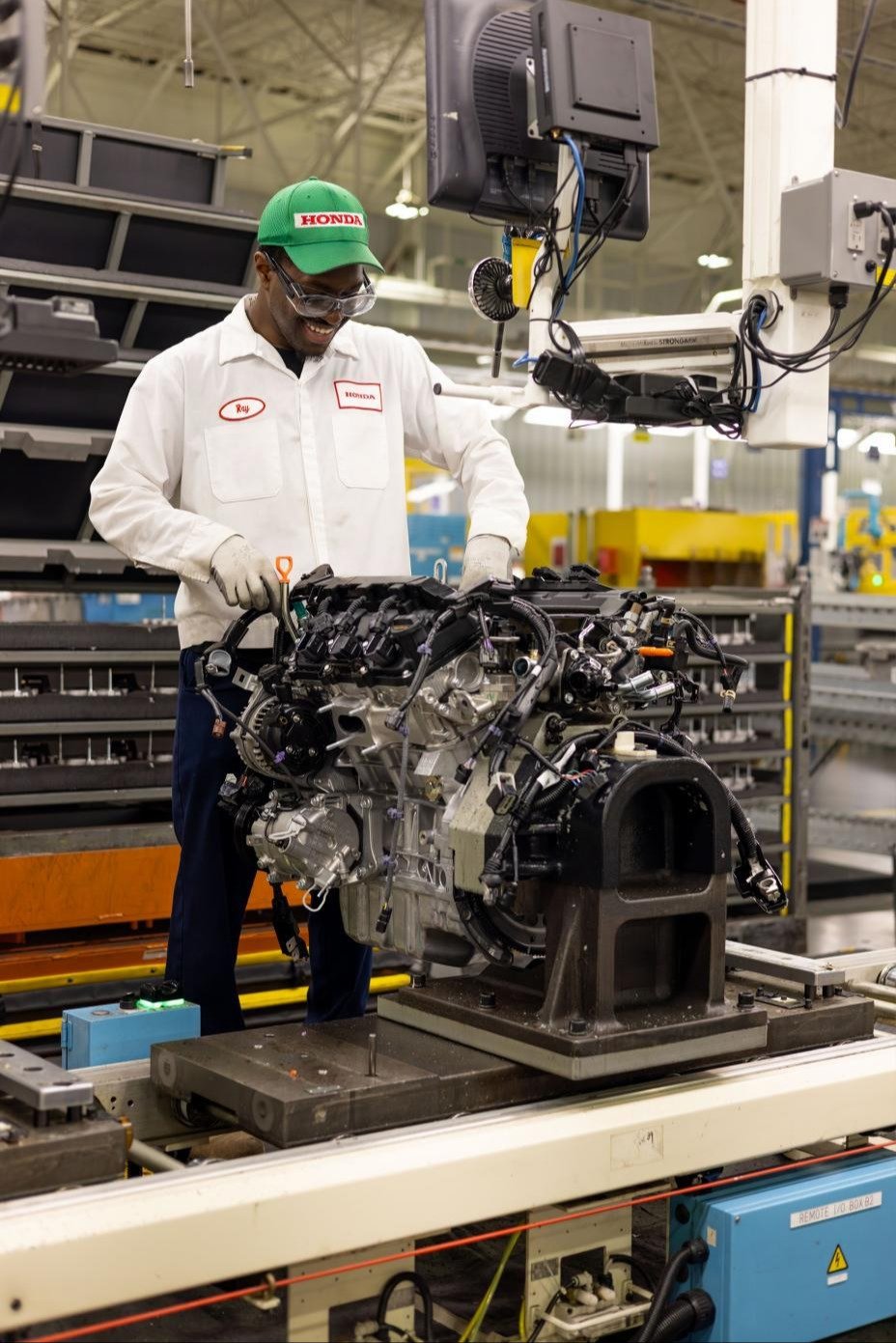
Those systems can feed any assembly line Honda owns, in Ohio, Alabama or Ontario. That is a hybrid strategy. A flexible body shop that can also build gas cars and EVs is a hedge.
Honda's own sales say the same thing. In October, Honda-brand hybrids set a record at 32,519 units, but by my estimate the non-hybrid side grew about twice as fast, and the hybrid share slipped to roughly 29.8%, as I worked out last week. Hybrid demand is rising. It is not outrunning everything else Honda sells, which is why the new plant is built to make both.
The case against my view
The strongest objection is timing. A plant that opens in 2029 can't be an answer to a January 2027 deadline, and the tariff could be gone long before the first car leaves the line. Factories last decades; trade policy sometimes lasts a news cycle.
The second objection is that Honda is also investing in Canada. On the same day, Honda Canada said it will spend $166 million to retool Alliston for future hybrid and gasoline models, BNN Bloomberg reports, and the release mentions bringing engine production back there. Why prepare Alliston if Ohio is the escape route? Add Honda's long habit of building close to its buyers and its best October since 2020, and a plain demand story looks credible.
My answer is that both moves together are exactly what an option looks like. Honda keeps Canada viable if a deal arrives and builds the capacity to work around it if it doesn't. And the "temporary" tariff on Canadian cars has already been in place for 19 months. By 2029 it would be four years old. If Honda only needed more volume, it could have kept stretching existing lines, which it is doing in Alabama. A greenfield plant that can build anything is what a company buys when it doesn't know which border its cars will be allowed to cross.
What would change my mind
If Washington and Ottawa sign a deal before January 1 that settles Canadian vehicles at a low tariff, and Honda still breaks ground on the 2029 schedule without hesitation, the demand story wins.
The model list will settle the rest. If Honda names an all-new vehicle from its U.S. R&D centers as the plant's first product, I'm wrong. If the first output is a CR-V or anything else now built in Alliston for American buyers, the hedge is confirmed.
I'll also watch Ohio's incentive package, which nobody has disclosed. A large state check would make this look more like cheap capacity than tariff insurance.
My read
Honda's $3 billion buys flexibility first and hybrids second. The hybrid commitment is in the powertrain plants, which serve every factory Honda has. The new assembly plant is insurance against the border, and my bet is that its first products will tell us which of those two stories Honda believed.