Ford's Privacy Promise Bans Selling Your Driving Data, Not Sharing It
Ford pledges never to sell how you drive. Its consent-based data pipes to insurers, open since 2020, are left untouched — and that's where GM's drivers got hurt.
Contents · 7 parts
Ford published a "Privacy Promise" on Monday, and the line it wants you to remember is in the FAQ: asked whether it sells driving behavior data to data brokers or insurance companies, Ford answers with one word. No.
The timing is not subtle. It lands days after General Motors agreed to pay $220 million to state attorneys general over Smart Driver data that ended up in insurance files. Here's what the headlines miss: Ford's promise draws the line at selling. GM's scandal was never really about the price tag. It was about data flowing to insurers under consent most drivers didn't know they gave. And Ford has had its own consent-based pipes to insurers since 2020. The promise doesn't close them.
Ford promised one verb and left the rest open
The announcement, signed by Chief Privacy Officer Kristin Jones, makes three pledges: privacy by design, plain-language explanations, and customer control over what gets shared. Ford lists the connected-vehicle data it uses as diagnostics, driving characteristics, and location. It uses them for connected services, troubleshooting and R&D, and to personalize offers of products and services.
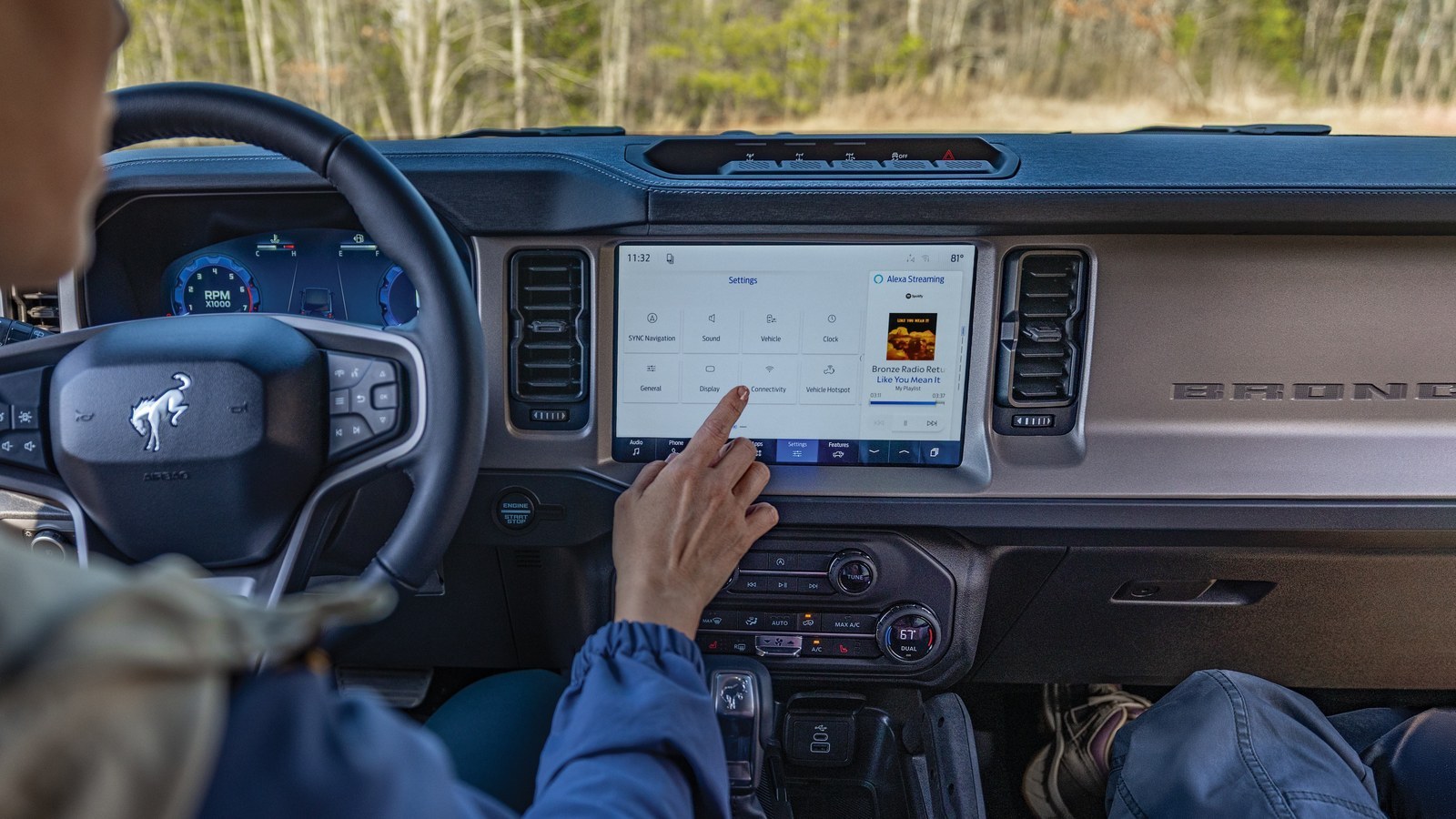
Owners of 2018 and newer Fords can change settings on the center screen or in the Ford App. They can also opt out of location and connected data sharing entirely. But Ford says that means BlueCruise, internet connectivity, and vehicle location in the app stop working. Lincoln, Canada, and Mexico get the same resources "in the coming weeks."
Read that list again and notice what is absent. There is no promise to collect less. There is no promise to stop sharing with insurers when a driver taps "agree." There is no word on what Ford did with this data before Monday.
The pipes to insurers already exist
In February 2020, Ford and Lincoln launched Ford Insure and Lincoln Motor Company Insure, powered by Nationwide's SmartRide program. The car's embedded modem sends Nationwide miles driven, hard braking and acceleration, idle time, and night driving. In exchange, the driver can earn a renewal discount of up to 40%, which can also be zero.
Eight months later, Ford joined the Verisk Data Exchange. That platform turns connected-car telemetry into "insurance-ready" scores for carriers' usage-based programs. Both arrangements are opt-in, and neither is a sale in the sense the FAQ uses. That is exactly my point.
I'm not accusing Ford of anything here. There is no public document showing Ford sold driving data, and I won't pretend otherwise. What strikes me is that the promise carefully forbids the one thing Ford apparently wasn't doing. It leaves untouched the thing it built: a route from your car's modem to an insurer's rating model, gated by a consent screen.
Consent is where GM's drivers got hurt
Smart Driver was also, on paper, something drivers enrolled in. In their July 2024 letter to the FTC, Senators Ron Wyden and Ed Markey said GM got no informed consent and used dark patterns to sign people up. The same letter put a price on the rest of the industry's habit. Ford wasn't in it.
| GM | Honda | Hyundai | |
|---|---|---|---|
| Driving data to Verisk | 2015–2024 | 2020–2024 | 2018–2024 |
| Vehicles | Not disclosed (8 million, per NYT) | 97,000 | 1.7 million |
| Verisk paid in total | Not disclosed | $25,920 | $1,043,316 |
| Per car | Not disclosed | 26 cents | 61 cents |
Twenty-six cents a car. That is what your braking habits were worth to a data broker. And a premium hike built on them can cost hundreds of dollars a year.
Toyota shows the same pattern from another angle. A 2025 class action filed in Texas, as reported by Insurance Journal, says a RAV4 owner opted out of Progressive's Snapshot. He then learned Progressive already had his driving data, and Toyota told him he had been enrolled in a data-sharing trial without knowing it. Whatever the court decides, the lesson for owners is the same. The fight is over what counts as consent, not over invoices.
The GM settlement itself sends its money to the states, not to drivers. Private claims go on separately in a federal MDL in Georgia. A pledge about sales would not have helped any of the people in that case.
The fine print goes further than the promise
Ford's full privacy notice is far longer than the promise, and it is more revealing. Ford says it may collect a vehicle's location regardless of settings for certain purposes. Those include protecting its property, such as repossession, and complying with the law. It says it may de-identify connected-vehicle information and use or disclose it for any purpose permitted by law.
So the answer to one of the open questions about Monday's pledge is already on Ford's own site. "Never sells how you drive" does not, by its terms, reach data that has been stripped of your name. Whether such data can really be kept anonymous, given trips that start and end at your driveway, is another argument.
Then there is the cost of saying no. A Ford owner who pays for BlueCruise and wants zero sharing loses the feature. That is not a choice between privacy and a nice-to-have. It is a choice between privacy and something you already bought. My bet is that very few owners will take it, and Ford knows that.
The case against my view
The strongest counterargument is legal, not rhetorical. A public, specific promise gives the FTC a hook. If Ford is ever caught selling driving data to brokers or insurers, regulators can treat the gap between promise and practice as deception under Section 5 of the FTC Act. It is the same kind of theory the FTC used against GM. Before Monday, Ford had a policy. Now it has a commitment it can be sued over.
And on the record, Ford appears to have behaved better than its rivals. It was not named in the Wyden–Markey letter. Its insurance programs were sold as opt-in from day one, with the discount as the stated benefit. Seen that way, the promise isn't spin. It writes down a practice Ford already follows.
Ford's own survey of just over 1,000 Americans makes the same case in numbers. Only 41% said they were very or extremely concerned about data privacy at vehicle manufacturers, against 61% for financial institutions and 72% for social media companies.
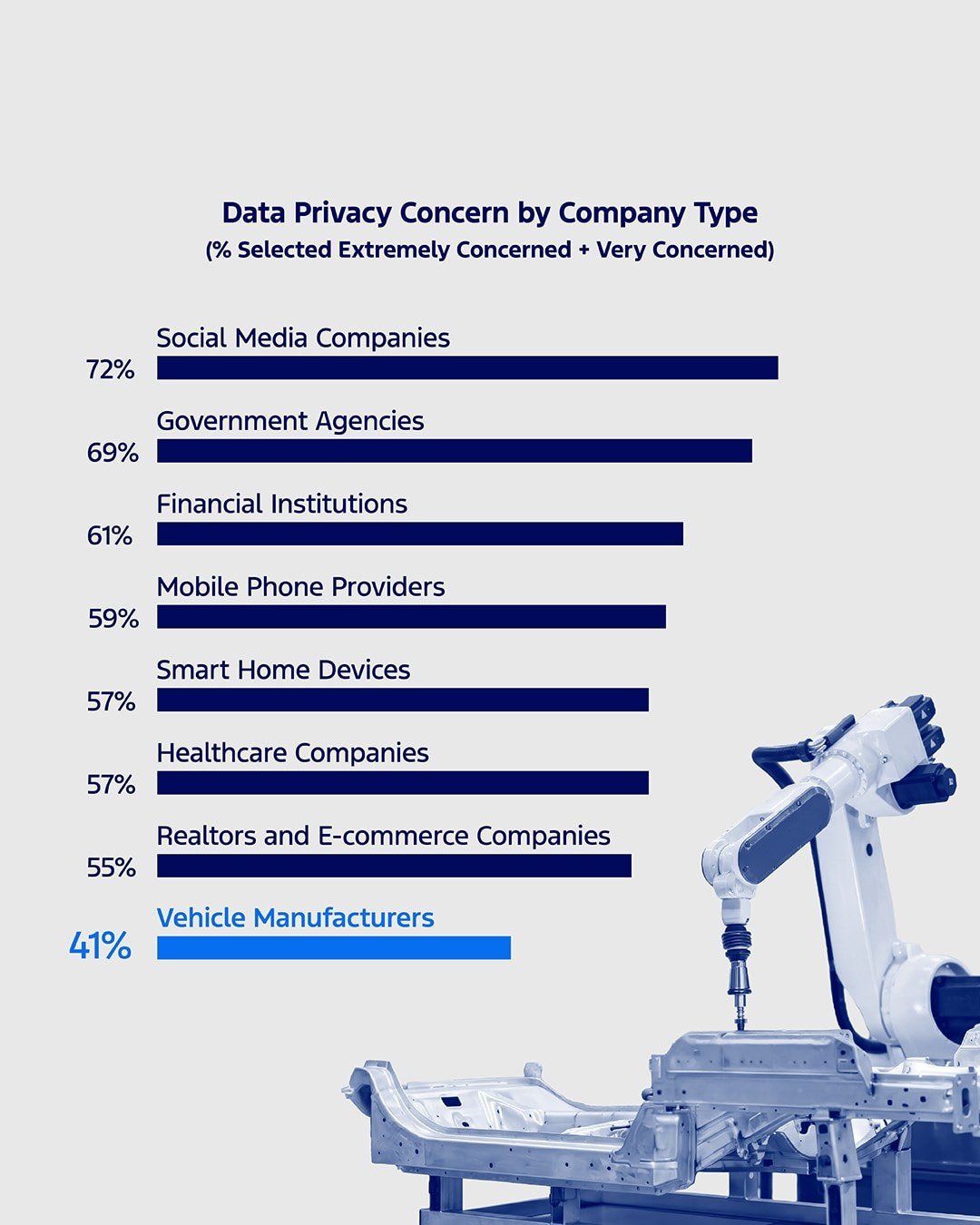
I accept most of that. The FTC hook is real, and Ford deserves credit for staying off the senators' list. But a hook only works on what the promise actually says, and the promise says "sell." It does not cover consent-based sharing, de-identified data, or offers built on your location. Ford's survey, run by Ford, says people worry less about carmakers than about social media. Four in ten still worry. GM's customers trusted their carmaker too.
What would change my mind
If Ford publishes, alongside the Lincoln, Canada, and Mexico rollouts it promised for the coming weeks, a list of every insurer and data company that has received connected-vehicle data from its cars, I'd call the promise a real change. The list would need dates and the consent flow used for each.
If Ford extends the pledge to sharing, not just selling, and lets owners keep BlueCruise while turning off driving-behavior collection, I'd also concede the point. The same goes if it says plainly whether Ford Insure and the Verisk link are still active, and how many drivers opted in.
And if the next twelve months bring no state or private complaint about Ford data showing up in an insurance file, that would count in Ford's favor too.
My read
Ford picked the safest possible verb. "We don't sell" is probably true, cheap, and easy to defend. It ignores the mechanism that actually moved drivers' data into insurance files at GM and, allegedly, at Toyota: consent screens few people read. Until Ford puts sharing, not just selling, on the record, the Privacy Promise is a well-timed answer to GM's bill rather than a new rule for your car.