Dodge Is Quietly Pricing the Electric Charger Out of Existence
A 40% residual, a 12.5% lease rate and a $12,500 price hike are not accidents. Dodge is winding down the electric Charger without announcing it.
Contents · 6 parts
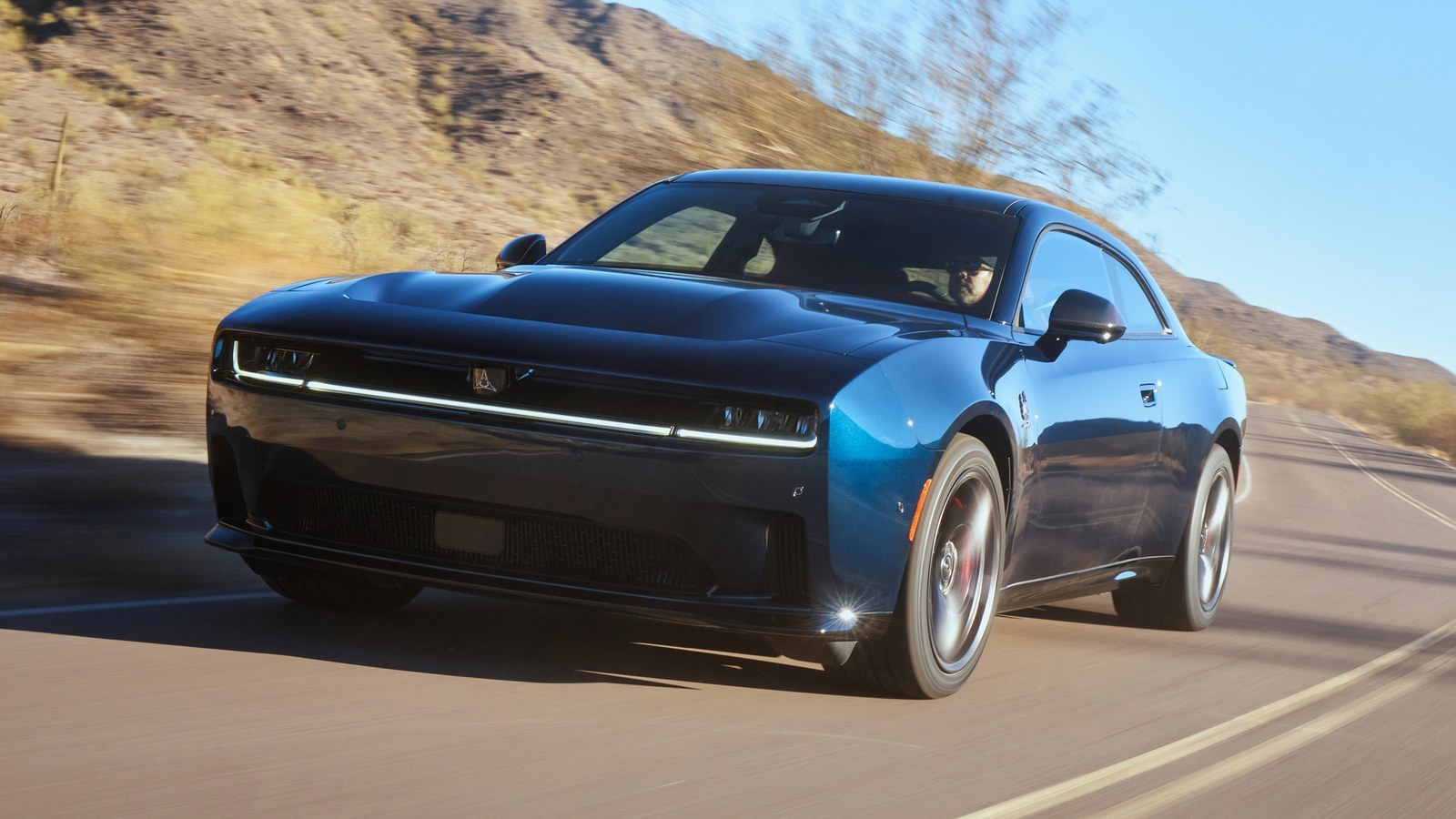
Leasing an electric Dodge Charger Daytona Scat Pack now costs about twice as much as leasing the gas Charger Scat Pack, even though the sticker prices are only 9% apart. That is the finding of a CarsDirect pricing analysis published Oct. 28, and most of the coverage since has treated it as another story about EVs being expensive to lease.
I read it differently. Here's what the headlines miss: Dodge isn't neglecting the Daytona lease. Every price lever on this car points the same way, and it points customers toward the gas Charger. In my view, this is how a carmaker winds down a model it no longer wants to sell, without the press release.
A 40% residual turns a $5,000 gap into $27,000
According to CarsDirect's analysis of Dodge's own payment estimator, a 2026 Charger Daytona Scat Pack two-door with an MSRP of $60,690 leases for $1,312 a month over 36 months with $6,269 due at signing, at 10,000 miles a year. The effective cost is about $1,486 a month. The gas Scat Pack two-door, at $55,690, comes out to $573 a month with $5,769 down, or an effective $733.
CarsDirect attributes the gap to a September dealer leasing bulletin, which it cites but did not publish. The figures it reports: a 40% residual and a money factor equal to 12.5% for the Daytona, against a 67% residual and 5.4% for the gas car. There is no lease cash on the Daytona at all, and CarsDirect's records show Dodge hasn't advertised a Daytona lease since the 2026 model went on sale.
| Charger Daytona Scat Pack (EV) | Charger Scat Pack (gas) | |
|---|---|---|
| MSRP, 2-door, 2026 | $60,690 | $55,690 |
| Residual after 36 months | 40% (~$24,300) | 67% (~$37,300) |
| Lease rate equivalent | 12.5% | 5.4% |
| Effective monthly cost | ~$1,486 | ~$733 |
| Effective cost over 36 months | ~$53,500 | ~$26,400 |
| US sales, Q3 2026 | 233 | 3,446 |
Run the residuals against the MSRPs and the trick becomes plain. The lessee pays for depreciation, and the bulletin's numbers project the Daytona losing about $36,400 of value in three years against roughly $18,400 for the gas car. A $5,000 price gap becomes a gap of about $27,000 over the lease. Then a 12.5% rate is applied on top, which is closer to a subprime used-car loan than to a factory-backed program.

Every other lever points the same way
If this were only a residual forecast, I'd call it cautious accounting. But it doesn't stand alone. For 2027, Dodge raised the price of the Daytona Scat Pack two-door from $59,995 to $72,495, a $12,500 increase, while the gas Charger kept its 2026 prices to the dollar, Jalopnik reported in June. The changes that came with the increase were a NACS charging port and new options. Asked to explain, Dodge said it was "shifting its focus to the new SIXPACK powertrain" and pointed to the gas Scat Pack from $54,995.
Add the trim history. The entry-level Daytona R/T, which once leased for an effective $688 a month, was dropped for 2026. After the federal tax credit ended, Stellantis did not replace the equivalent lease discount, according to CarsDirect. So the cheap way in is gone, the car got more expensive, and the lease got punitive. None of those is a decision the market made for Dodge.
The sales numbers show it is working. In the Stellantis third-quarter sales report, the electric Charger sold 233 units in the US, down 92% from 2,776 a year earlier. The gas Charger sold 3,446. Through September, it is 767 Daytonas against 8,029 gas Chargers. Dodge's own headline for the quarter was Charger retail sales up 22%. The name Daytona doesn't appear in the text at all, only as "Charger BEV" in the sales table.
Why a carmaker kills a car this way
Announcing a cancellation has costs. Dealers with Daytonas in stock lose the floor under their prices. Owners see their trade-in values drop overnight. And a company that spent years marketing "eMuscle" would have to say out loud that it was wrong, a year after it already cut the Daytona's price by $5,000 for 2026.
Pricing a car out of the market avoids all of that. The model stays in the configurator, the badge stays on the website, and the volume drifts toward zero on its own. My bet is that the 40% residual is the most honest number in the whole story, because it is the one that leaks Stellantis's own expectation: the company is not planning for a healthy used market for this car in 2029.
The gas side tells the same story from the other direction. The federal CAFE rollback has taken most of the regulatory cost out of selling more six-cylinder Chargers, a dynamic I wrote about earlier this month. Every buyer pushed from the Daytona into a SIXPACK car is now a better deal for Stellantis, not a compliance problem.
The case against my view
The strongest objection is that Dodge isn't steering anything, and the market is. Used EV values fell hard across the industry, the $7,500 federal credit that subsidized EV leases is gone, and any lender would set a low residual on a car that sold a few hundred units last quarter. A thin used market means unpredictable resale prices, and unpredictable resale prices mean a low residual. On this reading, 40% is simply a sober forecast.
Part of that is right, and I don't dismiss it. Low volume does make a car harder to price three years out. But the broader market doesn't support a 40% residual as an industry norm. Cox Automotive's EV Market Monitor for September shows used EV prices moving closer to gas cars, a record 3.3% share of used sales, and new EV incentives still averaging about $6,100 per vehicle. Other brands are paying to move EVs. Dodge is paying nothing on the Daytona and charging $12,500 more for the 2027 model. A company resigned to a weak market cuts prices. A company that wants buyers in a different car raises them.
The NACS port and the 2027 model year are the other objection: why update a car you're killing? My answer is that a running change to the charging port is cheap, while a cancellation is expensive. Keeping the Daytona alive at a price few will pay is the cheaper of the two.
What would change my mind
If Dodge puts lease cash on the Daytona this quarter, or if the 2027 lease program comes out with a residual above 50%, I'll concede that the September bulletin was a market forecast rather than a signal.
The Stellantis fourth-quarter sales report in early January is the next test. If Daytona volume climbs back toward 1,000 a quarter, the car still has a sales plan. And if Stellantis confirms a 2028 Daytona with a real product update, the "quiet wind-down" reading is wrong.
My read
Dodge doesn't need to cancel the electric Charger, because its own prices are doing that job. A 40% residual, a 12.5% lease rate, zero lease cash, and a $12,500 increase for 2027 add up to one message: buy the SIXPACK. If you're shopping a Charger today, the gas car is the rational choice, and if you already own a Daytona, the 40% residual is the clearest warning yet about your trade-in.