Hyundai Got Its First Genesis Seat-Fire Report in 2021. The Fix Still Isn't Ready
The two alleged U.S. fires in Hyundai's file date to 2021 and 2022. What finally forced this recall came from Korea, and owners still have no fix.
Contents · 7 parts
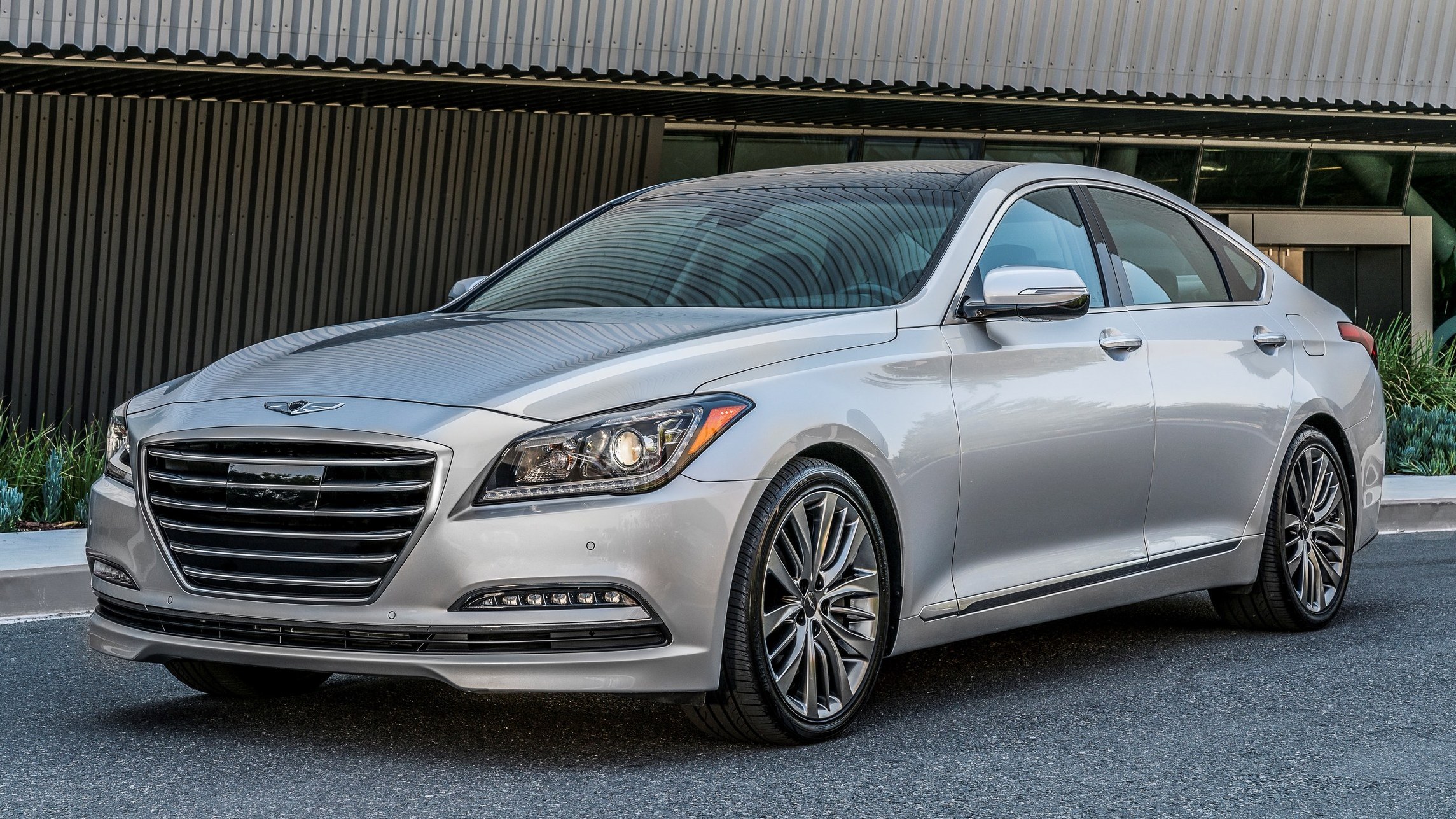
Hyundai is recalling 94,622 older Genesis sedans because a power seat switch can stick, keep the seat motor running, and start a fire, and it is telling owners to park outside because there is no fix yet.
Most coverage stopped at that advice. I think the more important story sits on page four of Hyundai's own filing. The two alleged U.S. fires in its file date to the end of 2021 and the summer of 2022. Nothing new turned up in America after that. What finally moved the company was data from Korea, delivered in July 2026.
That tells me the U.S. warning system didn't catch this. A foreign market did. And the owners paying for that gap are the people driving ten-year-old luxury sedans who may not read recall news at all.
A stuck switch, a running motor, and no part to fix it
According to the Part 573 safety recall report Hyundai filed with NHTSA on October 8, the campaign covers 54,644 Hyundai Genesis sedans from the 2015–2016 model years and 39,978 Genesis G80s from 2017–2020. Only cars with non-memory power seats are affected. Hyundai estimates that 1% of the population, roughly 950 cars, actually has the defect.
The mechanism is simple. A hard knock can dislodge or damage the front seat slider and height switch, built by Korean supplier Nidec Mobility. The switch stays engaged, and the seat motor keeps running even after the occupant leaves. Over time it overheats. The filing lists two warning signs: a burning smell from the seat and a seat switch that stops working.
The remedy is "currently in development." Dealers and owners are scheduled to be notified on December 6. VINs became searchable on October 13.
The U.S. file never grew past two cases
Hyundai's chronology reads like a slow relay. The first report, about a 2018 G80, arrived through its Speak Up For Safety channel on the last day of 2021; Hyundai could not recover the parts. A second potential case followed in August 2022. Hyundai did not get that car's seat into a lab until November 2023, fifteen months later. Its Korean parent confirmed the switch had been damaged by an external impact.
Then came the decision that defines this recall. From January through April 2024, Hyundai chose to keep monitoring. A review that summer found incident rates were low. Another review in late 2025 confirmed no additional U.S. fires.
The trigger arrived on July 2, 2026: new information from the Korean market about seat switch performance and alleged thermal events. Three months later, on October 1, Hyundai's U.S. safety committee voted to recall.
Look at the VIN table under the chronology. The two incident dates attached to the alleged U.S. fires, December 2021 and August 2022, match the first two reports. As I read it, the American evidence was the same in October 2026 as it was in 2022. Hyundai's assessment changed because Korea's numbers did, and the filing doesn't say how many cases Korea saw.
This was supposed to be the part Hyundai fixed
Context matters here. In November 2020, NHTSA announced a consent order with Hyundai over untimely Theta II engine recalls. Hyundai's share was a civil penalty of up to $140 million, and the order required it to build data analytics programs to detect safety problems sooner, under a third-party auditor reporting to the agency. The term was three years, with an option to extend by one.
The first Genesis seat report landed about thirteen months into that order. I'm not claiming Hyundai broke it; the law asks automakers to recall once they determine a safety defect exists, and two cases with no clear pattern is a hard call. What strikes me is that a system built specifically to catch problems earlier in the U.S. ended up waiting for another country to supply the evidence.
For owners of these cars, it's also not the first time they've heard "park outside." In February 2024, Hyundai filed recall 24V107 for water in the starter solenoid on overlapping Genesis models. That one had a fix ready.
| Recall 24V107 | Recall 26V664 | |
|---|---|---|
| Filed with NHTSA | Feb 13, 2024 | Oct 8, 2026 |
| Vehicles | 90,907 (incl. G70, G90) | 94,622 |
| Overlapping models | 2015–2016 Genesis, 2017–2019 G80 | 2015–2016 Genesis, 2017–2020 G80 |
| Fire source | Starter solenoid | Power seat switch and motor |
| Remedy at filing | Relay kit | In development |
| Owner letters | Mailed Jul 15, 2024 | Planned Dec 6, 2026 |
A 2017 G80 owner could plausibly get two park-outside warnings in under three years. That's a real cost for people who bought these sedans precisely because they offered big-car comfort at used-car prices.
The case against my view
The strongest argument against me is the arithmetic. Two alleged fires across 94,622 cars over almost five years is an extremely low rate, and the cause requires physical damage to the switch first. Recall every component with two incidents and no pattern, and you bury owners in notices they learn to ignore. Waiting for more data can be a responsible choice.
There's a second point in Hyundai's favor. It filed before the fix existed and told people what to do in the meantime. NHTSA's form shows "Park Outside" checked and "Do Not Drive" unchecked, so the cars remain drivable. Warning owners early, without a part, is exactly what regulators push automakers to do.
I accept both points. My answer is that low frequency is not the same as low severity. The risk here is a fire in a parked car, possibly in an attached garage. The filing itself says the motor can run after the driver walks away. For that failure mode, "keep monitoring" for nearly three years after a lab confirmed the mechanism is a long time, especially when the decisive evidence ultimately came from outside the U.S. market Hyundai was monitoring.
The practical gap is also real. The report leaves the interim owner notification date blank. Unless an owner checks the VIN or reads about this, the first official letter is due in December.
What owners should do before December
Check the VIN on NHTSA's recall lookup. If the car is listed, park it outdoors and away from other vehicles and buildings, as the filing recommends. Driving is not restricted.
Pay attention to the two warning signs in the report: a burning odor from a front seat and a power seat switch that doesn't respond. Hyundai says the repair will be free regardless of warranty status. It also promises to reimburse out-of-pocket costs incurred to obtain a remedy, under the general reimbursement plan filed with NHTSA on March 2, 2026. My reading of that language is that it covers repair costs, not parking. If you pay for anything related to this defect, keep the receipts.
What would change my mind
If Hyundai or NHTSA publishes the Korean case count and it turns out the Korean reports also arrived only in mid-2026, the delay looks more like a genuinely rare defect than a slow process. I would revise my view.
If the remedy is ready and owner letters go out on or before December 6 with parts available at dealers, the "no fix" criticism weakens considerably. And if NHTSA opens no inquiry into the timing of this recall over the next year, that is a sign the agency sees it as a judgment call rather than a lapse.
My read
The headline is the switch, but the story is the source of the evidence. In the U.S., Hyundai's file in 2026 looked just like its file in 2022, and it took Korean data to tip the decision. My bet is that more recalls for aging cars will follow this pattern unless automakers treat early incidents in a ten-year-old model as seriously as complaints about a new one.