Tesla Claims a 25x FSD Safety Gain. It Won't Say 25x of What
Tesla's "25x" has no published baseline, yet v15 uses it to relax driver monitoring at speed while NHTSA probes the very behaviors at issue.
Contents · 7 parts
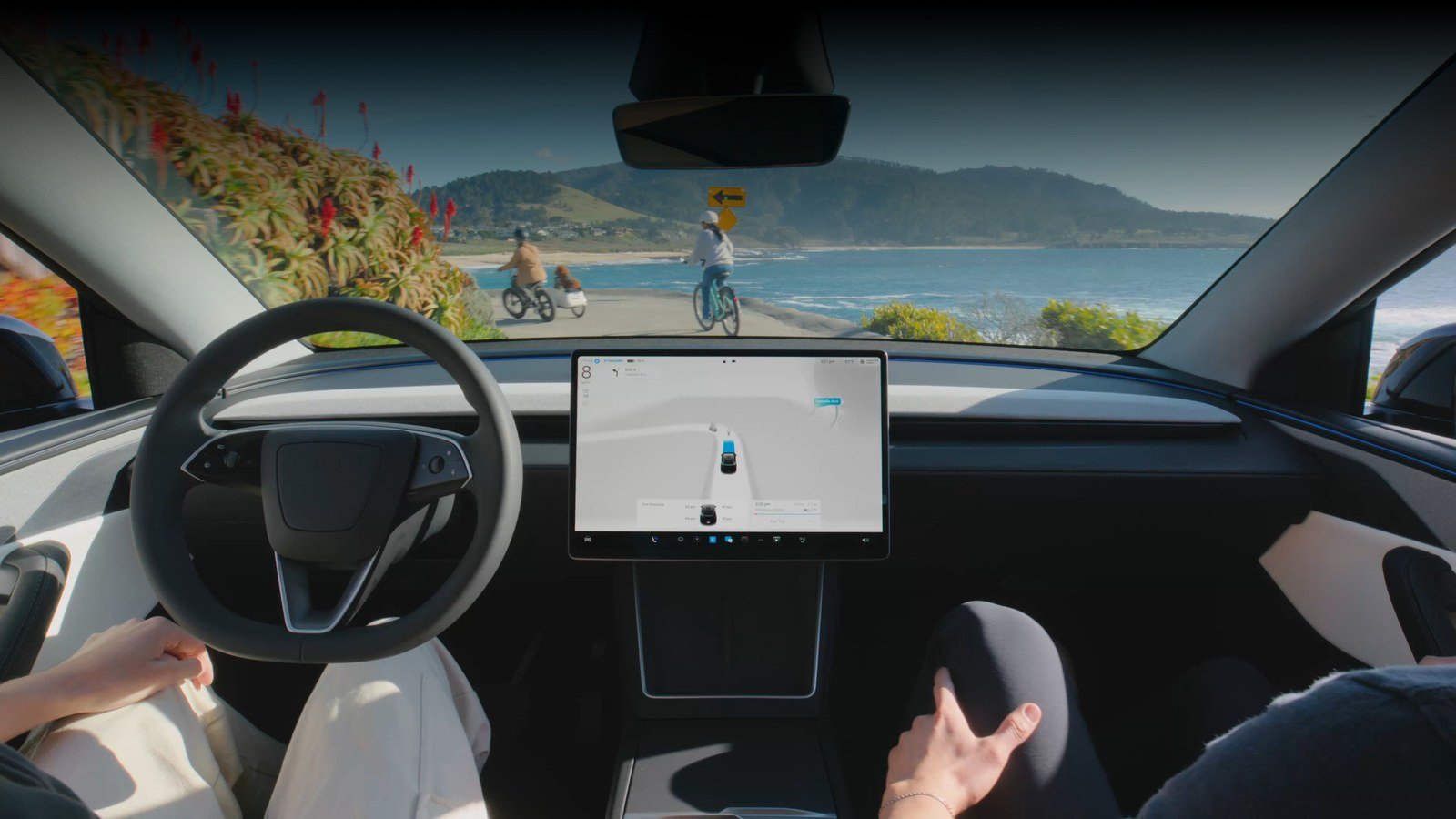
Tesla started pushing Full Self-Driving (Supervised) v15 to owners on Nov. 21 with one number doing most of the work: a 25-fold improvement in what its release notes call the critical intervention rate.
Here's what the headlines miss. Twenty-five times better than what? Tesla hasn't said. And a few lines further down the same notes, the company says it is decreasing the strictness of driver monitoring in its faster driving profiles. In my view, that is the real news in v15: Tesla is easing off part of the supervision it demands from the driver, and the justification is a multiplier with no base.
Tesla loosened the leash in the same release that sells the number
According to the release notes as quoted by Electrek, v15 rebuilds the end-to-end driving network around a new vision encoder shared with Tesla's Robotaxi and Optimus programs and credits it with "improving the critical intervention rate by 25x." The update replaces the old piecemeal visualizations with a single augmented-reality view, improves detection of road signs, debris, and potholes, and lists "improved speed handling for each driver profile, school zones and speed limits."
The driver-monitoring entry has two halves. The cabin camera will now track attention when the driver wears a hat or sunglasses, which closes a real gap. The other half reads "decreasing strictness in higher speed driver profiles." Tesla has not said which cars get v15 first; it has previously told investors that its HW4 computer is enough to run it.
A multiplier without a baseline is a marketing number
A rate improvement means something only if you know where it started and how it is counted. Tesla has published neither. We don't know what qualifies as a "critical" intervention, whether it is measured on customer cars or on Tesla's own validation fleet, or on which roads.
The best outside guess comes from Electrek, not from Tesla. Working from earlier data that put v14 at a couple of thousand miles between critical interventions, the outlet turns the 25x claim into roughly 50,000 miles. That is a publication's arithmetic on crowd-sourced figures, and it should be read as such.
What strikes me is that Tesla already has a public safety yardstick and chose not to use it here. Its Vehicle Safety Report counts miles per collision over a rolling 12 months, updated quarterly, and charges a crash to FSD if the system was active at any point in the five seconds before impact. It is imperfect, but it is defined. Intervention rates appear nowhere on that page. So the one figure that would let anyone check the 25x is the one Tesla keeps internal.
Regulators are already looking at the cases the notes promise to fix
The features Tesla advertises in v15, from school zones to signs to speed limits, map almost line by line onto open federal files. NHTSA's preliminary evaluation PE25012, opened Oct. 7, 2025, covers FSD running red lights and steering into opposing lanes. The agency cited six crashes reported under its Standing General Order in which a Tesla on FSD entered an intersection against a red light; four involved injuries. More than 13 months later, the probe is still open.
More to the point for v15, NHTSA built that investigation around whether FSD's maneuvers "forestall the driver's supervision." In plain terms: does the car do something wrong too fast for the human to catch? Loosening monitoring at higher speeds pushes in the wrong direction on precisely that question.
| Opened | What NHTSA is examining | Status | |
|---|---|---|---|
| PE25012 | Oct. 7, 2025 | FSD running red lights, entering opposing lanes | Open |
| EA26002 | Mar. 19, 2026 | FSD failing to detect degraded visibility and warn the driver in time | Open (upgraded from PE24031) |
| DP26010 | Oct. 9, 2026 | Petition: 2026 Robotaxis (Model Y, Cybercab) speeding in active school zones | Open |
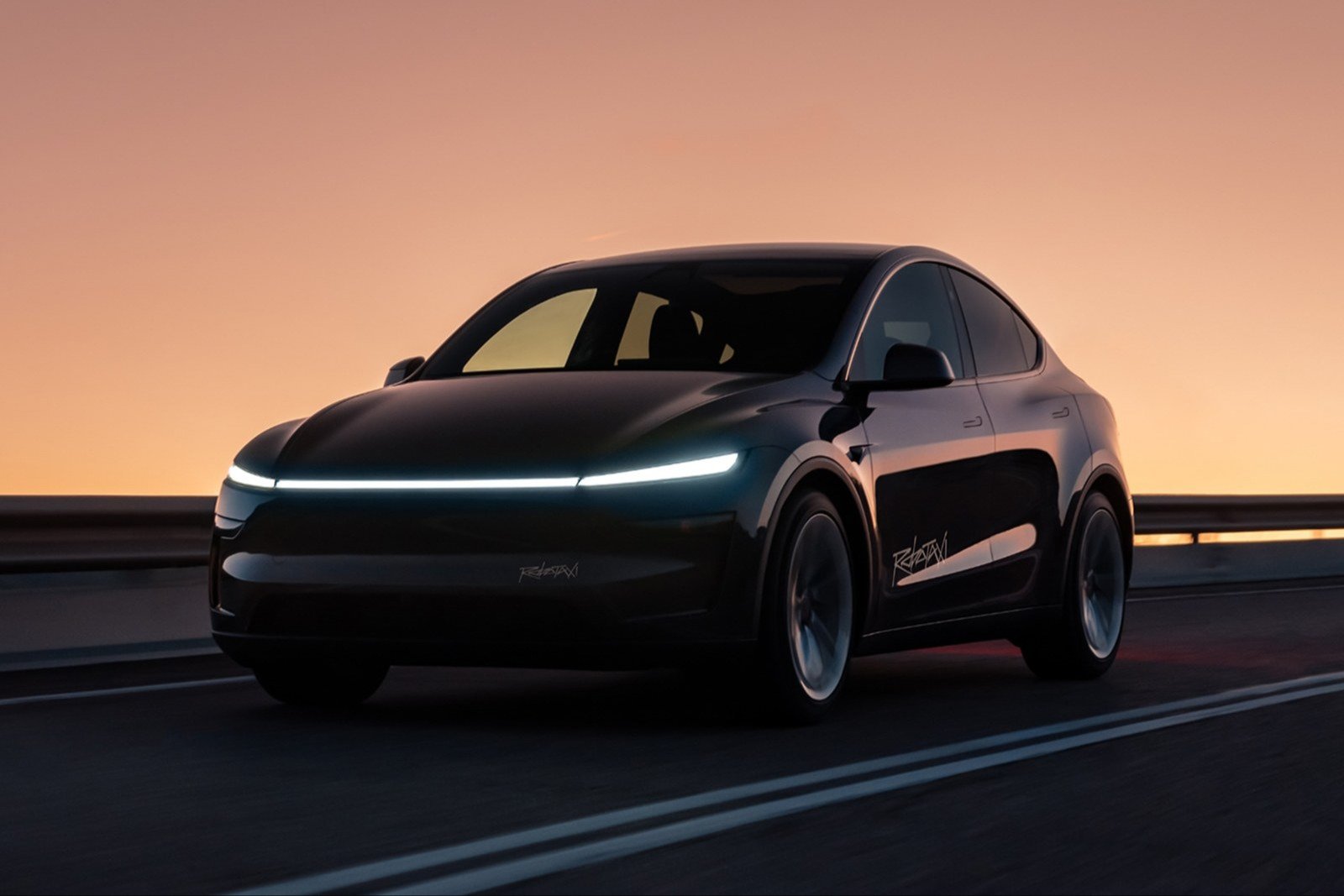
Then there is DP26010. On Oct. 9, NHTSA opened a review of a petition alleging that Tesla's 2026 Robotaxis exceed posted limits in active school zones, backed by three video links. That is driverless software, not the supervised product, but Tesla says the new encoder is shared across both, and the company is already talking up a Model Y with no steering wheel. A school-zone fix in the consumer notes and an open school-zone petition against the robotaxis are not a coincidence I'd ignore.
The same car gets the opposite treatment in Europe
Five days before v15, the Dutch regulator RDW approved an update to Tesla Assisted Driving, the European name for FSD (Supervised), on HW4 cars. According to Electrek's reporting, that update makes monitoring stricter: earlier warnings and hands on the wheel above 130 km/h (81 mph). Same cabin camera, same computer. One market tightens the driver's job at high speed; the other relaxes it.
I don't read that as Tesla believing American drivers are better supervisors. I read it as Tesla doing what each rulebook demands. Europe approves before release. The U.S. investigates after.
The case against my view
The strongest objection goes like this. An internal metric tracked consistently from version to version still shows the direction and rough size of progress, even without a published base. If v15 really cuts critical interventions by an order of magnitude, the driver has far less to catch. Add a clearer single visualization and attention tracking that finally works with sunglasses, and a lighter touch at speed looks like a fair trade, not a gamble. Monitoring that nags too often also teaches people to defeat it, which is worse than a calibrated one.
I take the sunglasses fix seriously; it is a genuine improvement. But the trade holds only if the number holds, and nobody outside Tesla can test it. Higher speed is where reaction time is shortest, and a better screen doesn't buy a driver seconds when the car makes a sudden wrong move, which is the exact failure NHTSA is investigating. If the 25x is as solid as Tesla implies, publishing the baseline costs it nothing. And the legal position hasn't moved: by Tesla's own description this is a Level 2 system, and the driver answers for the crash.
What would change my mind
First, Tesla publishing the baseline and the definition behind the 25x figure. The obvious venue is its fourth-quarter results early next year. With real numbers, I'd judge the monitoring trade on evidence rather than on a multiplier.
Second, the next quarterly updates of the Vehicle Safety Report, covering months when v15 is on most HW4 cars, showing a clear gain in FSD miles per collision. That would give the claim support from a metric Tesla has actually defined.
Third, NHTSA closing PE25012 without a recall and denying the DP26010 petition. That would mean the regulator considers the behaviors in question fixed. If instead the agency upgrades PE25012 to an engineering analysis, as it did with the reduced-visibility probe in March, I'll take that as confirmation of this reading.
My read
v15 may well be the best FSD Tesla has shipped. But "25x" is a claim nobody outside the company can check, and Tesla is using it to relax the one safeguard that keeps a supervised system supervised. Until the baseline is public, an HW4 owner should drive v15 as if the monitoring had not changed, because the liability hasn't.