Rivian's R2 Is a Hit. Its Car Business Still Loses Money
The R2 became Rivian's best-seller, yet the automotive gross loss more than doubled from the prior quarter, even with credits. Volkswagen-funded services carried the profit.
Contents · 6 parts
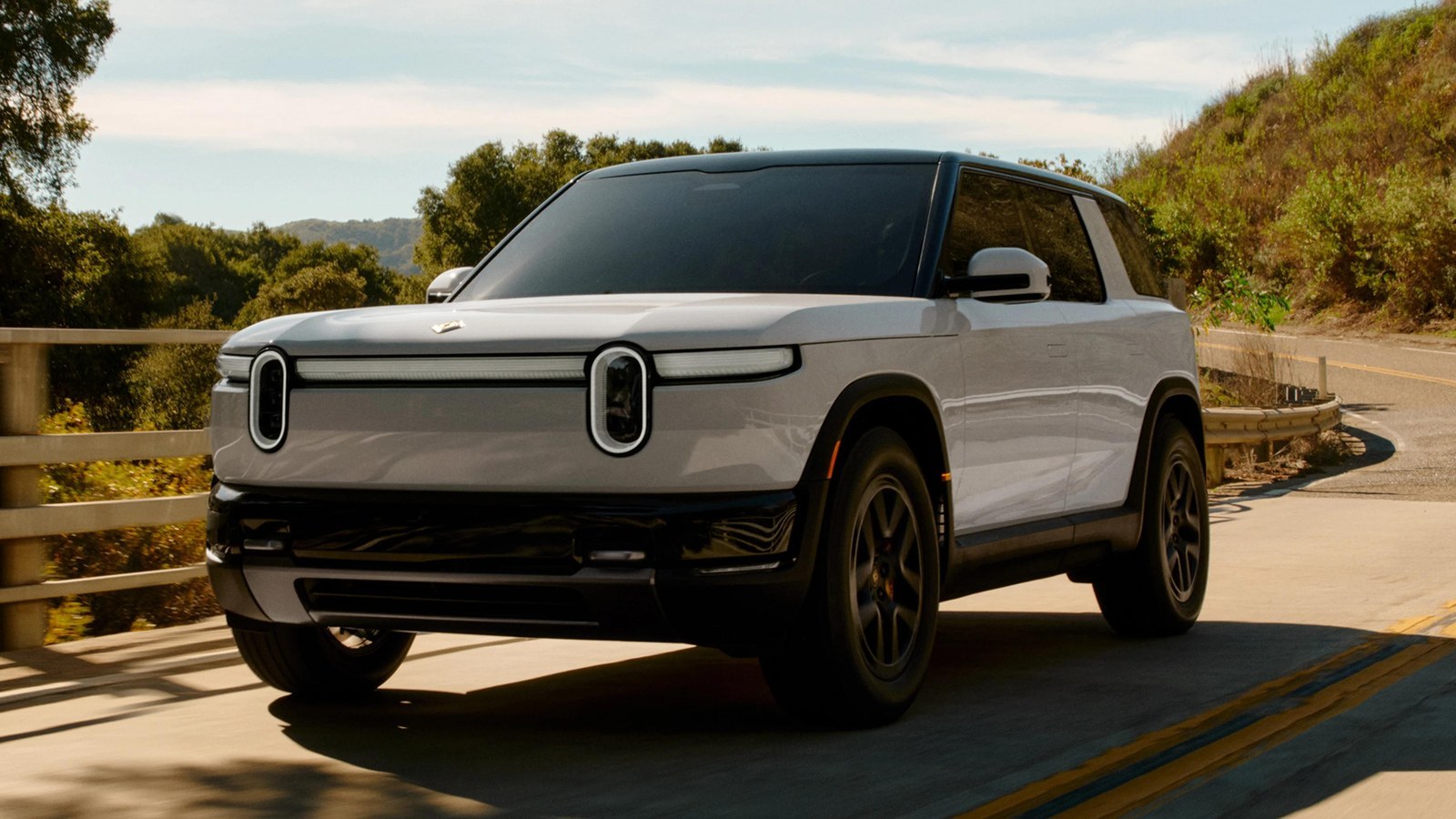
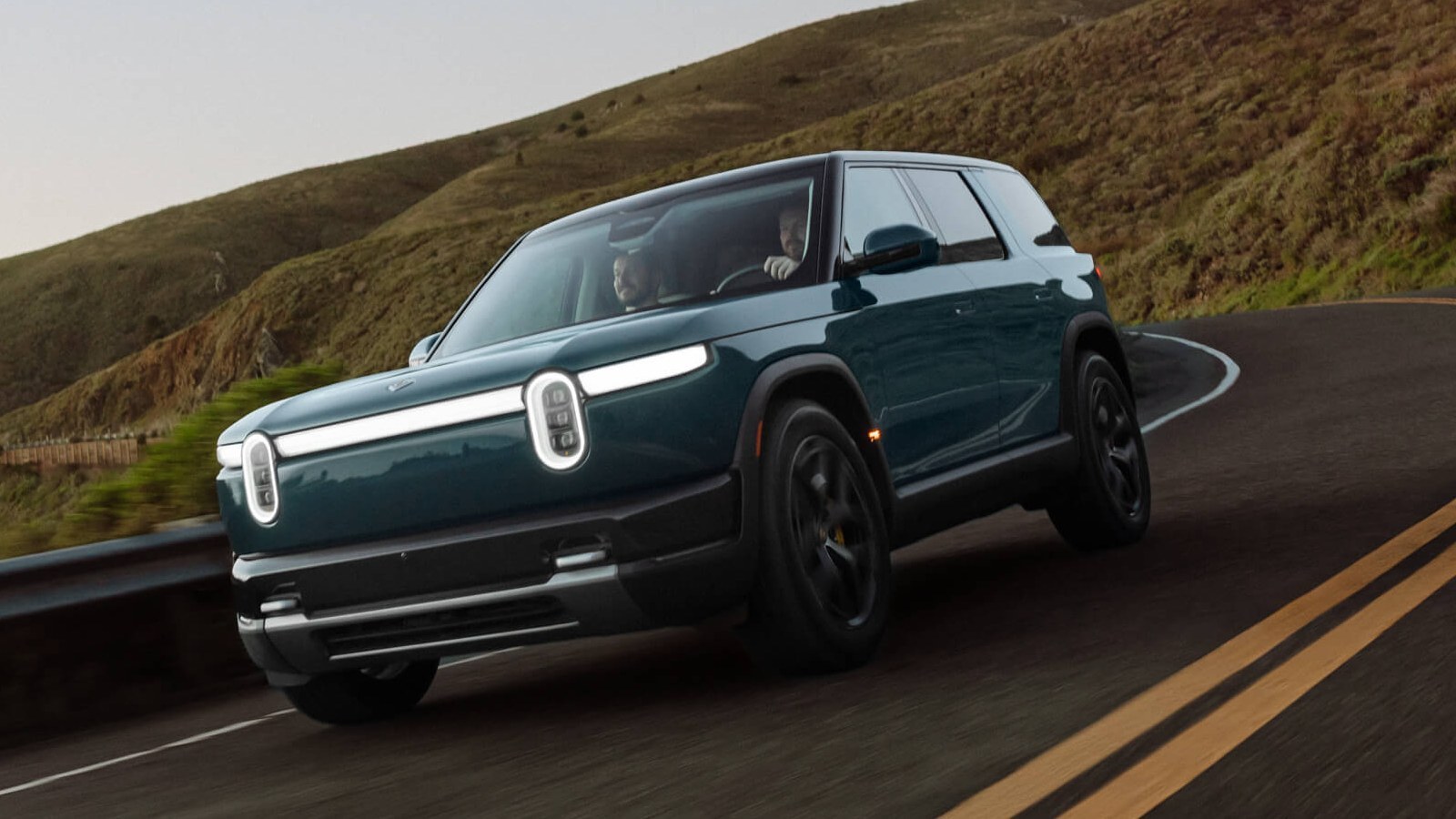
Rivian delivered 19,248 vehicles in the third quarter, a company record, and the R2 outsold both the R1 and Rivian's commercial vans. Revenue rose 38% to $2.155 billion, and management raised its 2026 outlook.
Here's what the headlines miss: the car business got worse, not better. Rivian's automotive segment posted a bigger gross loss in the quarter it sold the most cars than in the quarter before, and the company's gross profit came almost entirely from engineering work Volkswagen pays for and from regulatory credits.
I don't think that makes the R2 a failure. I think it means the R2 story is still a promise, and the third quarter didn't prove it yet.
A record quarter, as the filing tells it
According to Rivian's third-quarter results filed with the SEC, the company built 19,751 vehicles in Normal, Illinois, and delivered 19,248, up 46% from 13,201 a year earlier. Automotive revenue was $1.550 billion; software and services brought in $605 million. Consolidated gross profit was $176 million.
Guidance moved, but less than "improving across all metrics" suggests. The delivery range went from 65,000–70,000 to 67,000–70,000, so only the bottom end rose. The adjusted EBITDA loss forecast improved by $100 million at the midpoint, to a loss of $1.75 billion to $1.85 billion, and Rivian itself credited regulatory credits, an IEEPA tariff refund receivable, and higher volumes.
More cars, a bigger automotive loss
The automotive segment lost $80 million at the gross level. That beats the $130 million loss a year ago, which is the comparison Rivian leads with. The more useful comparison is the previous quarter: in Q2, on 12,194 deliveries, the segment lost $36 million, according to the second-quarter filing. Rivian added roughly 7,000 deliveries and lost $44 million more.
Divide the $80 million by every vehicle delivered, R1, R2 and vans together, and you get roughly $4,200 per vehicle. That is a blunt average of a segment number, not the cost of an R2, which Rivian doesn't break out. Take out the $81 million in regulatory credit revenue, which carries almost no cost, and the same arithmetic gives roughly $8,400 per vehicle.
| Q2 2026 | Q3 2026 | |
|---|---|---|
| Deliveries | 12,194 | 19,248 |
| Automotive gross profit | −$36M | −$80M |
| Regulatory credit revenue | $108M | $81M |
| R2 ramp costs (Rivian estimate) | ~$100M | ~$120M |
| Automotive result ex-credits, ex-ramp* | −$44M | −$41M |
| Consolidated gross margin | 11% | 8% |
*My calculation: segment gross profit, minus all credit revenue, plus Rivian's own ramp-cost estimate. Both quarters also include an IEEPA tariff refund that Rivian didn't size, so the underlying figure is somewhat worse than shown.
Mix explains part of the slide. Rivian says the average selling price fell because more R2s and commercial vans went out. On Rivian's R2 page, the only trim listed as available now is the $57,990 Performance. The $53,990 Premium is marked for late 2026, and the $44,990 Standard for 2027. The cheapest R2s haven't reached the mix yet, and they are the ones that will test the margin hardest.
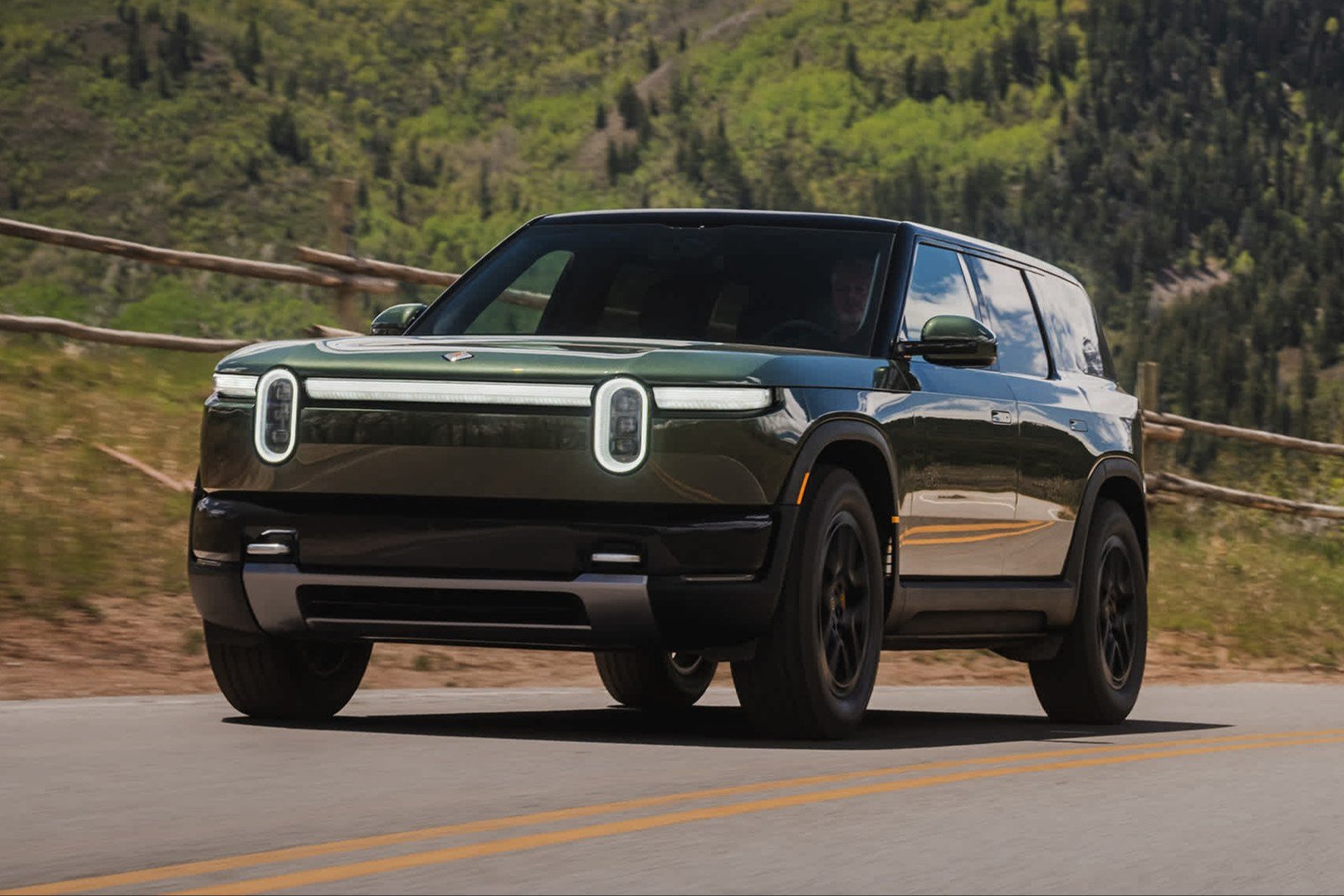
There's a volume caveat, too. Last week I looked at Cox Automotive's estimates of Rivian's third-quarter U.S. sales, which put almost all of the year-over-year growth on delivery vans while the R1 shrank. The filing doesn't contradict that. The R2 leads the mix partly because the vehicle it was meant to sit beside is selling less.
Volkswagen and regulators paid for the gross profit
Software and services earned $256 million in gross profit at a 42% margin. Of that segment's $605 million in revenue, $354 million, or 59%, came from Rivian's joint venture with Volkswagen Group, mostly electrical architecture and software development work. Volkswagen also sent Rivian $1 billion in October through a 10-year term loan, which lifts total available liquidity from $6.1 billion to $7.1 billion on a pro forma basis.
Put the pieces together and the quarter's $176 million gross profit is a services business propping up a carmaker. The car side came in at minus $80 million even after $81 million of credits and a tariff refund. Credits are a policy product, not a car product, and a refund is a one-off by definition.
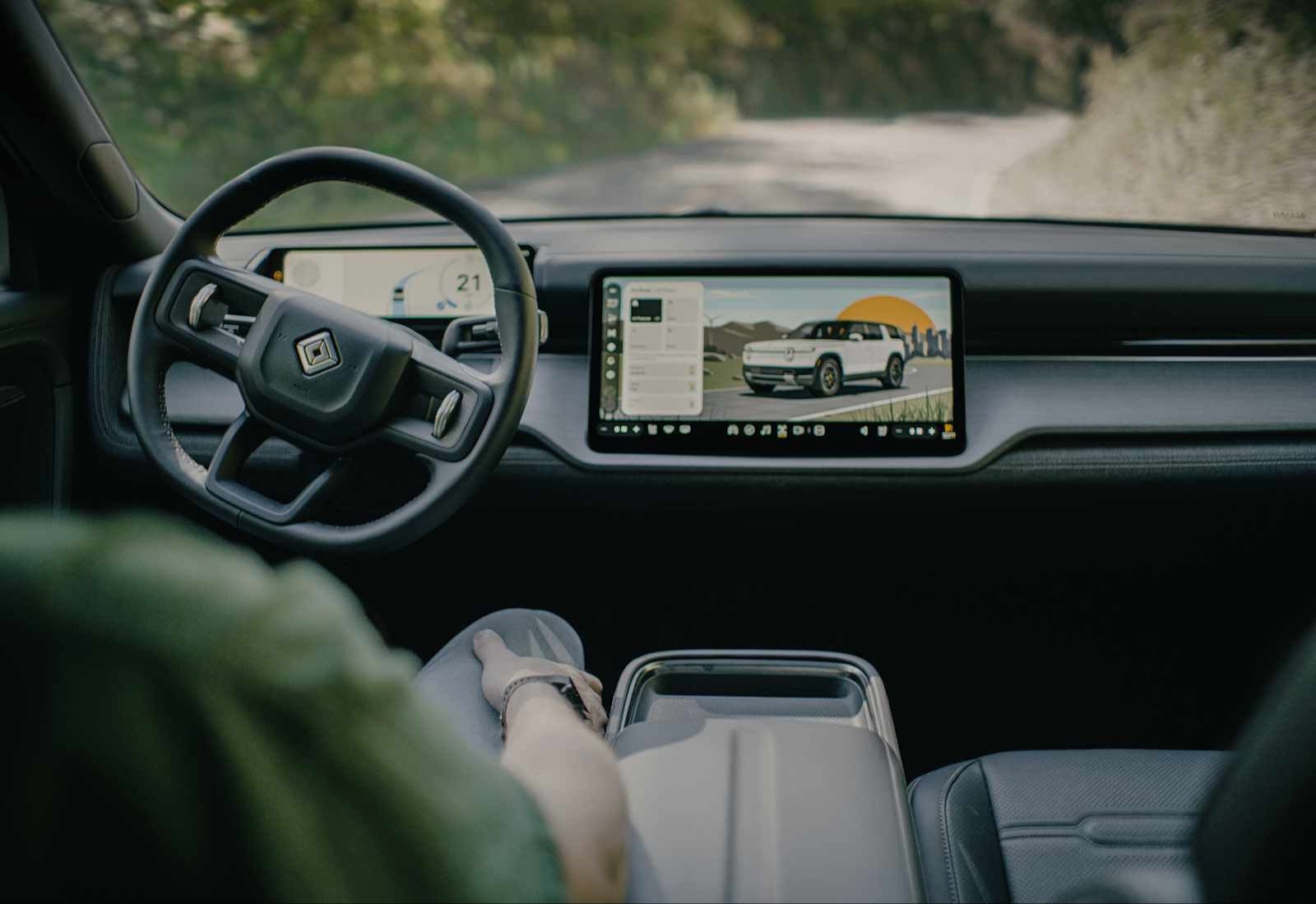
Cash tells the same story. Free cash flow was negative $1.124 billion, versus negative $421 million a year earlier, as Rivian built inventory for the R2 launch and deferred revenue unwound. At that pace, $7.1 billion covers roughly six quarters. Rivian is not in danger this year, but it is spending like a company that needs the R2 to work quickly.
The case against my view
The strongest objection is that I'm reading a factory launch as if it were a steady state. Rivian booked about $120 million of extra cost from ramping R2 production. Add that back and the automotive segment shows a gross profit of about $40 million. Strip out the credits as well and it was close to break-even: minus $41 million, against minus $44 million in Q2 on far fewer cars. Per vehicle, that underlying loss fell by about 40% in one quarter.
Management went further on the call. According to the call transcript published by Investing.com, Rivian said automotive gross profit excluding regulatory credits was positive on a cash basis in the third quarter, and that it intends to exit 2026 at a positive automotive gross profit, with the R2 expected to make up most of fourth-quarter deliveries.
That's a fair case, and the trend supports it. My answer is that each of those numbers still rests on the most expensive R2 and on adjustments. A cash basis leaves out depreciation on a plant Rivian very much has to pay for. Ramp costs are Rivian's estimate against a "normalized" level Rivian defines. And the $44,990 car that defines the R2's promise isn't in any of these figures. You normalize a loss away after the base model ships, not before.
What would change my mind
The first sign would be the fourth-quarter report, due early next year, showing positive automotive gross profit on a GAAP basis for the full quarter, not just an exit rate, with regulatory credit revenue well below the $81 million of Q3. That would mean the cars, not policy, are carrying the segment.
The second is the Premium trim arriving in late 2026 as promised and the $44,990 Standard shipping in 2027 without dragging the segment back into the red. If the Standard stays in "coming" status while margins improve, the improvement belongs to the mix.
The third is Volkswagen's share of services revenue falling while services revenue keeps growing. Autonomy+ subscriptions are where that has to show up, and Rivian's Autonomy and AI Day on December 9 is the next chance to see a number.
My read
The R2 is selling, and that was the hardest thing to prove. What Rivian hasn't proved is that it can sell R2s at a profit at the price that drew the reservations. Until the $44,990 version is in the numbers, I'd treat this quarter as a strong launch underwritten by Volkswagen and regulators, not as the turn.