Mazda Froze the CX-5's $29,990 Price. Everything Above It Went Up
The base CX-5 still costs $29,990, but every trim people buy got pricier, and Mazda's own price sheet points to the US-built CX-50 Hybrid.
Contents · 7 parts
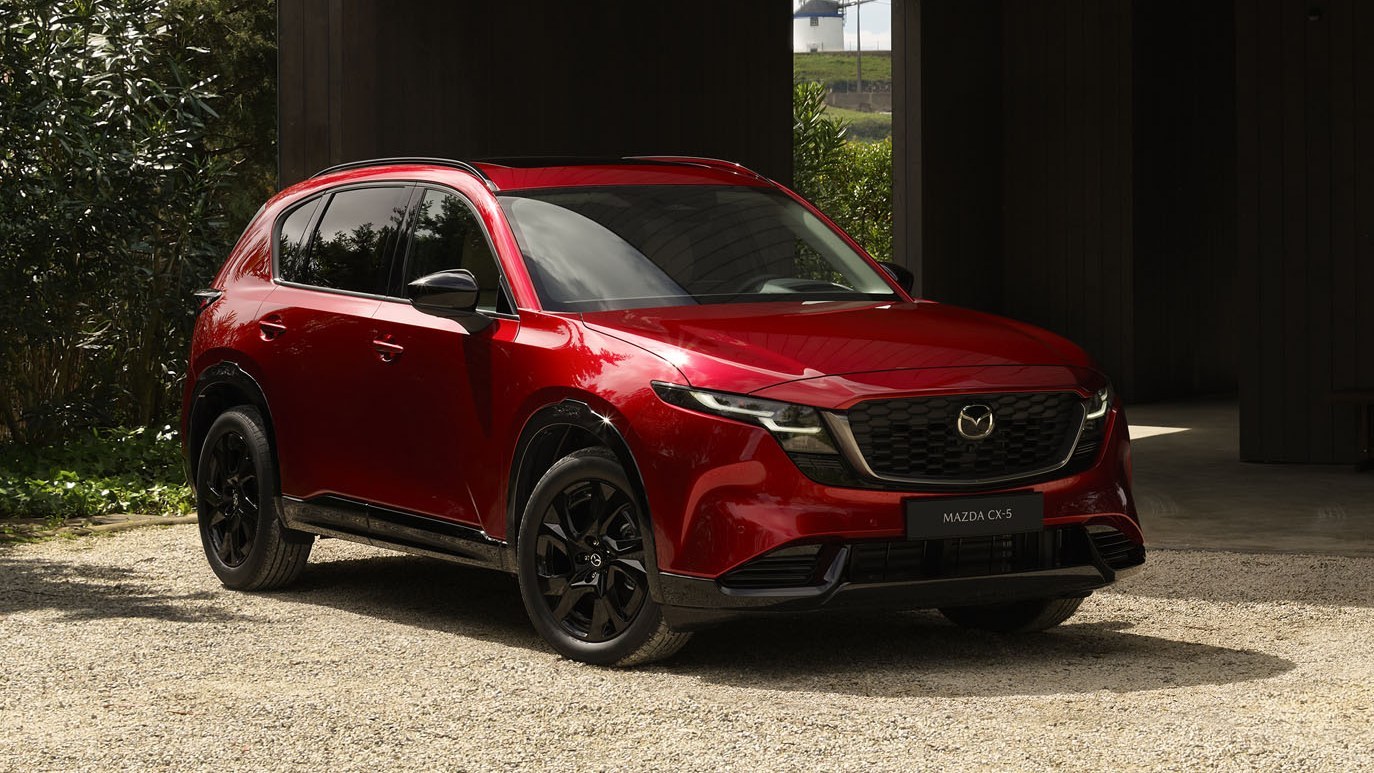
Mazda announced 2027 CX-5 pricing on October 26, and the headline number did not move: the 2.5 S still starts at $29,990. Every other trim did.
Here's what the "price unchanged" headlines miss. The $29,990 is a billboard. The money moves one rung up, and the most telling price on Mazda's own sheets isn't a CX-5 at all. It's the CX-50 Hybrid, built in Alabama, sitting $200 above a mid-trim CX-5 that ships from Japan and still has no hybrid.
A frozen base sticker on a car that keeps getting more expensive to buy
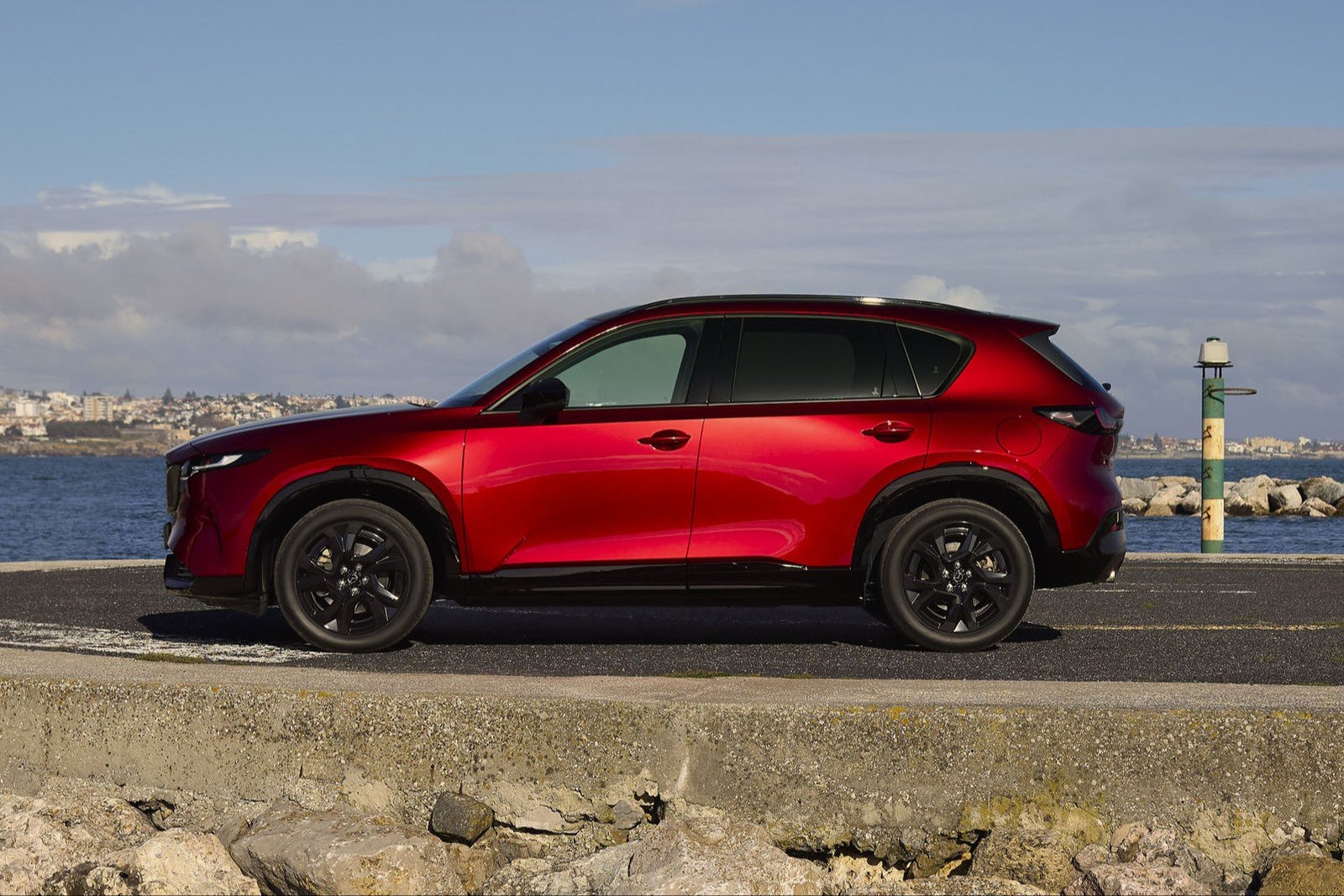
According to Mazda's 2027 pricing release, the CX-5 keeps its 187-hp 2.5-liter four, six-speed automatic and standard all-wheel drive. The base 2.5 S holds at $29,990 and even gains equipment: a 10-way power driver's seat with memory replaces the eight-way manual seat of the 2026 model, and keyless start joins the list. The four trims above it rise by $150 to $550. Cars reach dealers over the coming months.
The fine print moved as well. Mazda raised destination and handling by $100 on its compact crossovers effective August 11, from $1,495 to $1,595. So the cheapest CX-5 that cost $31,485 delivered when 2026 pricing came out in January now costs $31,585. That 2026 model year lasted about nine months.
The increases land exactly where families stretch
| 2026 MSRP | 2027 MSRP | Change | |
|---|---|---|---|
| CX-5 2.5 S | $29,990 | $29,990 | $0 |
| 2.5 S Select | $31,990 | $32,140 | +$150 (0.5%) |
| 2.5 S Preferred | $34,250 | $34,550 | +$300 (0.9%) |
| 2.5 S Premium | $36,900 | $37,450 | +$550 (1.5%) |
| 2.5 S Premium Plus | $38,990 | $39,440 | +$450 (1.2%) |
| Destination (at launch → now) | $1,495 | $1,595 | +$100 |
The pattern matters more than the size. The trim that exists mostly to anchor ads stays put. The trims people actually drive home absorb the change. The biggest jump, $550, hits the Premium, the first CX-5 with leather, a panoramic roof and Bose audio, which is precisely where a family buyer decides to stretch.
In my view, this is price-ladder management, and it's the mirror image of two moves we covered last week. Lexus and Kia deleted the cheapest rung. Subaru built a cheaper rung to advertise. Mazda keeps its rung and makes it nicer, because the rung is the ad.
The CX-50 is quietly winning Mazda's own showroom
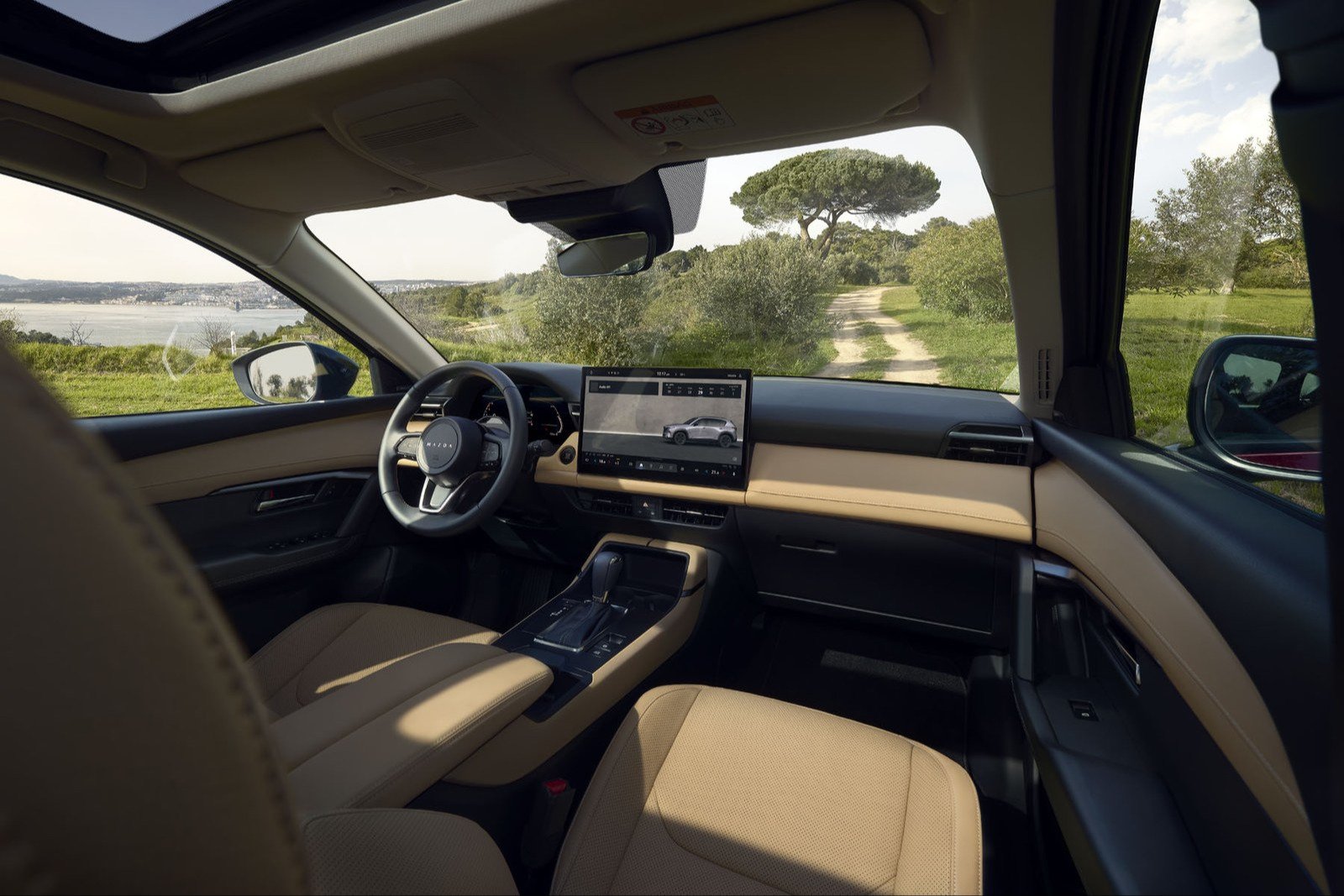
Mazda's September sales report shows how close the two crossovers have become. Through nine months, the CX-5 sold 95,762 units in the US, down 9.5% from 105,788. The CX-50 sold 95,351, up 19.7% from 79,628, with best-ever September results for the CX-50 overall and for the CX-50 Hybrid. Mazda as a whole fell 2.9% to 310,268. The CX-5 is still technically the best-seller. Its lead is 411 cars.
Now put the price sheets side by side. A 2027 CX-5 2.5 S Preferred costs $34,550. A CX-50 Hybrid Preferred costs $34,750, according to Mazda's 2026 CX-50 pricing release. For $200 more, that buyer gets 219 hp instead of 187 and an EPA rating of 38 mpg combined instead of the 2026 CX-5's 26 mpg. At 12,000 miles a year, that works out to roughly 145 fewer gallons.
Then there's the factory. Mazda assembles the CX-50 at Mazda Toyota Manufacturing in Huntsville, Alabama. The CX-5 is a Japanese car: Mazda's own production history lists the Ujina and Hofu plants as its home, and Bloomberg Línea reported that the new generation would keep shipping to the US from Japan despite tariffs. Since September 16, 2025, Japanese cars have entered the US at a 15% tariff, down from 27.5%, under the US–Japan trade deal, Bloomberg reported via Transport Topics.
So I read the 2027 sheet as a nudge. Mazda never has to say "buy the hybrid." It only has to keep the CX-5's best deal at the bottom of the ladder and let a tariff-free, 38-mpg CX-50 sit $200 from the middle of it. My bet is that Mazda is perfectly comfortable with which way that nudge works.
No hybrid until 2027 is the CX-5's real price increase
The release poses its own question about a hybrid CX-5 and answers it by repeating the gas engine's specs, then promising that additional powertrains will be announced in 2027. Announced, not on sale. Reports that a CX-5 hybrid arrives later this year aren't backed by anything Mazda has published, and I treat them as rumor.
That gap is what the CX-5 buyer really pays. The sticker barely moved. The choice did not grow. In a class where an electrified option has become the default step up, the CX-5 offers one engine, and the hybrid Mazda already sells wears a different badge.
The case against my view
The strongest counterargument is the size of the numbers. Increases of 0.5% to 1.5% are modest for a car paying a 15% import tariff, and the base buyer gets a better seat for the same sticker. If Mazda wanted to milk the CX-5, it had room to. The trend may also be turning: CX-5 sales jumped 37.8% in September to 11,345 as the new generation filled dealer lots, while the CX-50 grew just 3.1%.
I accept most of that. The increases are restrained, and September is a real signal. But restraint in the size of an increase doesn't change its direction or where it lands. And one strong month for a new generation, against a nine-month surge by its sibling, is a ramp-up, not a verdict. The question isn't whether the CX-5 is fairly priced. It's which Mazda the buyer at $34,000 drives home.
What would change my mind
If Mazda's full-year sales report in early January 2027 shows the CX-5 back in a clear lead over the CX-50, by several thousand units rather than a few hundred, my claim that the CX-50 is winning the showroom is wrong.
If the CX-5 hybrid, once Mazda prices it in 2027, lands within about $1,500 of the equivalent gas trim, then this year's sheet was a bridge rather than a nudge. And if Mazda moves the base 2.5 S off $29,990 in a mid-year adjustment, or announces US assembly for the CX-5, the billboard and the tariff logic behind my reading both fall away.
My read
The $29,990 CX-5 is real and better equipped than before, but it's the sign over the door. Behind it, Mazda raised every trim people actually buy, added $100 in delivery and parked its Alabama-built CX-50 Hybrid $200 from the CX-5's middle. Until a CX-5 hybrid has a price tag, I'd treat the CX-5 as the Mazda you're shown and the CX-50 Hybrid as the Mazda that Mazda would rather you buy.