Paris Just Showed the Cheap EVs America Won't Get, and Detroit Should Worry
Europe and China are fighting over the sub-€20,000 electric car. America sits behind a legal wall and a $50,000 average price, and that should worry Detroit.
Contents · 7 parts
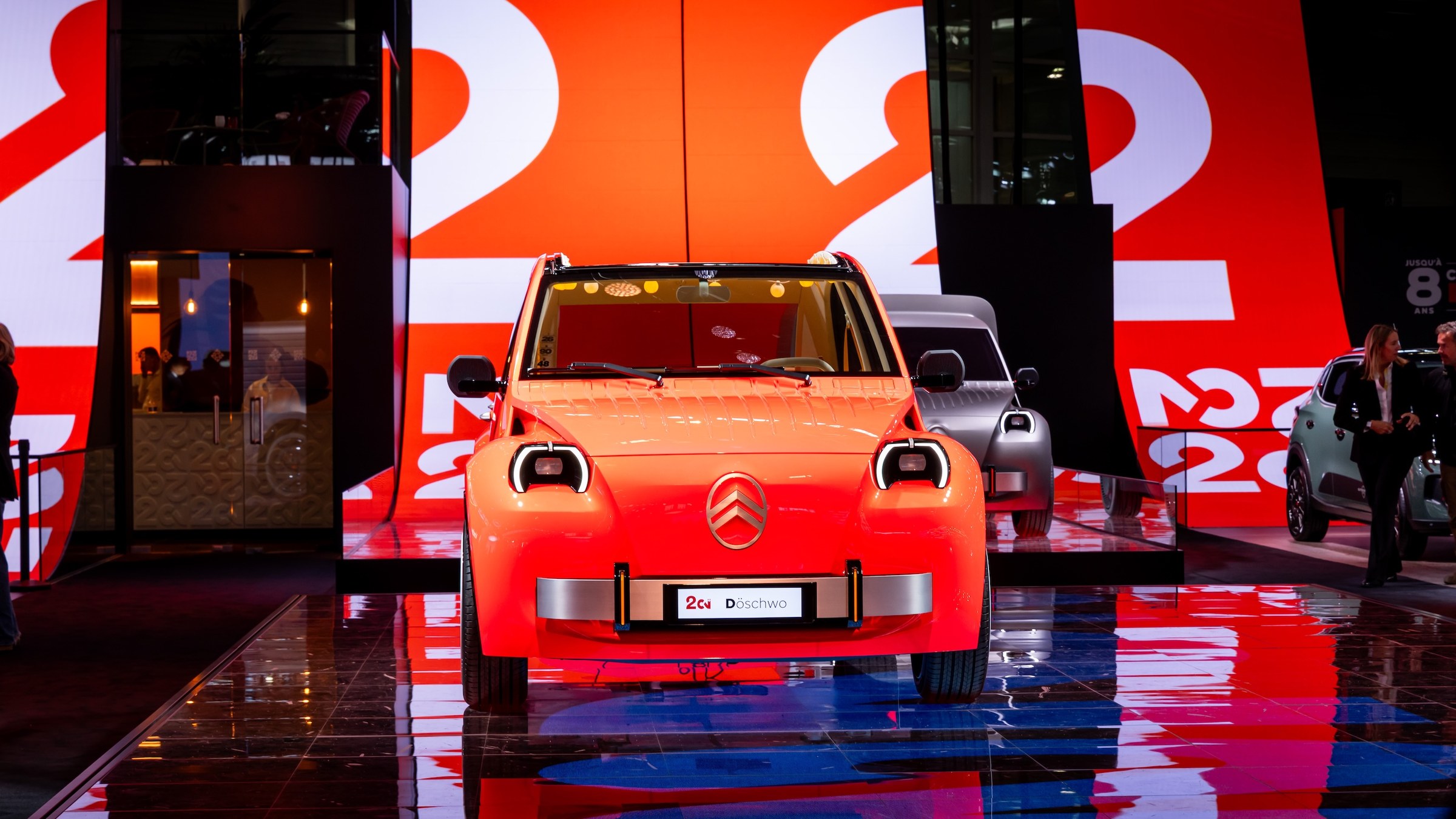
Roughly 60 automakers set up at the Paris Motor Show this week, and about 20 of them are Chinese, double the count from 2024. The cars that drew the crowds weren't supercars. They were a retro electric Citroën 2CV with a target price of about €15,000 and a two-seat smart that starts at €19,990.
Here's what the headlines miss: almost nothing that matters in Paris this year will reach an American showroom, and that is the most useful thing an American buyer can learn from the show. Europe and China are fighting over the cheap electric car, a segment Detroit walked away from on its own. I think that fight will shape what every automaker can charge, including in the US, long before any of these cars cross the Atlantic.
A show rebuilt by Chinese brands and €15,000 promises
The Mondial de l'Auto runs at Paris Expo Porte de Versailles, with an industry day on October 12 and public days through October 18. It opened days after the European Union reached an arrangement with China to cap imports of Chinese hybrids at 350,000 a year, according to a European Commission official quoted by Reuters. The details aren't final. Chinese hybrid exports to the EU tripled to $7.5 billion in the first half of 2026, per Chinese customs data cited in the same report.
Stellantis answered with six new models and nine concepts, Reuters reports, including the 2CV Concept, a Peugeot RCZ Vision coupe, and a Fiat Multiplay that borrows the old Multipla's layout. The group also said it would build small EVs in Italy on a platform developed with its Chinese partner Leapmotor. Mercedes and Geely's smart joint venture revived the two-seat city car. Chinese newcomers used the show to set dates: AITO, the Huawei-backed brand built by Seres, says European sales start in the fall of 2027.
The empty floor space tells its own story. BMW, MINI, Tesla, Nissan, Porsche, Mazda, and Lexus all skipped the show, while Toyota came without its luxury brand. BMW's absence is the strangest: the French trade site Fiches-Auto notes it was Europe's fourth best-selling car brand in the first half of 2026, with a new generation of EVs to promote.
What strikes me is who those absent brands are. They are mostly companies whose European business runs on premium margins or on an established dealer network. The brands that showed up in force are the ones that need volume: French and Italian mass-market makers defending home turf, and Chinese newcomers trying to buy their way into it. Paris became a show for the buyer who counts every euro. That alone says where the competition in Europe is headed.
Europe is fighting over the car Detroit stopped building
Look past the nostalgia and the pattern is plain. Citroën is targeting about €15,000 for the production 2CV, due in roughly two years, with a curb weight near one metric ton (about 2,200 lb) and a length of 3.76 meters (148 inches), Autocar reports. The smart #2 pairs a 35.8 kWh LFP battery with up to 180 miles of WLTP range (290 km), and deliveries start in 2027, according to Electrek.
These are small, light, deliberately limited cars. The retro shapes are a marketing wrapper. What Paris is really selling is a business model: a low-margin, high-volume EV that a nurse in rural France can afford without a subsidy.
The way I see it, Europe isn't building these cars out of nostalgia. It's building them out of fear. Chinese brands have taken share in Europe quickly over the last three years. Volkswagen Group's deliveries fell 14.3% in the third quarter, the steepest quarterly drop in four years, Reuters reports. Stellantis is openly copying Chinese development cycles. When a 125-year-old industry starts borrowing its rival's calendar, that rival has already set the terms.
China, for its part, has nowhere else to go. Car sales in China fell 20% in the first half of 2026, per Reuters, and the US market is effectively closed to Chinese automakers. "If they drop exports in Europe they die," François Roudier of the International Organization of Motor Vehicle Manufacturers told the agency. That is why Changan says it hopes to build its first European car in early 2027, why BYD says it is studying a factory in France, and why Geely plans to build electric SUVs at a Ford plant in Spain.
That last detail should get Detroit's attention. A Ford factory in Europe will build cars for a Chinese company. The American industry isn't absent from this fight. In some places it is renting out the arena.
America's wall works, for now
US buyers won't see the 2CV or the smart #2 for simple reasons. Neither Citroën nor smart sells cars in America. Chinese brands face a harder barrier than any tariff. Under a Commerce Department rule finalized in January 2025, software-related bans on Chinese and Russian connected-vehicle technology take effect for model year 2027 and hardware bans for model year 2030. Manufacturers with a sufficient link to China can't sell new connected vehicles in the US from model year 2027, even if the cars are built in America.
So the Chinese offensive that dominates Paris stops at the American border by law, not by market choice. In my view, that protection is real, but it doesn't cover the most important variable: price. A wall keeps cars out. It doesn't keep the American buyer from noticing what everyone else pays.
The price gap is the real story
The numbers say this better than any concept car. The average new vehicle in the US sold for $50,562 in September, according to Kelley Blue Book, just $52 below the all-time record. Even the average compact car went for $27,977.
| Market | Starting price | Status | |
|---|---|---|---|
| Citroën 2CV (electric) | Europe | about €15,000 (target) | Concept; production in about two years |
| smart #2 (electric) | Europe | €19,990 | Orders open; deliveries 2027 |
| Ford Fathom (electric pickup) | US | $28,350 + $1,595 destination | Preorders open early 2027 |
| Nissan Altima 2027 (gas sedan) | US | $27,790 + $1,275 destination | On sale |
| Average compact car, September 2026 | US | $27,977 (transaction price) | Kelley Blue Book |
| Average new vehicle, September 2026 | US | $50,562 (transaction price) | Kelley Blue Book |
I'm deliberately not converting euros into dollars here. European sticker prices include VAT and American ones exclude sales tax, so a straight conversion flatters the European cars. Even so, the gap is wide. Europe is fighting over a sub-€20,000 electric car. America's newest cheap EV, the Ford Fathom, starts at $28,350 before destination, and it is effectively the only domestic answer on the calendar.
That's the part that should worry Detroit. Detroit isn't losing the cheap EV market in America to Chinese rivals, because the law keeps those rivals out. It has simply chosen not to compete in it. Big pickups and crossovers earn the margins, and the industry has built its US business around them. Every year the average transaction price stays above $50,000, the space below $30,000 shrinks, and the buyers in that space learn to wait, buy used, or hold on to what they have.
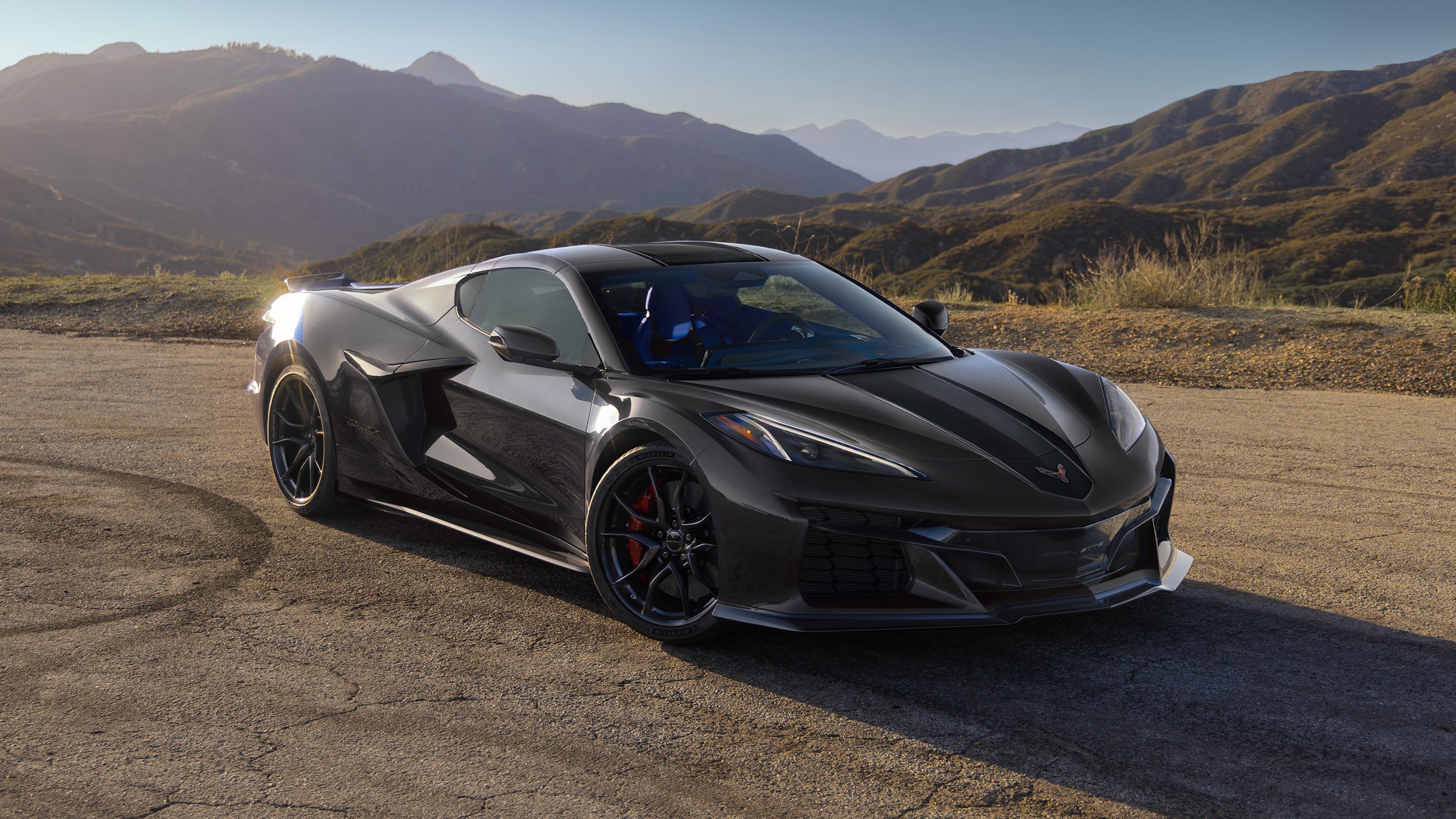
This fits a broader pattern of hesitation. GM still promises an electric Corvette with no date attached, and the case for cheap electric driving keeps getting stronger as gas prices outrun charging costs. The demand argument is there. The product isn't.
The case against my view
The strongest objection is that motor shows are theater. A concept isn't a car, and Paris has a long history of beautiful promises that never reached a dealer lot. The 2CV is two years away, and its €15,000 target depends on a new platform and on EU small-car rules that are still proposals. The 350,000-unit hybrid cap isn't finalized either. On this reading, Paris tells us what European marketing departments want, not what European buyers will get.
A second objection is about America specifically. US buyers drive longer distances, prefer bigger vehicles, and have rewarded Detroit for building trucks. A two-seat smart would struggle in Texas no matter what it cost. If the American market doesn't want small cars, the price gap isn't a failure. It's the market working.
Both points are fair, and I'd answer them the same way. I'm not arguing that the 2CV is coming to Ohio. I'm arguing that Europe and China are building an industrial base for cheap EVs at scale, with factories, suppliers, and battery chemistry tuned for low cost. The cars themselves are less important than the cost structure behind them. Once that structure exists, it shows up everywhere: in what Hyundai, Toyota, and Volkswagen can charge for their US models, and in what a $28,350 Ford pickup looks like next to a rival built on cheaper technology. Small cars may not sell in Texas. Cheap batteries and fast development cycles travel just fine.
What would change my mind
If Stellantis delays the production 2CV beyond 2028 or lets its price drift well above €15,000, the cheap European EV is still a slide deck, and the pressure I'm describing is weaker than I think.
If the EU's 350,000-unit cap collapses or Brussels softens its local-content rules over the next year, Chinese brands will keep exporting rather than building in Europe. That would make the fight look more like a trade dispute than an industrial shift.
And if, by the end of 2027, at least two more automakers announce US electric models below $30,000 alongside the Ford Fathom, Detroit will have answered the question Paris raised, and I'll happily concede that it was paying attention after all.
My read
Paris 2026 is a show about the car America won't get, and that is exactly why American buyers should pay attention. Europe and China are pouring money into the €15,000 to €20,000 electric car, while the US relies on a legal wall and a $50,000 average price. My bet is that the wall holds out Chinese cars far longer than it holds down the expectations of American buyers. When those expectations arrive, the automakers with a real low-cost EV will be the ones that went to Paris.